Monday, August 31, 2015

Metro's Active Transportation Plan needs your input!

Good advice lasts.  I remember hearing a talk in November of 2008 entitled "Leading Professional and Institutional Change through Subversion, Revolution and Meterology."  The speaker was Debra R. Rolison of the U. S. Naval Research Laboratory. She told us about the Rule of 18, which states that when you take a new research direction, it will take 18 months to get yourself up to speed in the [new] area.

Last week I attended an Open House Workshop about active transportation in the San Fernando Valley. I didn't study transportation planning or urban design in school, so it has taken some time to learn the ins and outs of the transit system here in Southern California.  I will try to explain some of the basics here so that you can take part in the conversation, too.

Metro is the major operator of bus and rail service in Los Angeles County, California.  Metro hosted the first round of Open House Workshops as part of the development of the Active Transportation Strategic Plan.  Active transportation refers to any form of human-powered transportation – walking, cycling, using a wheelchair, in-line skating or skateboarding. There are many ways to engage in active transportation, whether it is walking to the bus stop, or cycling to school/work.

Councils of governments (CoGs—also known as regional councils, regional commissions, regional planning commissions, and planning districts) are regional governing and/or coordinating bodies that exist throughout the United States. The Open House Workshop we attended was co-hosted by Metro and the San Fernando Valley Council of Governments (http://www.sfvcog.org/).  The SFVCoG represents parts of Los Angeles County: Burbank, Glendale, San Fernando and Santa Clarita. The Southern California Association of Governments (SCAG) is the nation's largest metropolitan planning organization, representing six counties, 191 cities and more than 18 million residents.


When we arrived at the open house, there were posters on the perimeter of the room and Metro provided copies of the posters in 8.5" x 11" format.  We scanned them and some are posted here.  The pillars of Metro's Active Transportation Strategic Plan are:
  • Acess to transit
  • Physical activity as an integral part of transit
  • Enhancing safety
  • Promoting clean transit
  • Improving public health
  • Nurturing equitable/sustainable communities
The objectives of the strategic plan are to (1) identify improvements to 661 Metro transit stations (2) create a regionally-integrated active transportation network (3) develop policies that support education, encouragement, enforcement, and evaluation (4) to propose a funding strategy so that local jurisdictions and community partners can work together with Metro to enhance the overall quality of the transportation network.


The "First Last Mile" concept is used to describe difficulty in getting people from a transportation hub (rail or bus) to their final destination. When people live and work in lower-density suburbs that are not within walking distance to existing public transportation options, transit use is less practical. Population density in suburban areas promotes a reliance on cars, which results in more traffic congestion, pollution, and urban sprawl.  Metro is aiming to help more people access Metro stations more safely and more conveniently, as well as making bus and light rail station improvements.

Complete Streets is a transportation policy and design approach that requires streets to be planned, designed, operated, and maintained to enable safe, convenient and comfortable travel and access for users of all ages and abilities regardless of their mode of transportation. Complete Streets allow for safe travel by those walking, bicycling, driving automobiles, riding public transportation, or delivering goods. Complete Streets offer improved safety, health, economic, and environmental outcomes for ALL roadway users.


Every subregion has its own mobility plan.  Metro's responsibility is to weave these together to maximize efficiency and reduce redundancy in planning. Measure R was a ballot measure during the November 2008 elections in Los Angeles County that levied a half-cent sales taxes increase on each dollar of taxable sales for 30 years in order to pay for transportation projects and improvements. There are currently 12 transit and 16 highway projects underway.  Also, 5 rail lines are under construction.

California Senate Bill 743 gives us an opportunity to promote sustainability, improve air quality, reduce city congestion by encouraging car owners to walk or bike instead.  Miguel Nunez emphasized the demand for a bicycle network that can attract a variety of cyclists, by creating safe routes that traverse the LA county subregion.  He noted that active transportation projects can be completed more quickly and at a lower cost than highway improvements.  Metro is looking to maximize their return on investment.  Some ideas: parklets (for pedestrians to stop and rest in the shade), and bikeshare programs (for bike-curious residents that do not currently own bicycles).


Metro has compiled 0.5 mile radius and 3 mile radius "walkshed" data.  One such compilation is shown here.  These data will be publicly available so that cities can use it when applying for grants.  After this, the workshop split into Breakout Sessions: (1) Potential Collaborations and Strategies to Overcome Barriers to Implementation of Active Transportation Plans (2) Regional Network Desire Lines.  Tham Nguyen of Metro encouraged all attendees to take an online survey and share the link. 

metro.net/walkbikeroll

Metro hopes to answer questions like:

  • What are the gaps in the transit network?
  • What would it take to get residents out of their cars?  

The deadline for responses has been extended to September 30, 2015 so there's still time to participate.  Please share the link with your friends, colleagues, and neighbors.

The first breakout session I went to was about barriers to implementation of active transportion infractructure.  The conclusions boiled down to (1) lack of leadership at the local level (2) lack of oversight at the local level, cities are not held accountable to make proposed changes (3) lack of community support for "road diets" (4) lack of feasability studies, there is a need for data showing that active transportation infractructure actually enhances communities (5) generalized resistance to change at the neighborhood level.  Some of the solutions proposed were: 
  • educate anti-bike lane folks that we're not taking anything away, just using leftover space
  • being "strategic" in the implementation of projects, doing community outreach first
  • call something a "pilot program" so that if it REALLY doesn't work, you can remove it, but people are more willing to be open-minded to change if it's not going to be permanent, when they see how the change improves livability then they won't let you undo it
  • get signatures from the community members (both "for" and "against" projects) compare numbers
  • propose projects as a "bundle," putting cycletracks together with lighting & sidewalks so that residents either get all-or-nothing
  • Metro (or their hired consultants) could attend city council meetings to present proposed projects, as a non-biased community outsider, the data showing decrease in accidents and slowdowns might be more convincing than an angry resident or crazy bike person
  • designate a regional spokesperson who can attest to the improvement in safety, economic development/revitalization, and quality of life for communities with "complete streets"
  • CicLAvia is one of the greatest agents of change because of its transient nature.  It's a demonstration of what protected bike lanes could look like.  It shows businesses how increasing cyclist access actually impacts their bottom line
The second breakout session I went to was about regional network desire lines.  I spoke with Mark Seinen about regional routes from Glendale to Pasadena and Claremont (East), from Glendale to Northridge and Chatsworth (NorthWest), from Glendale to Venice Beach (South), etc.  The Hyperion bridge may not go the way of cyclists, but we marked it as a "Desire Line" anyway.  We noted that certain scenic routes were better candidates for a cycletrack than other more straightforward routes.  Understanding that these plans are for the next 30 years, we heard that there may eventually be a cycletrack along the Ventura County Metrolink rail line that would be a more direct path to CSUN from Glendale.  Of course, we don't know where we'll be living by then so our input was for the greater good of residents from all corners of Los Angeles County.  In retrospect, events like CicLAvia have given us the opportunity to ride throughout the region.  Being dedicated to car-free travel, regardless of the distance, before we really learned how to use the light-rail, gave us insight into desirable regional connectors.  When you bike the landscape, you get to know the landscape.


A second round of workshops will be in Fall-Winter of 2015 and round three will be in Spring 2016.  Since this is a long-term project plan, we may not see immediate action, but it would be good to have a diverse range of community input.  Metro cannot prioritize enhancements to our neighborhoods without feedback from the residents who live and travel through them.

Saturday, August 29, 2015

Raymer to Bernson Double Track Project

Stefan Mayer (far right with bicycle) of Northridge claims that he takes the Metrolink to downtown LA.  He spoke at the Raymer to Bernson Double Track Project Community Open House Meeting at Lorne Street Elementary School on August 25, 2015.  In his public comment, he said that when he rides Metrolink he finds himself in an empty train car.  His reasoning for being against the double track project involves his statement that ridership on Metrolink is nowhere near capacity, therefore a second track and an expansion of commuter train schedules is unnecessary.  If you see this man on a Metrolink train car and there are other passengers there, please take a photo.

Many other Northridge residents (who live near the train tracks) spoke out in opposition to the safety improvements to at-grade crossings and upgrades to the Northridge Metrolink station.  Of the 18 residents that spoke at the meeting, Stefan was the only one who admitted to riding the train.  I would encourage all of those residents to read the latest issue of Metrolink Matters where the Woods family of Chatsworth wrote about taking their family to San Juan Capistrano on Metrolink.  The Woods family lives near the Chatsworth Metrolink station and it piqued their curiosity about the regional rail network.

Even though Mr. Woods attended Cal State Northridge, no one in his family had ever taken the train before.  They didn't know how the system worked or how far it traveled.  Once Mr. Woods did a bit of studying, he was impressed by the scope and scale of the Metrolink rail network.  They noted that while they hear loud safety horns when outside the train, from inside the train it is a completely different perspective: cool, quiet, and cozy.  With the exception of Mr. Mayer, I would encourage all residents who live near a Metrolink station to consider actually riding the train.  You may realize that your home's proximity to a commuter hub is actually an asset and not a liability.

My husband and I live 1,320 ft (as the crow flies) from the Metrolink/Amtrak railroad tracks.  The at-grade crossings at Doran St and San Fernando Road and Brazil St and San Fernando Road are less than 1,800 ft away from our house.  Our previous residence in San Diego was only 423 feet from the Amtrak rail line.  We have never had the noise problems Northridge residents described at the Double Track Project Community Open House meeting, although some residents of Northridge charactarized the distance from their homes to the tracks on the order of tens of feet.  Living 2.5 miles from the Glendale Metrolink station is one of the best features of our current home and we would not move to a new house that was not of a similar distance from a major transit hub.

If Metro has agreed to collect noise and vibration data, allow them to survey your property.  Get a quantitative readout of the noise levels from existing rail traffic.  One of your own residents stated that excessive noise was being caused by a track in disrepair, which was repaired within 24 hours of his phone call to Metro explaining the situation.  It's not possible to fight population growth, if you are tired of waiting 4 minutes at rail crossings, your time is not more valuable than anyone else's.  Commuters fill rail cars on the Ventura County line every day.  If you don't believe this, take a look at our photos on bikecar101 and tell me that you can spot an empty rail car.

Stop patting yourselves on the back for gathering an anti-train mob.  Don't tell your children that trains are dangerous ticking time bombs.  Take your children for a ride on the train like the Woods family.  Show your children that it's possible to travel to fun destinations without a car.  Auto accidents are the leading cause of death for persons under the age of 34.

Sunday, August 16, 2015

Psychic Benefits of Bicycling

Generally I try to write about scientific topics, or non-scientific topics in a quantitative way.  I'm having trouble finding articles that study the psychic benefits of riding a bicycle compared with other modes of transportation including driving a car, walking, or taking public transportation.  I'm surprised that some economist or ergonomics evaluator has not measured this.

I did find a good article called "Bicycle Blueprint" that articulates the benefits of bicycles:

  • does not operate on electricity or use a combustion engine, therefore it has a smaller (but not zero) carbon footprint, cyclists still have to eat!
  • is quiet and does not contribute to city noise pollution
  • fits neatly into the "door zone" of any street due to its small size, roadsharing is easy!
  • offers mechanical advantage, shoppers can carry goods in a basket or bags, and the weight can be borne by the bike
  • is "human-scale," not some giant metal box on wheels

The article also articulates the benefits of cycling:

  • control over the schedule, no waiting for a bus or train, but there are still stoplights and stop-signs to obey
  • offers some (but not too much) exercise
  • allows the rider to be more interactive with the environment: smells, sounds, sights
Psychic cost is "incurred directly due to emotions that a certain kind of activity engenders." As David Brooks wrote in a NY Times Op-Ed, "The daily activity most injurious to happiness is commuting." This is known as the commuter's paradox. People think that the time savings associated with driving will provide a greater psychic benefit, when in reality we forget that driving has a great deal of unpredictability and we are disappointed when it takes longer than it should.  Therefore driving has a greater psychic cost than cycling.

Many experiments, albiet some non-scientific ones, have shown that cycling beats driving.
https://experiencelife.com/article/bicycling-values-the-cost-of-car-vs-bikes-commutes/


I really liked the calculation in "Bicycle Blueprint" that showed for an equivalent number of calories (or Joules of energy) a cyclist can travel 10 miles, a pedestrian 3.5 miles, and an automobile 100 feet. Even without a quantitative metric for psychic cost/benefit, that's pretty powerful math.

Monday, July 20, 2015

Summer Goals

One of my goals this summer was to get to know Southern California's light rail system which consists of two subway lines (Red and Purple) and four light rail lines (Blue, Green, Gold and Expo).  At first, I thought it was confusing with all those colors going in all directions, but now that I have a better handle on the commuter rail system (Metrolink) consisting of seven lines (91, AV, IE-OC, OC, R'side, SB, and VC) I think I can handle branching out (pun intended).

The difference between Metro and Metrolink is confusing when you first hear about it.  Remember that Metro is the bus and light rail system while Metrolink is the commuter rail.  Amtrak is the interstate rail system.  If you have a Metrolink monthly pass, you can ride Metro (light) rail and buses for free any time.  You can also ride some Amtrak trains.  This is how we roll.

Our first ride on Metro rail was the subway between Union Station and Wilshire/Western on the Purple line.  We were going to the Grove, a big mall in Los Angeles, and we didn't want to be stuck in weeknight traffic.  It was awesome because we just tapped our monthly pass and rolled our bikes through the handicapped turnstile.  There were escalators and stairs, but we could have taken an elevator if we didn't want to lift our bikes.

The Metro was fast and trains appear often.  It was good we had our own bungee to tie the bikes to a hand-rail once we were on the train.  The abrupt starting and stopping made the bikes roll a bit so we stood there and held them.  We reached our destination so quickly that it was no big deal to stand for the trip.

I get motion-sickness and the underground rail was not so fun in that regard, but it was over fast.  I'm looking forward to taking some of the other above-ground lines.  When I first started taking Metrolink, I thought I might get sick every day, but as long as I keep my eyes on a window, I feel fine.  In fact, I feel so much better than being stuck in a car.

The next CicLAvia (Sunday, August 9, 2015) would be a great time to take the Metro Expo line, but I'll be out of town.  I hope lots of people take the opportunity to experience our light rail system.  There's also a suite of free concerts in Pasadena, which might be a great way to take the Metro Gold line (Thurs, Fri, Sat, Sun) to Memorial Park.  Last but not least, I'd like to take the Blue line down to the Long Beach Aquarium.  We got some $5 off passes in our goodie bags from the LA River Ride and I think they expire August 31st.

I'm kind of inspired right now by an event going on this Friday, July 24th at LA Union Station called PUBLISH! Your Journey.  It's part of the #MetroRail25 event series.  The event is an interactive writing activity where people's journeys will be pinned on a map and later posted online to visualize a composite portrait of commuters’ personal narratives.  Maybe we'll see you there!

Monday, July 13, 2015

Freedom Ride ~ Report

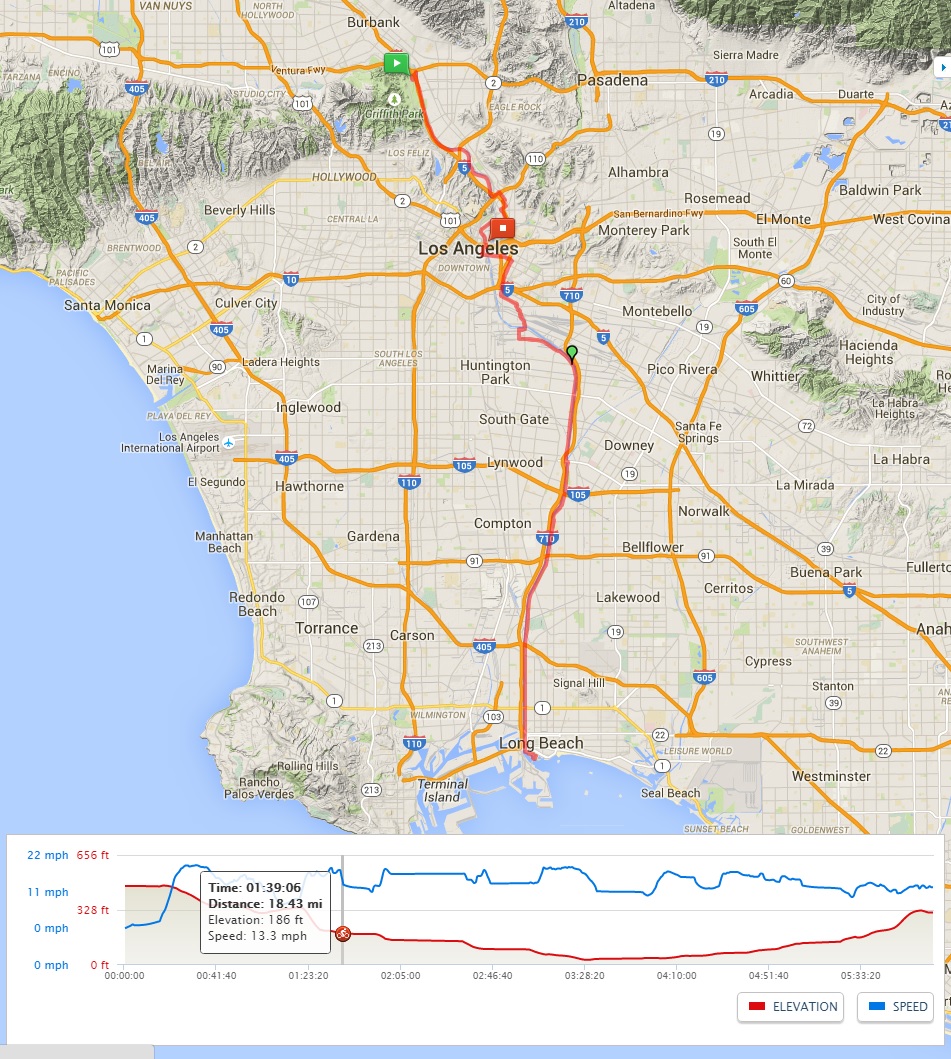
This ride was designed to liberate participants from their cars, instead riding bicycles through Los Angeles and Orange Counties, returning via Metrolink train.  We accomplished this goal with a small group of riders, which was good since it was our first time planning and leading such a ride.

We prepared for the ride by, of course, riding.  We rode ~40 mile rides many weekends in May, and ~50-70 mile rides in June, to be ready for this ride.  We started discussing it in March and set the date about a month ahead of time with a few of the riders who were really dedicated to riding it.


We planned a good amount of water/bathroom stops and regroup points, even adding one at 301 East Coast Hwy, Newport Beach, CA 92660 (Chevron/Subway) which had a very clean restroom and a great soda fountain with water/ice.

We cut the trip short of the routeslip by catching the train at Tustin instead of Irvine, but it worked out perfectly.  We learned that there's a Jack-In-The-Box and Subway/CircleK/76 to get snacks for the train.  We were only about 10 minutes early, but the train was a little late.

We met some new "bike people," other folks who enjoy freedom on two wheels as we do.  Altogether, the trip was inexpensive ($10 day pass for the train) especially since many of us brought our own snacks.  We got someone riding Metrolink that had never done it before.

Friday, July 3, 2015

LA River Ride ~ Report

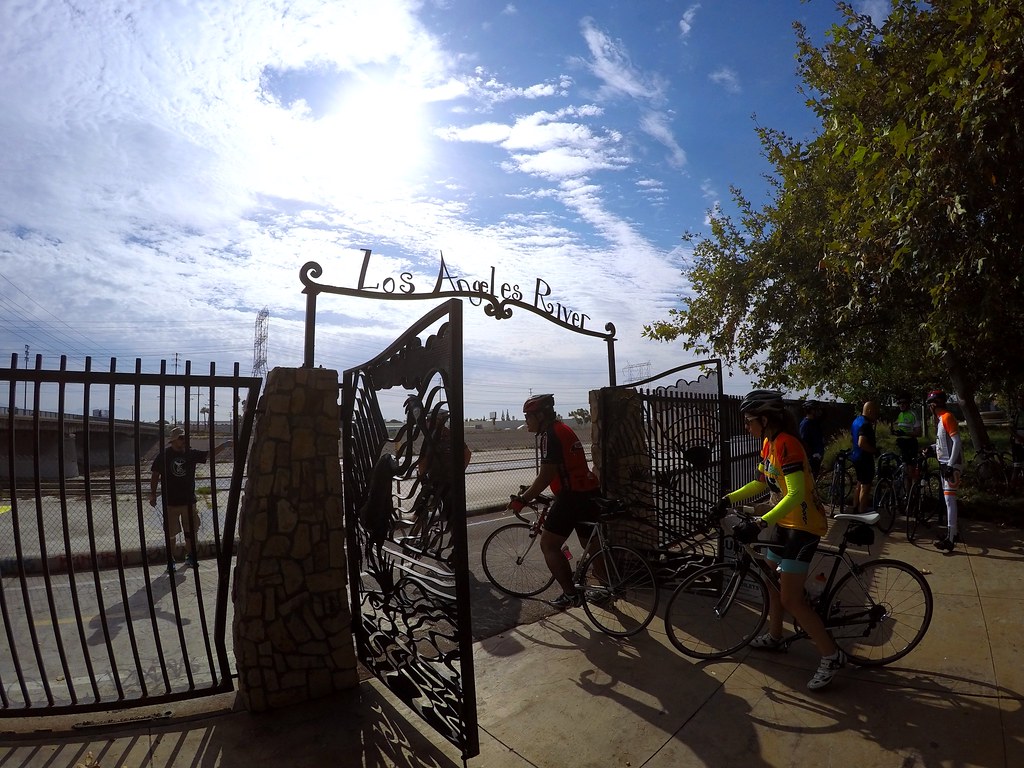
The LA River Ride this year was hot, literally.  Of everything I could say about the day, the heat is the most noteworthy.  According to the Weather Underground, the temperature was 97 degrees.  Although at some points on the roads, a cycling computer read well into the triple digits.

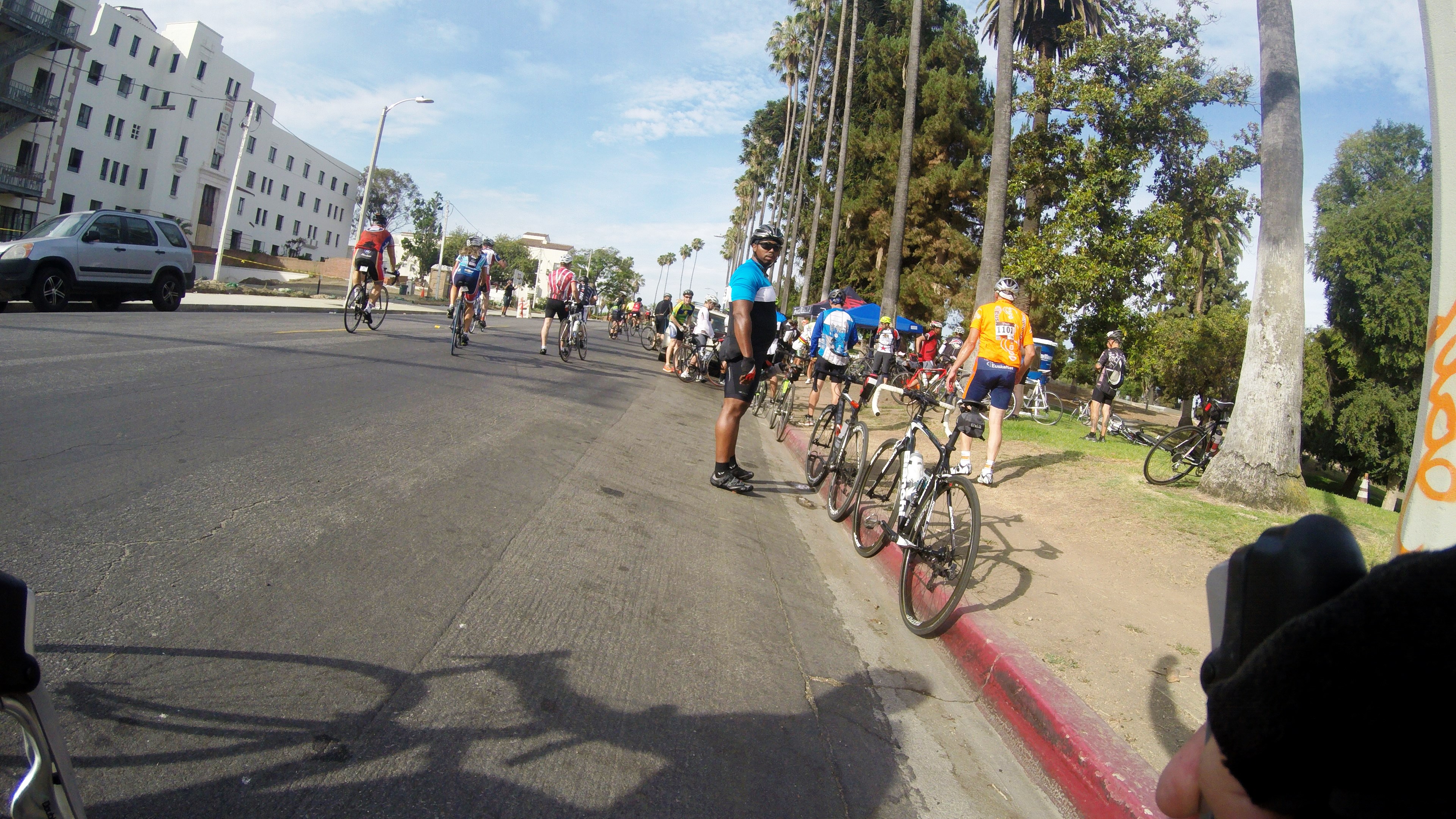
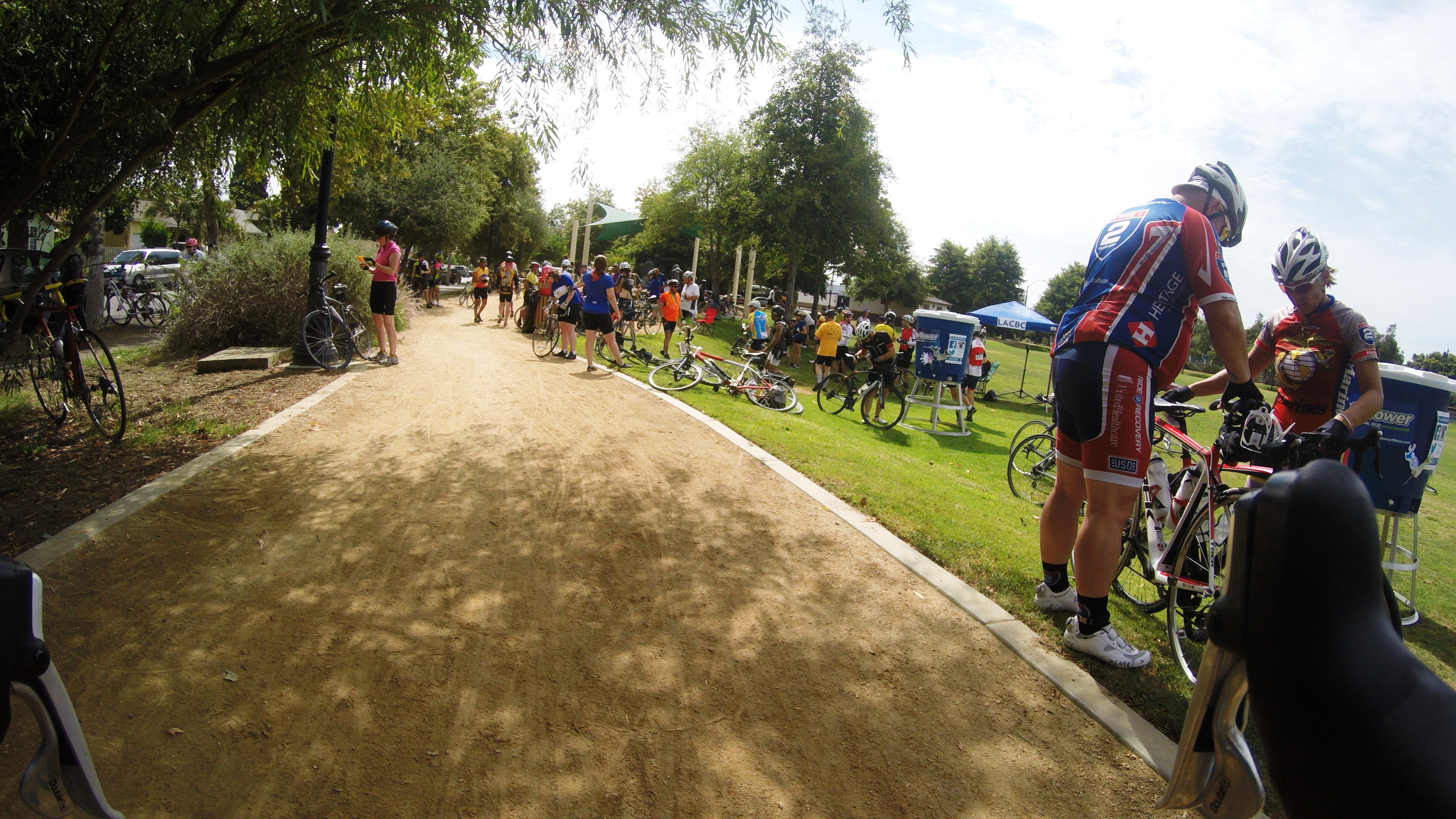
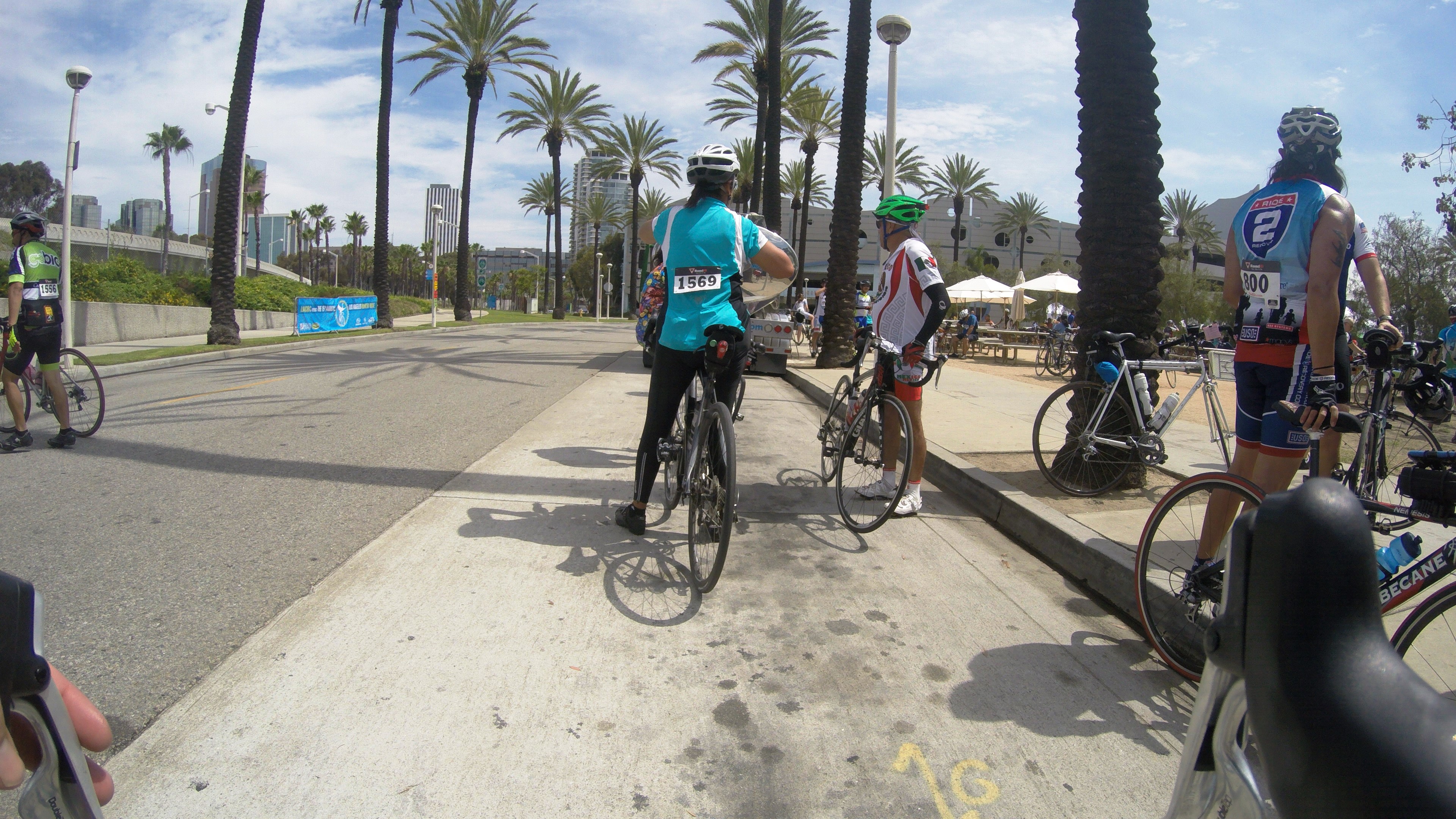
The Los Angeles County Bicycle Coalition (LACBC) did a fantastic job of providing water stops.  Hollenbeck Park had restrooms and large water reservoirs (and music!).  Maywood and Dills Parks were also great!  There were small Clif bars, peanut-butter pretzels, water, electrolytes, and trail mix with nuts and rice crackers.

Hollenbeck Park
Maywood Park
Dills Park
Aquarium of the Pacific
I am extremely grateful to all the volunteers who made these rest stops possible.  I am also grateful to Wayne "Ridetime" Howard for taking us on the Metrolink Metric Century the weekend before the LA River Ride.  Riding in the heat for the majority of the day helped us prepare to successfully complete this ride without incident.


We completed 70 miles in about 7 hours, for some segments we were going 16-18 mph.  I will caution riders that the segment of the river trail around Firestone has some really nasty underpasses.  The trail zig-zags around some large curbs after going over a kind of bump and there is no visibility for riders coming under the roadway.  I'm not complaining, it's always great to have an underpass, but these ones are gnarly and we had a rider from our group collide with another rider in a head-on collision.  It's unclear who (if either of them) violated the centerline rule, and I'm not saying the trail should be removed or redesigned, but I am urging all cyclists to ride safely in this part of the course.  Riders that passed us, walking their bikes, mentioned that someone always "goes down" in this part of the ride, every year.

Friday, June 26, 2015

If the shoe fits...

I retired a flight of shoes this week.  It's hard because we've been through so much together.  I rely on my shoes to protect and cushion my feet.  I've been having pain in my feet, which may or may not be related to the wear and tear on the shoes.  A friend recently asked me why I would wear shoes with holes in them when I have plenty of money to buy new shoes.  

So let me tell a few stories about these retired shoes, to honor them before they are donated to reuse-a-shoe, Nike's recycling program to turn old shoes into new materials like flooring and jacket zippers.  If you want to recycle a few pairs of your old shoes, a few nearby recycling centers are:

Nike Running Pasadena
37 West Colorado Blvd.
Pasadena, CA 91105
626-793-7862

Fleet Feet Sports Burbank
1516 West Magnolia Blvd.
Burbank, CA 91506
818-238-9522


From Left to Right: The Asics TK61E was an impulse buy at Big 5 sporting goods in Claremont (or Montclair) on a day when I had to teach lab and I didn't have closed-toed shoes.  I used them for walking, running, cycling, commuting, and teaching.  I logged 139 miles of fitness on MapMyRide, and now they are retired.  

The Nike ZOOM NUCLEUS MC+ was a shoe that I researched and was fitted for at Running Center in Redlands.  I logged 282 miles of fitness on MapMyRide, these shoes ran probably 13 races and many training runs.  

The Nike DUAL FUSION RUN was an impulse buy on my way to participate in the Color Run in San Diego.  I loved that they were hot pink and I ran/walked only 70 miles with them, but wore them on many bike rides and for teaching.  

The Old Navy MESH SNEAKERS were on sale for probably $10.  I bought them because I loved the tennis-ball fluorescent yellow color.  Turns out they were like barefoot shoes and I wore them for many bike rides and for teaching.  

Last but not least, the red PUMA.  I bought those in Switzerland.  They may have been on sale.  I wanted something to remember my trip there, something that could not be found in the US.  I wore them for 10 years, they are shredded in the heel and have a hole in the toe.  The little gold puma details are falling off.  When I wear them it hurts, so it's safe to say these are cleared for retirement. 


Here's the new lineup (from left to right): New Balance 730 (W730RB2) is an ultra-lightweight running shoe. ACTEVA™ LITE midsole provides optimal resistance to compression set.  ACTEVA LITE is 24% lighter than standard foam because it is a blend of Elvaloy® and ENGAGE™ to increase flexibility, toughness, long-term outdoor exposure, and soft touch. I liked the color scheme and the way it felt like wearing a nice pair of slippers.

Fila Turbo Fuel Energized running shoe has a memory foam insole for extra comfort and CoolMax® technology for ventilation.  I really liked the color.  I don't know how they will feel to run in, but I will wear them for teaching and possibly also for Zumba.

New Balance 580 (W580SG3) is a classic running shoe with ABZORB® technology for cushioning made of Dupont ENGAGE™ elastomeric polymer, and a sole of Isoprene rubber for durability.  I realize these shoes are made from petroleum, and I wonder if there are shoes that are made of primarily renewable materials.

Specialized Cadet cycling shoes that have a simple black exterior and all kinds of hidden goodies.  First, the shoes have a Lollipop™ inner plate to enhance pedaling efficiency while EVA midsole stabilizes and cushions off the bike. Second, there is a Lacelock™ elastic mechanism to securely stow shoelaces so they won't catch in your chainring. Third, the shoe is decorated with reflective elements for enhanced visibility.  So far I love these.

Nike Flex TR5 has an EVA midsole. The bottom of the shoe has a rubber traction outsole with pods at high wear areas.  I liked the way it felt also like a slipper when I put it on.  The shoe weighs 7 ounces, putting it in the lightweight category.  I guess stability shoes can weigh anywhere from 10-13 ounces which is probably why it feels so weird that this would be a running shoe.

Of all these new shoes: I hope to find something good for walking, something good for standing (teaching), something good for running, something good for cycling, and something good for dancing!  I doubt I will find the perfect all-around shoe, but I hope each of these shoes eventually proves that they have a specialty.