Thursday, March 19, 2015

smartphones and tablets in my classroom


I must say that students' reliance on their mobile devices is making me uncomfortable. Until there is a 1:1 ratio between students:tablets (of equivalent capability) I don't think that these devices have a place in my classroom.

The true source of my apprehension is a frustration based on my direct observations that students are unwilling to do the same amount of work that I am doing. After all, they are the ones who are paying money to be in my classroom, so shouldn't they be willing to do the recommended work to achieve their goal (whatever that may be)?

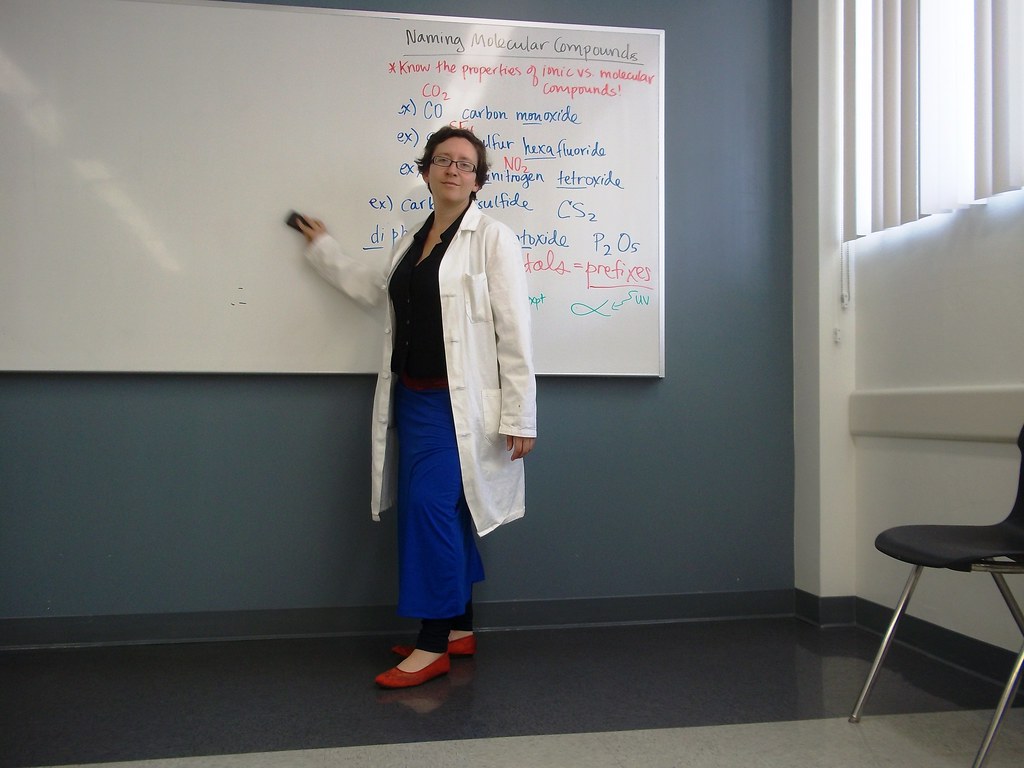
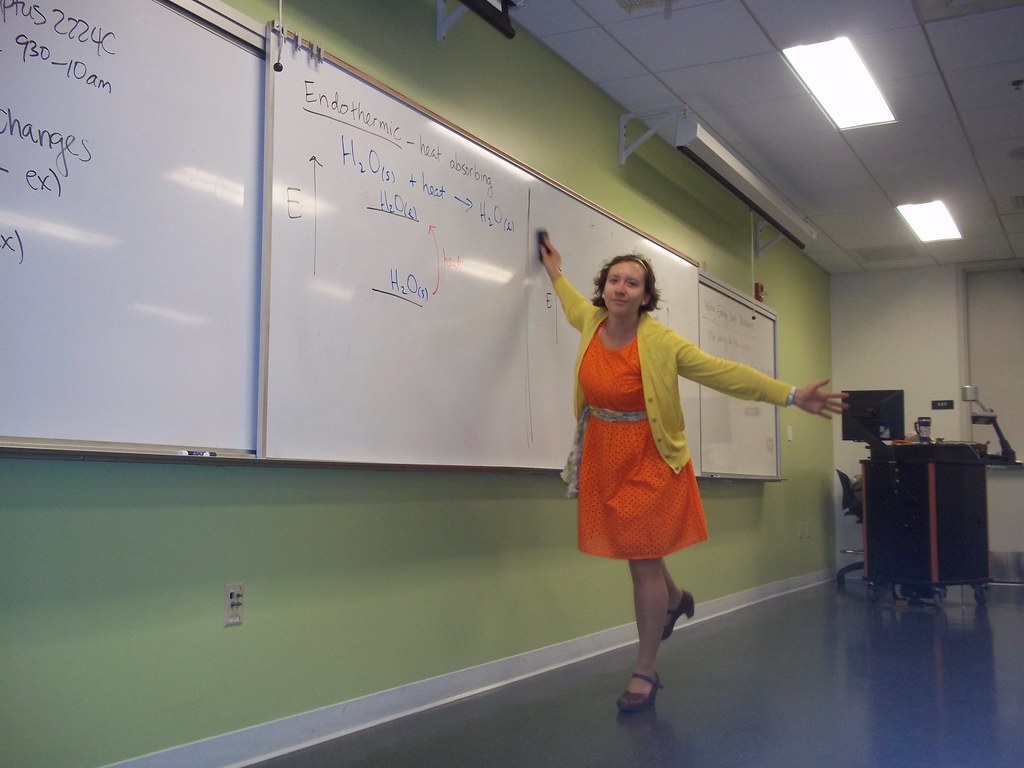
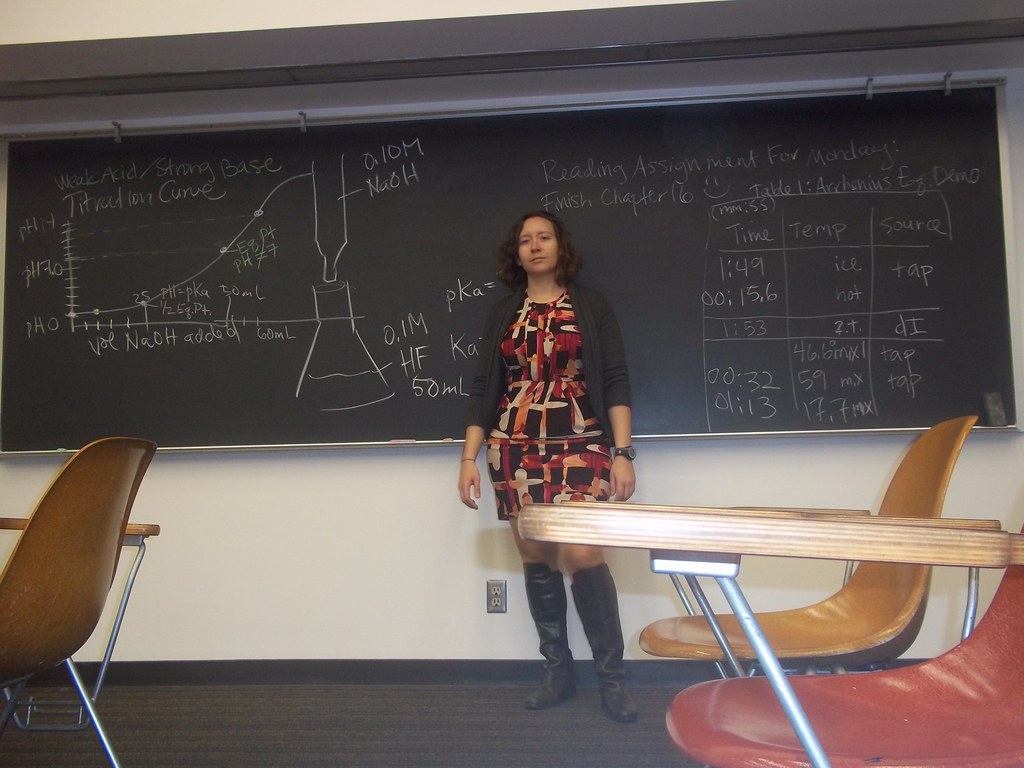
What I mean, specifically, is that when I take the time and put forth the effort to write a problem on the board, I expect students to also write it down. My mantra has become "WRITE IT DOWN." But despite my chanting, ranting, and jumping up and down, throwing markers, and losing my temper with students who do it: students are still caught writing nothing down and taking a picture with their mobile device just at the moment when I have finished writing out the problem and circling the answer.

When I find myself at my wit's end, I have to do some research and writing (in true scholarly fashion) to see what others think about this issue. One article cited a study that found "excessive use of technology reduces people’s intelligence more than twice as much as heavy marijuana use." This is one of my worries. I think students are quick to turn to their devices (which are NOT allowed on the day of the exam) for answers, or to supplant traditional notetaking. How are they to solve problems without access to their device? How are they to recall a problem-solving process if they have not been engaged while we are going along? Paying attention to the last 0.5 seconds is not the same as writing down each step.

The same article cited a second study that suggested people are becoming "less likely to want to experience things that take long periods of time or that do not provide instant gratification." I also see this. When it takes me longer than 20 seconds to get an answer to a problem, I hear long sighs from the students in the class, as if they are thinking "How much longer is this wack-o teacher going to spend getting an answer to this problem?" I also see it during exams. When 55 minutes have passed, students are squiriming, flipping pages aggressively, and breathing heavily as if they have run out of patience for the work.

A book chapter about digital notebooks from 'Reinventing Writing: The 9 Tools That Are Changing Writing, Teaching, and Learning Forever' by Vicki Davis (2014) p. 48-49 lists the following concerns:
  • Students don't have an organizing system of any kind to review, sort, or file notes.
  • They run out of room on their phone or tablet and delete the notes because they don't know where they are.
  • Students mix note pictures with personal pictures, which get deleted and lost.
  • Students don't know whether they took the notes on their phone, tablet, or PC. There's no synchronization.
  • Students replace electronics and forget to move notes.
  • Paper notes don't combine with their electronic notes -- there's no system for merging them.
Some of these are concerns I had never even considered, but I have experienced in my own learning process.
at the end of a lecture, I am exhausted

I don't have all the answers, but my argument at the moment is based on equality. Until every student in my classroom has the equivalent tablet, I don't think it's fair for some people who have the technology to be able to take pictures of the board while others who don't have the technology are not able to do so. I also wonder if there will come a day in my teaching career when students are allowed to take an exam on their tablet with access to all the wonderful pictures they have captured. At least that would encourage students to organize all the information on their device.

Tuesday, March 3, 2015

lithium orotate

It has been some time since a chemical story has come to my attention. When a colleague suggested that lithium orotate is "better" than lithium carbonate, I felt compelled to investigate.

Lithium in its drug form comes in many names.
(lithium or lithium carbonate or calith or camcolit* or carbolit* or ceglution or duralith or durolith or eskalith or hypnorex or hynorex or hyponrex or lentolith or licab or licarb or licarbium or lidin or lilipin or li?liquid or li-liquid or lilitin or limas or liskonum or litarex or lithan or lithane or litheum or lithicarb or lithionate or lithizine or lithobid or lithocarb or lithocap or lithonate or lithosun or lithotabs or litheril or litilent or manialit* or maniprex or phanate or phasal or plenur or priadel or quilonium or quilonorm or quilonum or teralithe or theralite)

Oral doses of lithium in the soda 7 Up, originally named "Bib-Label Lithiated Lemon-Lime Soda," were available from 1929 to 1940 in the form of lithium citrate.

Within the review by Fairweather-Tait and Hurrell, it was reported that Schlebusch, et al. found magnesium orotate to have a higher bioavailability than magnesium hydroxycarbonate.  Other studies reported magnesium oxide with a lower bioavailability than magnesium citrate or magnesium aspartate, and magnesium from foods is as bioavailable as magnesium acetate, but the bioavailability of magnesium chloride is much lower than food or the acetate salt.  The study by Schlebusch was based on 14 healthy male volunteers with 5 samples collected over a 12 hour period. Hardly a large-scale clinical trial.

Andermann and Dietz compared three forms of zinc in rabbits.  They found zinc pantothenate and zinc sulfate were not significantly different (bioequivalent) whereas the plasma concentration after injection with zinc orotate had a faster distribution and elimination.  With oral administration, zinc orotate had a slower absorption phase, compared with that of the other two salts.  Magnesium and zinc are not the same ion as lithium, neither in size nor charge.

Balon wrote a letter to the editor of Annals of Clinical Psychiatry to share his opinion that lithium orotate, for self-diagnosed bipolar disorder is dangerous because this preparation is unregulated by the FDA and has not been fully investigated for toxicity in acute overdose and the long-term effects to the thyroid and kidney.  Lithium orotate is readily available online or over the counter.

Smith, A. J. et al. reported in 2014 the investigation of lithium salicylate and lithium lactate, which have markedly different pharmacokinetics than the more common FDA-approved salt, lithium carbonate.  Lithium salicylate produced elevated plasma and brain levels of lithium beyond 48 hours post-dose without a sharp peak, which is currrently observed with lithium carbonate.

Sartori reported in the journal Alcohol in 1986 with a group of 42 alcholic patients (33 males and 9 females) that treatment with lithium orotate proved useful as the main pharmacologic agent for the treatment of alcoholism.  The conclusion of the study was that a daily dose (150mg) given 4-5 times weekly was sufficient to for side-effects to subside, which included muscle weakness, loss of appetite or mild apathy.  Further advantages to lithium therapy included improved liver and cardiovascular function, reduction of migraine headaches, amelioration of seizures, improved white blood cell counts in leukopenia, reduction of edema in liver cirrhosis, suppression of manic episodes, and reversal of hyperthyroidism.  Does lithium orotate sound like a wonder drug to you?


In the review by O'Donnell and Gould, the mode of action of lithium is explored, shown in the above diagram (Fig.1).  This review focuses on the action of lithium carbonate in rodents (rat, mouse).  It is easier to investigate drug action in small mammals because they fit easily in laboratory shelves and can be sacrificed when it is time to harvest organs for analysis.  Rodents are easier to control in terms of diet and exercise, to isolate the variable of interest.  Transgenic mice or pharmacological
probes can be used to investigate how the factors associated with clinical disorders are reflected in the behavior of laboratory animals, which is where our current understanding of genetics, cell and molecular biology are advancing the field.  However since it is impossible to ask a mouse how it is feeling, it is difficult to use rodents to measure the efficacy of a mood disorder treatment.

Lastly, I wanted to discuss a meta-analysis conducted by Andrea Cipriana, et al. which aims to include studies on human subjects (sample size ranging between 4 patients to 418 patients).  This study found that lithium was associated with a reduced risk of suicide (by more than 60%) and a reduced risk of self-harm.  The side-effects of lithium included reduced renal (kidney) function, hypothyroidism, hyperparathyroidism, and weight gain.  Although this study does not address the bioavailability of lithium carbonate versus lithium orotate, it does show that lithium has its uses in the treatment of affective disorders.

After all this scientific research, I consulted the resource most people turn to nowadays, Wikipedia. The page connected some dots for me, since I am not an expert in clinical psychiatry or pharmacokinetics.  "Major medical research has not been conducted on lithium orotate since the 1980s due to...the abundant availability of lithium carbonate."  Through the Wikipedia page, I found the article by D. F. Smith, which showed no differences between three forms of lithium (orotate, carbonate, and chloride) but only studied 4-9 rats at a time.  This small sample size is not too convincing.  A nice story of the history of lithium carbonate is told by the RSC in a podcast you can download here originally posted on 25 April 2012.

References:

Andermann, G. and Dietz, M. "The bioavailability and pharmokinetics of three zinc salts: zinc pantothenate, zinc sulfate, and zinc orotate." European Journal of Drug Metabolism and Pharmacokinetics (1982) Vol. 7, Iss. 3, p. 233-239.

Balon, R. "Possible dangers of a 'nutritional supplement' lithium orotate" Annals of Clinical Psychiatry (2013) Vol. 25, No. 1, p. 71.

Cipriana, A.; Hawton, K.; Stockton, S.; Geddes, J. R. "Lithium in the prevention of suicide in mood disorders: updated systematic review and meta-analysis" British Medical Journal (2013) Vol. 346, doi: http://dx.doi.org/10.1136/bmj.f3646

Digital Deli, The. Golden Age Radio Spotlight on Advertising. http://www.digitaldeliftp.com/LookAround/advertspot_7-up.htm (accessed March 3, 2015)

Fairweather-Tait, S. and Hurrell, R. F. "Bioavailability of minerals and trace elements" Nutrition Research Reviews (1996) Vol. 9, p. 295-324.

O'Donnell, K. C. and Gould, T. D. "The behavioral actions of lithium in rodent models: leads to develop novel therapeutics" Neuroscience and Behavoiral Reviews (2007) Vol. 31, p. 932-962.

Royal Society of Chemistry. "Chemistry in its element: compounds" by Chemistry World. http://www.rsc.org/chemistryworld/podcast/CIIEcompounds/transcripts/lithium_carbonate.asp (accessed March 3, 2015)

Sartori, H. E. "Lithium orotate in the treatment of alcoholism and related conditions" Alcohol (1986) Vol. 3, Iss. 2, p. 97-100.

Schlebusch, H; Pietrzik, K; Gillesschmogner, G; Zein, A. "Bioavailability of magnesium from magnesiumorotate and magnesiumhydroxycarbonate" Medizinische Welt (1992) Vol. 43, Iss. 6, p.523-528

Smith, A. J.; Kim, S.-H.; Tan, J.; Sneed, K. B.; Sanberg, P. R.; Borlongan, C. V.; Shytle, R. D. "Plasma and brain pharmacokinetics of previously unexplored lithium salts" RSC Advances (2014) Vol. 4, p. 12362-12365.

Smith, D. F. "Lithium orotate, carbonate and chloride: pharmacokinetics, polydipsia and polyuria in rats" British Journal of Pharmacology (1976) Vol. 56, p. 399-402.

Saturday, February 14, 2015

Ride 2 Recovery

14 year old Michelle Morlock will be participating in two Ride 2 Recovery (R2R) Challenges in 2015. This young lady is an inspiration to me and I want to help spread the word about her 2015 fundraising goals.

R2R is a 501c3 that uses cycling as the core activity to help Active Duty Military and Veterans to recover from both physical and non visible injuries through cycling. R2R puts on approximately 6 to 7 Challenge Rides a year. Each Challenge Ride is approximatly 350 to 450 miles ridden over 6 to 7 days. All hotels, meals, loaner bikes and support are provided at no charge to the injured Veterans.

Civilians that wish to participate in these rides can. They are however required to raise $3,000 for R2R. 14 year old Michelle Morlock of Los Angeles will be riding in the Texas Challange in April riding from Houston to Ft. Worth. Then in September the Army Vs. Navy Challenge riding from West Point N.Y. to Annapolis Md. You go girl!

Project Hero ride, January 25, 2015 (Michelle at far right)
You can help Michelle reach her fundraising goal in one of three ways:

(1) by donating online. Visit https://ride2recovery.com/donate.php  Type in her name Michelle Morlock.

(2) by mailing in a check. Please remember to put in the notes section = Sponsor Rider Michelle Morlock. The mailing address is:

Ride 2 Recovery
attn: Donations
23679 Calabasas Rd. #420
Calabasas, CA 91302

(3) attend a fundraiser dinner. @ Bob's Big Boy (4211 W Riverside Dr, Burbank. CA 91505) from 3-9:30pm on Friday, May 15th. 15% of proceeds from that time period will automatically go towards supporting Michelle in her challenge fundraising.

Any amount you are comfortable with (even a number of $10 donations will add up) will help Michelle reach her targets for the Texas & Army vs. Navy Challanges. Donations from $1 to $1,000.00 will be accepted.  

Included in the R2R family of programs is Project HERO. Project HERO are the local branches of R2R that recruits and trains the Veterans to participate in the Challenge rides. There are over 50 Project HERO programs nationally with 3 in Los Angeles County.

Project Hero training ride, January 25, 2015, 56 mile route
I have been riding with Project Hero Hollywood and Michelle for several months and I'm impressed with her strength and positive attitude.  She is our fearless leader, who sets the pace for the group. She skillfully navigated 17 mph wind gusts on our January ride.  I have no doubt she will be successful in completing the two challenges this year.

Tuesday, February 3, 2015

commuting

This new year I had a few simple resolutions 1) eat out less, cook more at home 2) drive less, bike to work more.  These resolutions expanded into 3) join a gym, do more yoga and zumba 4) run a half-marathon, pain-free.

The things I have learned commuting are: you can't go from riding ~150 miles per month to ~250 miles per month overnight.  You have to lighten up and bring fewer things with you.  You can't expect to hurry.  You will be hungry.

When I do more, I eat better.  When I eat better, I have more energy.  When I feel better, I sleep better.  But life isn't perfect.  I've ridden to Pasadena 4 times and driven 2 times.  When I bike, I feel more relaxed.  When I drive, I have more time.

The thing that has really slowed me down is my posterior tibialis.  It hurts.  I didn't go see a doctor about it, instead I used the athletes treating athletes blog.  I understand it is likely due to unsupported ankles.  Maybe too much jumping on and off my bike.  Maybe too much Zumba?  Not enough stretching?  Wearing old shoes with not enough support?

Some guy pulled up next to me on the Colorado Street bridge and just as he drove through my blind spot, he honked.  I got so startled, I nearly jumped off my bike.  There are no signs saying "Share The Road" but there are also no signs saying "No Bicycles On Bridge" so why was that guy honking?

Some guy pulled up next to me near downtown Pasadena on Colorado and yelled "I wish I was your bike seat!"  That was also alarming because he was holding up traffic to drive at my pace.  Dudes, fellas, and guys: let a lady ride her bike in peace!

I was riding up Colorado through Eagle Rock and some guy flew by me on an e-bike.  It was humbling.  We were pedaling at an equal cadence, so how could he pass me on that uphill?  My persistence was rewarded when I (almost) caught up to him at a stoplight.  Then he sped off.

At least I have bike lanes almost all the way to school.


Tuesday, January 13, 2015

Top 10 list

I've been pondering a question lately: if you could keep only 10 possessions, which would they be? The reasons I'm thinking about this are twofold: I live in a 327 square foot house AND I'm still considering a cross-country bicycle trip.  If you live in a small house, it's silly to be a pack-rat.  And if you plan to live for a couple of months on the road, carrying the weight of everything with you, it's time to think about which items are really meaningful and which items are just heavy junk.

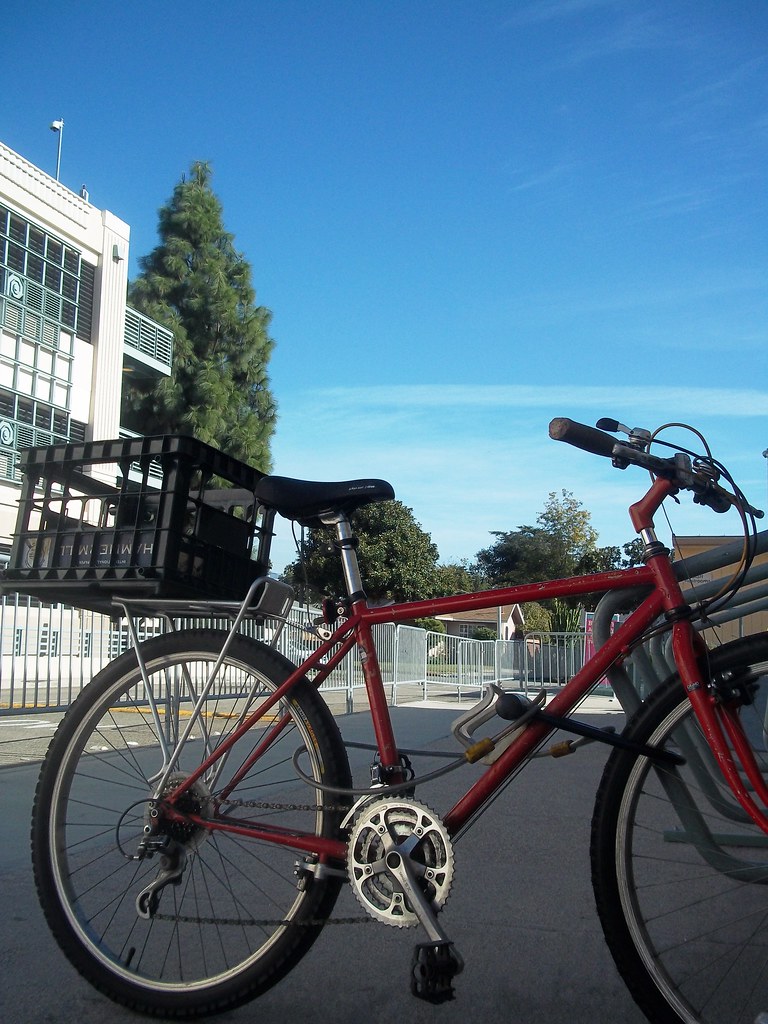
Obviously, I would keep my bicycle.  This is the first grown-up bike I have owned and we've been through so much together.  I took this beauty with me when I left for college, riding out what is now called The Links trail for some much-needed escape from the busy campus life at University of Nebraska at Kearney.  I rode to and from Arizona State University in Tempe as a graduate student and to University of California, Riverside along bike lanes and trolley routes.  I've taken this bike down to Newport Beach along the San Gabriel River Trail.  It's one of my core possessions that is almost as important to me as my heart.

I would keep a journal.  I've been writing in a journal since I was about 12 or 13.  I kept one all through high school.  I wrote periodically through college and started writing regularly again in graduate school.  Of course, I would try to keep something lightweight, but this is a deal-breaker, I would not undertake a journey of a lifetime without a hardcopy journal.  There's no need for electricity, but I would also need to being a pen or two to write, sketch, and think.

There are several water bottles that I've had over the years that I love.  On a long trip, I would have to bring at least one water bottle.  I like one that has writing on it that shows where you biked from.  I used to have one from Arizona but it got so old and weathered that it started leaking from the side.  The one I carry now is from California and I think that if I went on a long trip, I would like to keep that one or something like it.  Obviously the helmet is a necessity.  The things you have to bring are not as fun as the things you choose to bring, but can we just go ahead and include tools, pump, patch kit, spare tubes, and panniers as one thing?

I would need a tent.  And a sleeping bag.  Can we use our bicycle lights as a flashlight?  I don't think I would bring an entire camping stove.  I don't think I would bring lots of food either.  I saw the video below a while back and it really stuck with me.


I would definitely have to take some toiletries.  Does this mean I would need a small towel?  I gotta wash my face, hair, body and brush my teeth.  Also have to include sunscreen.  I guess I would also have to include some clothing so I'm not biking naked.  This means socks, bike shorts, jersey, jacket, sports bra, and shoes.  Possibly also a hat and sunglasses.

I'm sure I'm up to my 10 items.  What's on your list?

Friday, January 9, 2015

Planning

Some blogs pop into my mind fully formed, this one is like a landscape after a tornado.  I have so many thoughts in my head, some left over from last semester.  I want to write something about education.  Life is like a dark maze sometimes.  I imagine it is like some big, black plastic tube with many potential paths one could take.  Some tunnels lead to dead ends.  Maybe when it's all over, I'll finally emerge into the light (above ground).

Another topic I wanted to write about is nutrition, fitness, and wellness.  Or lack thereof.  Something about New Year's resolutions, cleaning house, getting organized, and setting forth goals.  These are all the things in my mind.  You know those items on your "to do" list that you never quite get to?  I was cleaning house this morning and found some "to do" lists from this time last year and I had never crossed off the item "take used lightbulbs to Home Depot for recycling."

During final exams, I usually dump all my thoughts on the reverse side of the seating chart.  It's kind of boring sitting there for 2 hours and gives me plenty of time to think, prioritize, and speculate.  One idea I had for a blog involved the question:

Is learning supposed to be fun?


From what I've read since then, many elementary (and preschool) teachers write about making learning fun.  It's not so popular in higher education.  One argument is that "fun" experiences are not as memorable as "painful" experiences.  I wonder how much psychology and neuroscience evidence is out there to support this hypothesis.  For a long time, I thought learning could and should be fun even at the college/university level.  For some reason, I'm getting over this thought.

I feel like I might be ready to be hated.  I feel like I might be ready to completely abandon the idea of being the pretty, young, nice professor.  I might try being the evil dragon-lady.  I always ask other teachers and coaches what they do to motivate their students.  If "fun" isn't a strong enough motivator for coming to class, and there's only so many ways to deduct points, how can we get students to stay engaged?  I tried a dialogue-with-extra-credit model and the attendance still dropped off in the last few weeks of the semester.

Maybe I'm feeling out-of-sorts because I never finished writing my end-of-course memos.  These are a summary for myself of what I tried, what worked, and what didn't work, in terms of student engagement and learning.  I haven't got my teaching evaluations back yet, which sometimes inform the content of these memos.  Last semester ran by quickly, and I got some thoughts down as the semester was ending, but I could definitely go back and revisit those.

I've had a couple teaching-related dreams lately.  There's the one where I show up to give an exam over material that we haven't covered yet.  There's another where I am trying to give an exam but I don't have enough copies.  So far, I have my syllabi nearly finished and the online content is almost ready to go, so I hope these teaching nightmares end soon.

Will I find balance this semester?


I have to admit that I put on weight over the past couple semesters.  In fact, I'm back at the weight that qualifies as "obese."  Last time I weighed this much, I put myself on an exercise regimen that led to a more healthy weight for me.  It took about a year of intense cycling.  My plan so far involves joining a gym near my house so that I can take yoga and zumba classes.  I also plan to bike to work every day (CAR FREE).  In addition, I want to bring and prepare food at school instead of eating food from the on-campus dining options.

In 2014, I applied for a full-time tenure-track teaching position in February and for a full-time tenure-track chemistry education teaching & research position in October.  Job applications on top of a teaching load got me pretty stressed out.  I wonder if another position will be open this year and whether or not the search for a full-time job will pan out for me.  I know I can be impatient when it comes to major life events and sometimes when I force things to go when I want them, it might not be the best thing for me or for my family.  All good things come to those who wait, right?

I waited for our finances to be in better shape before making some major technology purchases. First, we got new computers!
ASUS T100TAM-H2-GM
Second, we got a Go Pro camera!
GoPro HERO4 SILVER
I plan to use these in the classroom. I had to buy a HDMI Female to Micro HDMI Male in order to connect the new PC to the projector. We bought a "Handlebar / Seatpost / Pole Mount" for the camera in order to take it with us on bike rides.  I've played with the camera a bit so far, so I am somewhat confident that I can use it to collect video and photos of classroom activities.


Above is our commute including bike and train.  It's one of the first videos we have posted, with more to come I'm sure.  I know that 2015 will bring all kinds of adventures, some of which I can plan and many of which I'm not aware of yet.  If you haven't seen it, please check out our page at bikecar101.com and enter your information to show that you support having a dedicated bicycle car on every Metrolink train.  Besides being a better teacher, I see 2015 as a year full of opportunities to make commuting in Southern California more enjoyable for more people.

Friday, January 2, 2015

DV Packing List Revised 2015

Items to be added to this list include:

Fire tongs
Ax
Outdoor shower
Bar soap
Aluminum foil
Paper plates, paper bowls
Water reservoir(s)
Plastic containers (for night storage of food)
Camping chairs
Small ziploc bags
Laundry bag
Garbage bags & collapsable trash can
Skillet
Saucepan
Kettle
Cutlery (paring knife, spoon, fork)
Dish towel

Food to consider bringing next camping trip:

Oatmeal
Nuts / trailmix
Mac & cheese
Instant mashed potatoes
Stuffing
Mandarins
Bean & cheese burritos

Revisions to the packing list:

Sweatpants w/ pockets
LESS underwear

The best food item:

POWER NUGGETS!!!