Saturday, January 2, 2016

Cyclecamping or Cyclocamping?

Whatever you call it, traveling to a campsite by bike is wonderful!  Here's the ride report:

Add to the packing list:
13) Frisbee
14) Folding chairs for the fireside
15) Los Angeles & Orange County bike maps

Subtract from the packing list:
Fewer books/things to do
Maybe fewer socks

I brought a coloring book, colored pencils, belated holiday greeting cards (blank), a journal, and a bunch of pens.  The only thing I really wanted to do was use the colored pencils to make this drawing after sitting on the beach all day.

I loved watching the brown pelican (Pelecanus occidentalis) diving headfirst into the water to catch their meals. They also did a funny flapping of their wings on the water, it seemed like they were talking to each other that way. There was also some kind of duck or grebe that was smaller than the pelican which dove under each wave. Seagulls were abundant also, and there were crows around the camp.

We ended up taking an earlier train down to LA Union Station, to give us more time for our "layover."  That gave us time to have a cup of coffee and use the restroom, as well as let our dog walk around outside before the long OC line train ride.  The cost of the train was $25 for two adults.  Our monthly passes only got us as far as LA and we had to pay for the second leg of our journey.  There were officers with canine cops in training, and it was hard for the dogs not to distract each other.

We arrived in San Juan Capistrano and a very friendly man offered to ride us to the check-in for our campsite.  It was great to ride the TRABUCO CREEK and SAN JUAN CREEK TRAILS.  We were able to arrive at the camp without any vehicular cycling.  We passed a pack of dogs at Creekside Park and the trail was shared with walkers, joggers, cyclists, strollers, scooters, and leashed (and unleashed) dogs.  We arrived at the park so early (9:45am) we couldn't check in.  So we ate at Coffee Importers instead.

The original entrance to Donehy State Beach
After a slammin' breakfast bagel sandwich, we rode down towards Camino Capistrano on the Coast Highway Protected Trail. We could have gone a bit further to the San Clemente Metrolink station, but we decided to turn around and hang out at a day-use area on Park Lantern, just south of our campsite. The sun felt warm even though the temperature was in the mid-60s. We hung out there until just before 2pm, when we were allowed to check in to our campsite.

We setup our tent and got a sense of the campground.  We walked to the nearby AM-PM and the Carl's Jr to get snacks and dinner, respectively.  Since we were on foot, we didn't buy firewood there.  Around sunset, we looked for the camp host to get some firewood.  There were no hosts on site, so I rode back to the AM-PM to learn that they were out of firewood.  Luckily, the Albertson's on Del Obisbo was only 1.5 miles away.  I strapped two bundles of firewood to my rear rack and coasted downhill back to the campsite.
Pedestrian Bridge over Coast Hwy: A new entrance
The nights were cold.  Sleeping on the ground is uncomfortable.  I thought there was condensation on the inside of our tent when I woke up at sunrise.  Regardless, it made our house feel so comfortable when we got home.  It was nice sleeping in until the tent became a sauna.  We definitely didn't emerge until around 9am.  We walked up Goldern Lantern to the Coast Hwy, which had great views coming back down the hill.  It was nice to work up an appetite. 

Looking back towards the water
We had a great breakfast at Denny's.  I had the Lumberjack Slam, which was more food than I could finish and bottomless coffee!!!  It was so hearty, I wasn't hungry again until it was dark.  They were also cool with our dog, Edna Jo, hanging out on the patio.  We spent the mid-day and afternoon at the beach.  I brought some yoga sequences, which we practiced once our bellies had digested the brunch.  We returned to our campsite after the sun was telling us that night was falling.  I sketched the image in this post right at this point.

Mosaic on the Pedestrian Bridge
That night, we located the camp host and got three bundles of firewood.  At some point, we took showers.  We fed in a $10 bill and got a big handful of tokens.  Each token was 2 minutes.  I used 4 tokens for a great shower.  When you live in a tiny house, the campshower seems huge and luxurious.  On one side of us, there was no campers, but on the other side was a huge group of friendly, happy people.  It was great to share the space with such a positive bunch.

We walked to the Del Taco and got a Fiesta Pack.  There was outdoor seating and it was well-lit.  We ate burritos and tacos with our dog, Edna Jo.  We ate everything we could and then walked back for our our second fire.  

The great thing about our site was that it was a straight shot to the restroom.  I didn't hesitate to get up several times in the night to use the facilities.  They were clean, well-lit, and well-stocked with TP.  The RVs around us had motion-sensors on them which lit up when you walked by, which one might find annoying but I found it comforting.  

A word of caution: we were warned about a "homeless problem" so we locked our bicycles securely to our picnic table.  We also put all our gear inside the tent when we weren't around.  We did receive a visit from the sheriff (3 squad cars) that evening, but we never really got the details what was going on.  We speculated it was regarding non-paying visitors to the campground.

Beach access from our campground
The next morning, we realized that there were only two options for us to get back to LA.  One train was at 7am and the other was at 4pm.  We didn't wake up until after 7am so we planned to hang out and pack up by noon, when we were required to check out.  We went over to the McDonald's for a late breakfast, now that a limited breakfast menu is served all day.  That was the perfect fuel we needed to head back to San Juan Capistrano.

We let Edna Jo run around at the dog park for a bit.  Then we hung out at the Metrolink station.  It's right by the Mission and there are lots of boutiques and cafes.  It was a great spot for people watching.  We saw a wedding party and many people came over to pet Edna and chat the hours away.

San Juan Capistrano Amtrak/Metrolink Station
In conclusion, it was a great trip.  I would highly recommend cyclecamping at this site to anyone.

Monday, December 28, 2015

Doheny SB ~ Packing List

So, we're doing our first bicycle camping adventure!  It's not a full-on wilderness campsite, being just 1 mile away from the urban center named Dana Point, and less than 4 miles from Laguna Niguel, San Juan Capistrano, and San Clemente.  I wanted to write about what we plan to take in order not to over-pack.

1) tent
2) sleeping bags
3) yoga mat
4) cycling shoes
5) swimsuit?
6) long underwear
7) matches/lighter for starting fire
8) towels
9) camping lantern/headlamps
10) bike tools (pump, tire irons, patch kit, etc.)
11) reading materials (coloring book, colored pencils, journal, yoga poses)
12) hat/sunglasses/sunscreen

It's hard to bring many electronics that would need to be recharged.  Obviously we need to bring our Metrolink Monthly Passes.  Our plan is to take the Ventura County line train 104 (departs 7:37am from Glendale, arrives 7:50am at LA Union Station) and Orange County line train 600 (departs 8:00am from LA Union Station, arrives 9:23am into San Juan Capistrano).  After the train trip, we will ride 3.7 miles from the station down the San Juan Creek Trail to our campground.

Loaded with Christmas Cheer
We did a big Christmas ride loaded down with gifts to practice riding with loaded bikes.  It was a great way to explore the Pacific-Electric trail.

IE Metric Century: total ascent of 2600 ft 

It was also fun to ride Historic Route 66 through Glendora, San Dimas, La Verne, and Claremont.  We picked up the trail at Monte Vista Ave.  It ended at Cactus Ave where we dropped down to Rialto Ave, cruised by the Rialto Metrolink Station, and dropped into Riverside on Riverside Ave.  The journey took us 9 hours and we never stopped to have a sit-down meal.  We did use the restrooms at the Taco Bell (140 W Huntington Dr, Monrovia, CA 91016) which were clean!  That was about 17 miles into our trip (2 hours) and we got a burrito and a Dr. Pepper.


I definitely don't want to bring a camping chair strapped to my back to Doheny, we will have a picnic table for sitting.  There are areas to explore, well described here.  We have all day today to pack and get the house in order so we can come home in the new year to a clean tiny house.

Friday, December 18, 2015

2015 Year In Review

When the year is winding down, it's nice to do some retrospection.  For me, this gets quantitative.  I found some infographics that show how the average american family spends their income.


I periodically download all our bank transactions and create a graph comparing us to the average American family.  The way we managed to survive in 2010 was by keeping our transporation costs extremely low.  We shared one car that was paid off and maintained liability-only insurance.  Also, we almost never drove the car.  We rarely ate out and made most of our meals from scratch.  We spent next to nothing on clothing and appearances.  We didn't make any donations to charities.

HOS = HOUSING When we were living in two separate places (Riverside, CA and La Jolla, CA) we spent 48% of our meager income on rent!  Now even though we live in a relatively expensive area (Glendale, CA) in terms of housing (3.59 x the national average) we spend less than the average American on housing costs.  How, you may ask, do we achieve this miracle?  We live in a tiny house.  Our rent includes utilities.  We do pay extra for a storage unit off-site, but even accounting for that, 24% of our spending goes to housing.  I'm not sure how the Average American Family numbers were calculated but that means in 2010, we spent 28% of our income on housing.  Now, we spend 18% of our income on housing.  Turns out we spend almost EXACTLY the same amount on housing, but we're making more money.

TRA = TRANSPORTATION Now, we still spend less than the average American family on Transportation.  Even with keeping our bicycles running in top shape, paying insurance on one vehicle, making car payments, and driving the car periodically, we're spending less than the average family.  I guess it's easier for us since we don't have a large family (no kids).  Also, CSUN gives us a sweet discount on Metrolink monthly passes, which get us around on weekends for free!
FOA = FOOD (DINING OUT) Here's where we really suffer.  We eat on campus all the time and when we're home, we eat out and get delivery all the time.  Out of 1,317 total transactions, 52% of them were eating out!  We eat out 1.9 times per day!  An average "dining out" cost is $12.37.  Sometimes that's for 1 person and sometimes for 2 or more.  But mostly for 2 people.  This is literally eating up 9% of our income.
FOH = FOOD (DINING IN) Out of all transactions, 5% of them were going to the grocery store.  We go to the grocery store 5.4 times per month.  An average trip to the grocery store is $70.  I feel like this semester (FA15) I had more free time so I did more cooking, but certainly not as much as I did in 2010.  We were living very cheaply, shopping in bulk from Winco.


INS = INSURANCE We're spending about half what the average American family spends for insurance.  This is probably because we don't have to pay homeowners insurance and we only have one car.  Glendale, CA is considered the WORST city in California, where drivers pay 62% more than the average Californian for the same coverage.  If we lived somewhere else, and when we get the SmartCar paid off, this part of our expenditures will decrease.


OTH = OTHER I really have no idea what this spending is about.  I put all ATM withdrawls into this category because obviously we don't know where or to whom that money went.  Some goes to buy groceries at the Farmer's Market and some goes for tips to service professionals (our Massage Therapists for example).  Why this category takes up 19% of our spending, I couldn't say.  I put all our random travel expenses in this bracket.  Taking out identifiable fun trips and academic expenditures, 8.2% of our spending is still uncategorized.  I guess that's why it's good to put everything on plastic, so that you can look back at what they were.


HEA = HEALTHCARE We are blessed not to have had to worry much about this category.  I think next year we'll see a further reduction since dear husband has stopped his membership in a Martial Arts gym, and I've stopped my membership to Bella Fitness.  Not because these weren't good things, but because we weren't really using them and they were costing us $150 and $70 per month, respectively.  We're still getting our massages every month, and maybe we can put those other monthly things we won't be doing in the future into dentist, podiatrist, and women's health care visits.


ENT = ENTERTAINMENT This includes movies, plays, musicals, and Netflix.  I also put our phone and internet bills into this category.  It's only 4% of our income.  I guess we're doing well here.  Or should I say that we could spend more here.  I still want to go to the Aquarium of the Pacific down in Long Beach.  Also we discussed buying an Annual Zoo Pass for next year.


APP = APPAREL (or Appearance) This includes clothing, shoes, and haircuts.  We saved money in 2010 by doing homecuts.  We also didn't buy hardly any new clothes or shoes.  Now, we definitely spend more freely in this regard, although not lavishly.  I've purchased quite a few new shoes this year, and so has my husband.  I get new clothes almost every semester, due to wear and tear and the fact that I can't seem to maintain a constant weight.


DON = DONATIONS I put all the donations to various organizations into this category.  We've been fairly generous this year: our nephew's Surf team, The OC Marathon, RailPAC, Steel Wheels Conference, CalBike, Rail User's Network, Ride 2 Recovery, Cal Bike Summit, LACBC, The Climate Ride, and others.  Compared to the average American family, we could give a bit more.  In 2010, we didn't really have any money leftover to give to charity.


ACA = ACADEMIA I had to make a category especially for us.  Because being an academic has associated costs.  I'm sure other industries have business-related expenses, but this year we made it to two conferences and purchased various books and supplies directly to facilitate our learning.  We also renewed our memberships in professional societies, which again I'm sure other professionals do too, but I don't think there's an American Housewives Network that has dues of $100 per year.

You may be wondering: are you really that nerdy that you enjoy looking at your personal financial data and posting a blog about it?  The answer is: yes, I am that nerdy.  But also, we've been giving some serious consideration to getting into the real estate game.  We're trying to pinch every penny and sock it away to use as a down payment.  The funny thing is, we calculated this weekend that for homes in our area, we'd have to gather $80,000-$100,000 before getting the process going.  We have saved nowhere near that amount.  So this analysis may lead me to discover where we can save and redirect that part of our income to savings instead of spending it.

P.S. I did the drawings myself.  I think I'm suffering from whiteboard withdrawls.

References

Source: NY Times Feb 10, 2008  Accessed: June 10, 2010
http://www.nytimes.com/imagepages/2008/02/10/opinion/10op.graphic.ready.html

Accessed: December 14, 2015
http://www.creditloan.com/blog/how-the-average-us-consumer-spends-their-paycheck/

http://www.scpr.org/blogs/economy/2014/03/11/16046/report-glendale-has-the-highest-car-insurance-in-c/

Monday, December 14, 2015

Zion ~ Hiking Report

Our trip to Zion NP was awesome!  Below is a photo of the items that were necessary for the trip.

Camelback Daytrekker Hiking Backback + 2L hydration reservoir
Sunglasses, case and cleaning cloth
Swimsuit
1L drinking bottle
Heavy winter coat, hat, scarf, gloves
Heavy sweater, fleece pullover
Performance (thin) socks, 2 pairs
Ski (thick) socks, 2 pairs
Heat holder socks, 1 pair
Performance (thin) long-sleeved shirt
Long underwear, tops and bottoms
Hiking pants, tights, yoga pants
Tank top with shelf bra
PJs, sweatshirt and sweatpants
Windbreaker jacket
Clif bars, 3
Sunscreen, toothpaste, lotion, facewash, toothbrush, SPF chapstick, comb
Camera, extra battery, battery charger
Cell phone, charger
Things packed that were actually used
Hike #1: Angel's Landing  NPS Description:  (4 hours) 5.4 mi Round Trip, 1488 ft Elevation Change.  Long drop-offs. Not for young children or anyone fearful of heights. Last section is a route along a steep, narrow ridge to the summit.

Angel's Landing
From the picture here, it's difficult to see the people.  Maybe if you zoom in a lot.  This hike was a steep climb.  Someone else posted the hike on MapMyFitness and the grade was 15-20% for a significant portion of the hike.  It is an out-and-back with lots of switchbacks.  There's no way to get lost on this popular trail, in fact we ran into some old friends on our way down.

For this hike, we brought some muffins and grapes to eat at the turnaround point.  We didn't go on the part of the hike that required holding onto a chain.  We instead enjoyed the sunny vista-cum-picnic area just before the chain part started.  It was great to relax and rest our knees before heading back to the FREE park shuttle.

Hike #2: Lower Emerald Pool Trail - Kayenta Trail - The Grotto Trail  NPS Description: (Lower Emerald Pool) Minor drop-offs. Paved trail leads to the Lower Emerald Pool and waterfalls. Connects to the Kayenta and Upper Emerald Pool Trails.  (Kayenta) Moderate drop-offs. An unpaved climb to the Emerald Pools. Connects The Grotto to the Emerald Pools Trails.  (The Grotto) The trail connects the Zion Lodge to The Grotto. Can be combined with the Lower Emerald Pool and Kayenta Trails to create a 2.5-mile loop.

Emerald Pools
I have no idea which parts of these trails we hiked, but we spent the afternoon out there.  I think we started and ended at the Zion Lodge because we got a To-Go coffee there between Hike #1 and Hike #2.  As you can imagine, we were pooped after two big hikes in one day.  Also, someone slipped on the ice near the waterfalls and that was difficult to watch.

Zion NP is not a great place for those who have a fear of heights.  Although, there are some trails with less elevation change than others.  We stopped at the Emerald Pools to take some photos, which are some of my favorites from the whole trip.  The juxtaposition of desert and running water was so stunning.  There were also some areas along that hike that opened up into green meadows.  I loved the "weeping rocks" where water flowed through the porous sandstone, supporting ferns and other plants you wouldn't normally find in a desert environment.

Hike #3: The Narrows via Riverside Walk  NPS Description: (8 hours) 9.4 mi Round Trip, 334 ft Elevation Change.  Read page 5 of the park newspaper and check conditions at the visitor center before attempting. High water levels can prevent access to The Narrows.

The Narrows
I don't think we hiked the entire length of the Narrows but we may have reached "Wall Street."  We rented drysuits from Zion Adventure Company. This $53 package includes a short orientation video, drysuit, canyoneering shoes, neoprene socks, and a walking stick.  I was scared before we actually got into the water: scared of the cold, scared of the rocks, scared of the current.  But none of these fears were ever realized.  From the moment I started walking in the water, I realized the neoprene socks were very insulating and the suit was completely water-tight.  The only downside was that it was difficult to disrobe to relieve oneself.  We also ate some grapes on this hike and some powerbars.
We stayed at the Cliffrose Lodge.  We used the pool and jacuzzi every night.  They have a fantastic continental breakfast.  The lodge is within walking distance to the park entrance.  There's a movie theater and Zion Canyon Brew Pub (where we ate after Hikes #1 and 2).  We ate at Wildcat Willie's after Hike #3.  Overall, it was a magical trip!

The elevation of Springdale, UT is 3,900 feet so a bit of low oxygen training would be useful.  Glendale, CA where we live is 522 ft.  The most useful thing we bought at Canyon Market was bottled water.  We reused the 1 Liter bottles continuously to stay hydrated on and off the trails.  Our souvenirs of this trip were a couple of postcards and EO Handsoap in French Lavender, which was in our rooms at Cliffrose Lodge.  The handsoap is available for purchase at the Lodge's giftshop.

Thursday, November 26, 2015

the obesity paradox

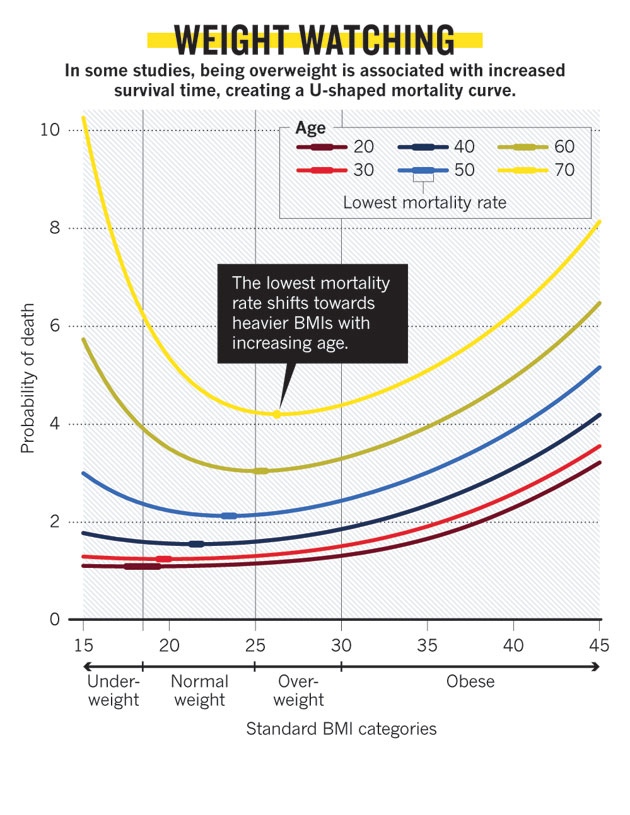
The irony is that as a scientist, I heard it first on NPR.  I was taking a trip to our storage unit to get out some winter coats, sweaters, gloves, and hats and Wait Wait Don't Tell Me came on.  They were cracking jokes, as usual, and cited a study that DIDN'T link obesity with early mortality.  In fact, this phenomenon has a name, "the obesity paradox" and it isn't a totally new idea.

I couldn't tell you the countless minutes of each day I spend telling myself, "we shouldn't be letting ourselves get this fat" and then eating a few more pieces of halloween candy.  The guilt and shame of being overweight is momentous due to society's expectations of beauty.  Add to that a generous helping of medical studies that link obesity to decreased life expectancy, and you get a recipe for body image demons.

I read a great book many years back called "Learning Curves" which attempted to reprogram one's thinking about self and food.  But I think the ultimate goal of the book was to get an overweight or obese person to lose weight and achieve that "Normal" weight status.  The scientific data shows that as a person ages, being in the "Normal" weight bracket isn't necessarily going to extend one's lifespan.  In fact, those who are carrying extra weight in their 60s and 70s have a boost in life expectancy compared with their peers.

And, this may sound horrible, but for me in my 30s or my husband in his 40s the probability of death is not even doubled by having a BMI of 35 (or 32, respectively).  I guess one wouldn't want to knowingly engage in behaviors that would knowingly double one's risk for death, but we do dangerous things all the time.  I don't know what it is that makes my weight go up and down, it's complicated.  I've tried using electronic devices, tracking calories, beating my body into submission to get into that "Normal" bracket.  Unfortunately, happiness is more difficult to quantify.

At least knowing about this obesity paradox is going to help me relax and ease off the self-deprication (the silent soundtrack in my mind) this Thanksgiving.  I'm going to be grateful for the health I do have and enjoy the body as is.  We're heading to Zion National Park for some hiking this weekend and I have no doubt my body will perform.  Maybe the extra fat will come in handy with the winter weather we're having right now.


https://en.wikipedia.org/wiki/Obesity_paradox

http://www.independent.co.uk/life-style/health-and-families/features/why-being-overweight-means-you-live-longer-the-way-scientists-twist-the-facts-10158229.html

http://jama.jamanetwork.com/article.aspx?articleID=1555137&%E2%80%9D

http://www.nature.com/news/the-big-fat-truth-1.13039

http://www.npr.org/2015/11/21/456922659/whos-bill-this-time

Wednesday, November 18, 2015

Edit this

“Editing is the very edge of your knowledge forced to grow--a test you can't cheat on.”
S. Kelley Harrell

I've been up to so much since my last post, and the more time that passes makes it more impossible to summarize everything I've learned in one post.  But procrastination is the enemy of productivity and I may have to go on a ramble to get caught up with myself.

November almost didn't exist.  I was so focused on the activities of October.  National Chemistry Week (Oct 18-24, 2015), for example.  We went to San Diego Miramar College.

"Chemistry Colors Our World"
I still need to do a write-up of all the hands-on activities visitors to our booth were invited to interact with.  Many of the items involved recycled materials, we really kept our costs down this year.

After the ChemExpo, we headed to Downtown San Diego for the bike summit (Oct 25-28), which I did summarize in a previous post.  What I didn't discuss was my play-day in the bay.

"Cat" Niki de Saint Phalle (1999) 
I have always loved the Niki de Saint Phalle's work and it was a real treat to walk along the bay with my dog, Edna.  I had an idea to walk to Cabrillo National Monument, which I didn't quite make.  I got as far as the USS Recruit and hopped on a BikeShare bicycle to ride back to where I started.

After that, it was time to prepare for the American Chemical Society Western Regional Meeting (Nov 6-7, 2015) in San Marcos.  It was a real treat to visit another CSU campus.  I saw a handful of friends, old and new, and it was a good retreat from the everyday teaching life.

Mission San Juan Capistrano
After the meeting ended, I drove up the coast to Dana Point.  While waiting for the check-in time for my hotel across from Doheny State Beach, I visited the Mission San Juan Capistrano.  It was gorgeous!  I had made it a goal to see the California missions in a previous post.

It looks like camping at Doheny State Beach costs $35/night for up to 8 people, 2 vehicles.  The campsites are right on the beach.

Pedestrian Overpass (33.458311, -117.672942)
There are restrooms and showers and a place to get firewood.  This is definitely something to consider for a bicycle camping adventure.  There's a Ralph's grocery store in Dana Point.

I wanted to start this post off with a quote about "editing" because I feel like that's what my life needs right now.  There are so many opportunities to "say yes" to various activities.  Just like with one's wardrobe, it can be tempting to put on every neckalace, bracelet, watch, ring, and pair of earrings but good outfits need editing.  The same is true with writing.  The same is true with life.  I feel like my New Year's resolution this year will involve editing.  Learning how and when to "say no" to various activities will prevent me from feeling overcommitted and exhausted.

Monday, November 2, 2015

CalBikeSummit

Breakfast Plenary Session

Tony Dang, California Walks
Michele Hasson, Counsel for Justice & Accountability
Chanell Fletcher, Safe Routes to Shool National Parternship
Estuardo David Mazarigos, TRUST South LA

TD: We have to remove the financial strings attached to getting involved in advocacy
Case in point: I had to pay $200 for a one-day attendee registration fee!

MH: There's no data to use in proposals b/c safety issues are not accurately reported

Lead Organizer Estuardo Marzariegos
TD: Walking plans are in place for only 50% of communities, plans should be community-driven rather than consultant-driven.  Residents should define where they want to go.

EDM: Create a community that can stand up for itself.  Host bike rides.  Survey at the street level.  Recruiting people in this way will empower them.  Collect their stories.
Hold press conferences.  Visit Councilmember's offices.  Make inequity clear.
Out of 123 surveys, 38% of people have been in accidents, 67% use a bicycle as a primary form of transportation.  Collecting the voices of constituents (mothers, workers) has been convincing.

CF: Complete streets need reporting; climate health, equity.  If the project doesn't collect data the funding will be pulled.  The new idea of "Low Carbon Roads."

MH: When a continuing dialogue is ongoing with politicial leaders, it's easier to push when the time is right.  Continuing education at every interaction.

~~~~~~~~~~~~~~~~~~~~~~~~~~~~~~~~~~~~~~~~~~~~~~~~~

Best Marketing & Promotion Practices

Cory Wilkerson, City of Santa Ana
Ryan Johnson, Alta Planning + Design
Nathan Wheadon, Orange County Transportation Authority

CW: $150,000 grant for direct education (school assemblys, bike rodeos), marketing & design

RJ: Community surveys conducted including key stakeholders (police, engingeering & public works, city staff, Spanish language translators)
8 month funding cycle, which took 3-4 months to secure contracts
Survey results were translated into word clouds (Wordle): the prompt was
"How would you describe Santa Ana in 1 word if it were a person?"
Goals of the image campaign: not graphically violent, not humorous b/c humor can be lost in translation, more simplistic/positive/uplifting, the expectation is "Travel Safely"
How a single person in a single day can be all 3: pedestrian, cyclist, driver

Outcomes: 12 bus stop posters (3 months, $17,000)
36 pole banners placed in areas of high bike-ped collisions
Printed brochures, safety sheet, webpage http://www.ci.santa-ana.ca.us/bike/
jenny@graphikdeziner.com
18 school assemblies during April/May
"Safe Moves" coordinated the bike rodeos
10 new League-Certified Instructors were inducted in an LCI seminar
1000 helmets were distributed

NW: A SWOT analysis is a way to begin a project, decide what/when to say something, choose a relevant/topical message, the audience is educating drivers
The best teachers use humor, voices, antics! If you can come up with a campaign and get the support of the more conservative board members, then it may eventually be approved.
Next campaign [B]right... be safe, be seen.

The video should be less than 60 seconds, educational, entertaining, positive, funny/creative.
The video should NOT be inspiring fear or victim-blaming.
The video can be distributed using social media (digital), at events (face-to-face), through email marketing, through print media (magazines, local newspapers) through a formal press release, and through your own network of contacts (city staff and bike advocates) ask them to share it!

It takes 2 months from the concept for a video to a publicly posted video, 2 weeks of filming
5 videos were made at a cost of $20,000

~~~~~~~~~~~~~~~~~~~~~~~~~~~~~~~~~~~~~~~~~~~~~~~~~

On the Cutting Edge of Quantifying the Public Health Benefits of Bicycling

Dan Gallagher, San Diego Association of Governments
Sherry Ryan, San Diego State University
David Flores, Casa Familiar
Peter Jacobsen, Public Health Consultant
Sean Co, Toole Design Group
Carla Blackmar, Public Health Alliance of Southern California

DG: The built environment effects community behaviors, correlations between the geographical environment and health factors were calculated and used to prioritize infractructure projects
Active Transportation (trails, parks, sidewalks), Injury Prevention, Nutrition, Air Quality
all granular data fed into the model... Compared San Ysidro versus all San Diego County
Partial Correlations Analysis used to determine which factors had the most impact on health
http://sandag.maps.arcgis.com/apps/MapJournal/?appid=fc149b3233eb48e796dd8e40d7e6eac4

SR: the percent difference between San Ysidro versus San Diego city was used to identify ramps and lighting, landscaping, traffic calming, new parks, wayfinding, crosswalks, bike lanes that could improve the health of San Ysidro
http://www.sandag.org/uploads/publicationid/publicationid_1933_18945.pdf
DF: promotoras are community leaders of health that volunteer to boost community awareness
they receive in exchange for their leadership training in first aid, zumba, which builds their skills.

PJ: He was a contributor to the Bike Plan for the City of Pasadena and noticed that the amount of cyclists in a city actually decreased the risk of injury (collisions b/w cars and cyclists)
If you double the # of cars, you double the # of collisions b/w cars but the same is not true for cyclists/pedestrians "Safety in Numbers"
The reasons for this are twofold 1) physiology 2) psychology
Physiologically we evolved to understand a 15 mph pace, beyond that our minds simplfy situations and ignore some of what is going on.  This is a learned behavior
Psychologically, rare events are hard to detect.  When there are fewer cyclists, drivers simply don't recognize them or "see" them.  If cyclists are commonplace, they're easier for drivers to "see"
Driver education alone is insufficient/unsuccessful, it's better to encorage more people to bike/walk

SC: Montlhy pass riders in Washington DC choose to take BikeShare instead of walking (35%) or taking public transportation (45%), but ~13% of them would have otherwise taken a car or taxi.
The motivation was for time savings (73%) and exercise (41%) even though 23% admit the BikeShare is more costly than other means of transportation.

CB: Public health benefits are important to measure and will be required as a part of future proposals for funding.  Active Transportation has a greater impact on quality of life benefits when compared with "Low Carbon Driving"  Water infrastructure should be a part of complete streets plans

Active transportation accounted for a 7% reduction in depression and 5% decrease in breast/colon concer, a 13% reduction in cardiovascular disease and diabetes, a 9% reduction in dementia

~~~~~~~~~~~~~~~~~~~~~~~~~~~~~~~~~~~~~~~~~~~~~~~~~

Modeling Benefits & Costs for Equity & Connectivity

Sherry Ryan, San Diego State University
Laura Cohen, Rails-to-Trails Conservancy
Michael Jones, Alta Planning + Design
Eric Anderson, City of Berkeley
Brett Hondorp, Alta Planning + Design

We rode past this counter on Wed 10/25/15
SR: $300,000 investment to monitor 37 sites in San Diego County
24 bike-only counters (in street) Class II, III bike infrastructure
9 bike/ped counters for Class I bike infrastructure
4 ped-only counters (sidewalks, urban)
Goal: track trends over time as the bike network was built out

SR: when a buffered bike lane opened, the # of cyclists per month jumped from 1000-1500 to 1800-3000 per month, which is roughly double.  On a scatterplot this data looks awesome.
New "rules of thumb" found that 16.5% of cycling activity occurs between 4-6 pm regardless of whether the counts were done in San Diego or Maricopa counties
http://www.eco-public.com/ParcPublic/?id=681 is the link to live count data
Class I bike paths were more used on weekends, whereas Class II and III were used on weekdays

LC: Trail Modeling and Assessment (T-MAP) tool
3 year $1,200,000 effort to collect data, model the data, and disseminate the info to the public
"Trail Score" likened to Walkability score.  The question is "What % of the population can get to a majority of their destinations using a low-stress route?"  The goal is that by 2020, 90% of Americans will live within 3 miles of a trail system

MJ: National Bike & Pedestrian Documentation (NBPD) recommendations stipulate that if you do a bike/ped count only once per year that it happens on the 2nd week of September.  You may consider 4th of July the peak and try to count on both weekday and weekend.
Rather than choosing random placement of counters, consider relevant places within your transportation network. http://bikepeddocumentation.org/
Key Findings: 76% of walking trips and 29% of biking trips are for work or essential activities
70% of respondants biked once per week

MJ: Alta Benefits Cost Model (ABC) takes into account reduction in greenhouse gases
Property values (of real estate) increased $2,200,000 within 500 ft of bike/ped projects


BH: Strong & Fearless = will ride no matter what; Enthusiastic & Confident = need bikeways; Interested but Concerned = the majority of people; No Way, No How = won't ride anyway
To reach all people there was a random sampling by zip code and a door-to-door survey on a tablet showing streets in their community with either: no markings, sharrows, bike lanes
The streets shown in the mock-ups were residential all the way to arterial streets
A segregated cycletrack was preferred and least desirable was a 4-lane arterial with fast traffic

Note: this graphic was re-created in Google Sheets based on percentages presented in the session

~~~~~~~~~~~~~~~~~~~~~~~~~~~~~~~~~~~~~~~~~~~~~~~~~

Coronado Bike Tour

Mariah VanZerr, City of Coronado Transportation Planner
John Holloway, KTU+A Planning + Landscape Architecture

Met some good people on this outing!


If you ride from Los Angeles to San Diego, it can be done in 2 days, camp at Doheny!