Showing posts with label San Diego. Show all posts

Tuesday, October 1, 2024

Bigger and Smaller Races

I have to admit, the number of runners in the Santa Monica Classic freaked me out. It was so crowded I almost had a panic attack right before the race started. It got me thinking about how many runners registered or finished each of the races I've already done and the races I have upcoming.

An example of a smaller race is the Corona del Mar Scenic 5k, which has a very hometown feel. The starting line is a simple balloon arch. There are no fireworks.
  • CdM Scenic 5k = 1,010
    • Men's - 601
    • Women's - 409
A few others with a hometown feel I used to do that I really liked were
  • Glendale Downtown Dash 5k = 1,033
  • Riverside Raincross 5k = 591
  • A Run Through Redlands Half = 476
    • 10k - 802
    • 5k - 1,731
Getting into larger races, you have the three events leading up to the LA Marathon. Together these events make up the Triple 5k Tour of LA / Conquer LA Challenge.
  • Santa Monica Classic 5k/10k - 2415 + 3046 = 5,461 (race is in September)
  • Rose Bowl Half = 9,207 (race is in January)
    • 5k - 1,632
  • LA Marathon = 20,475 (race is in March)
    • LA Big 5k - 6,545
Students Run LA is a program for students in public schools to train alongside their teachers to run the LA Marathon. The Holiday Half Marathon is part of their race schedule.
Run Riverside County Challenge
  • Mission Inn Run = 3,950 (race is in October)
    • 5k - 2040
    • 10k - 1091
    • Half - 819
  • Citrus Heritage Run Half = 516 (race is in January)
    • 10k - 492
    • 5k - 805
  • Palm Desert Half = 541 (race is in February)
    • 5k - 599
Thinking of other glamorous events that I may want to do in the future:
  • La Jolla Half Marathon = 3,568 (race is in May)
    • Starts at the Del Mar Fairgrounds - Finishes at La Jolla Cove and this has been on my radar since 2013
  • Run Malibu Half = 2,763 (race is in November)
    • 5k - 1,509
  • Mountains 2 Beach Marathon = 1,689 (race is in April) in Ventura
    • Half = 1,544
    • 10k = 192
    • 5k = 174
  • Ventura Marathon = 977 (race is in February)
    • Half = 1,691
  • Malibu Moves (race is in October)
  • Seaside Marathon (race is in May) in Ventura
    • 12th annual will be in 2025
  • Valencia Half Marathon (race is in June)
  • Pride of the Valley 5K (run is in August) in Baldwin Park
    • 29th Annual was in 2024
  • Mardi Gras Madness 5K/10K in Valencia (run is in February 2025)
    • 15th annual will be 2025
  • Chinatown Firecracker 5k/10k (race is in February)
    • 47th annual in 2025
  • Hope the Mission - Drumstick Dash LA (race is on Thanksgiving)
I'll make a special category for trail races, which I think are great for some people but maybe not for me unless someone special talked me into doing it.
  • Red Rock Rumble (trail race in June)
  • Chesebro Half Marathon in Thousand Oaks (trail race in April)
  • Catalina Island Half Marathon & 10k (trail race is in November)
  • Moorpark Mammoth Run (trail race is in October)
    • 11th Annual in 2024
  • Verdugo Mountains 10k (race is in May)
  • Griffith Park Trail Marathon Relay (race is in June)
SoCal Triple Crown is a race series in San Diego. I've been wanting to get back down to San Diego and I asked my mother-in-law for recommendations and she suggested the San Diego Half but I'm not sure which one of these she was referring to. She said it was a point-to-point run where you start at Point Loma (a high elevation) and you finish at Balboa Park (a low elevation). 
  • GOVX San Diego Half Marathon = 3,355 (race is in March)
  • America's Finest City Half Marathon = 3,631 (race is in August)
    • This has been on my wish list since 2012
  • Carlsbad Marathon = 997 (race is in January)
    • Half = 3,411
    • 5k = 1,166
    • Double Down Challenge is 5k + half (16.2 miles)
Beach Cities Challenge is a race series in Orange County which my nephew recently mentioned that he would like to complete. I've done the OC Half but not any of the other ones.
  • Surf City Marathon = 1,544 (race is in February)
    • Half = 8,341
    • 5k = 3,587
  • OC Marathon = 2,916 (race is in May)
    • Half = 9,589
  • Long Beach Marathon = 2,511 (race is in October)
Then you have runDisney races, which are just on a whole other level. We don't have the Tinkerbell Half marathon weekend (which was a women's empowerment event) anymore but we do have two race weekends here in SoCal now.
  • Disneyland Halloween Half Marathon = 11,162 (race is in September)
    • 10k = 7,802
  • Disneyland Half Marathon = 11,186 (race is in January/February)
    • 10k = 6,601

Saturday, May 6, 2017

23 Reasons Why You Need a Milk Crate on Your Bicycle

If you've never had a milk crate on your bike rack, you are missing out on one of the most versatile ways to haul a diverse array of items.  I will present some of the most compelling reasons here. Invest in yourself to celebrate Bike Month and consider adding a milk crate to your commuting setup.  It's more affordable than a set of the cheapest panniers.

You can find a milk crate in the office supply store, hardware store, or superstore in the home organization section.  Or better yet, find one in the trash to upcycle.  I've had 3 different milk crates on bikes in my life (in the past 20 years).  Sometimes people attempt to steal or vandalize your milk crate, and sometimes the plastic just wears out.  Mount it securely to your rack with nuts & bolts. Carry an adjustable wrench and screwdriver to tighten the mounting hardware if it gets loose.

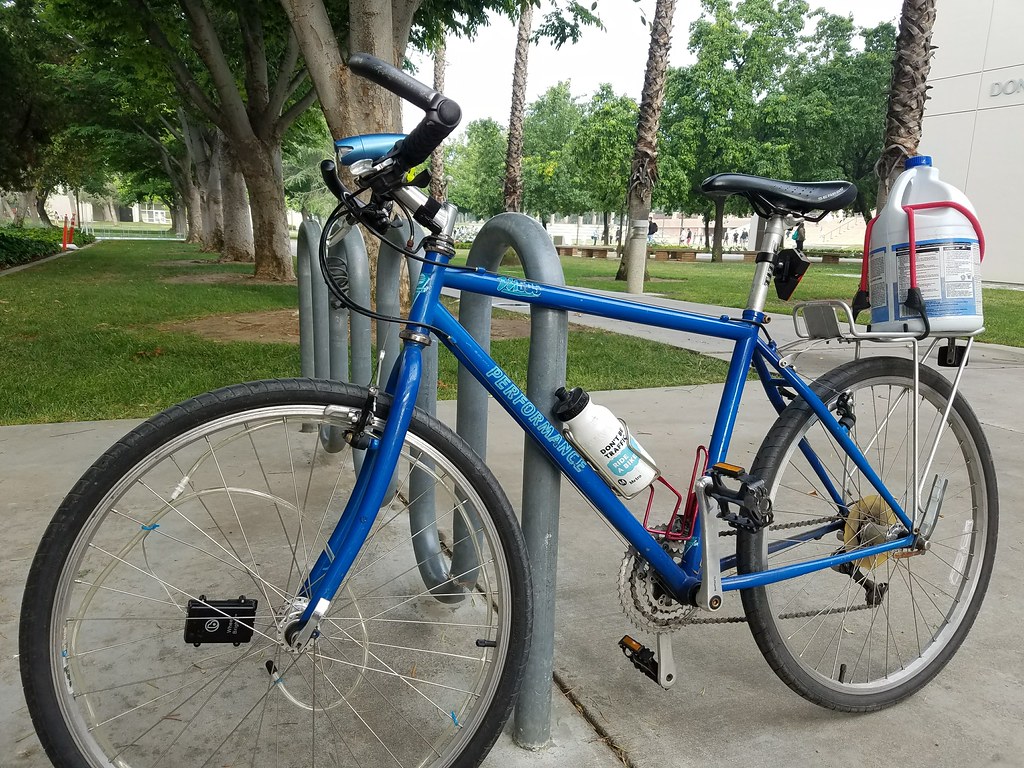
1. Hazardous Materials - Pictured here is a jug of bleach bungeed onto my rear rack.  It would have been safer in a milk crate.  I could see this would also be a safer way to transport paint.  Anything you wouldn't want to spill or explode in a pannier.  A milk crate can be easily detached and rinsed out in the event of a leak.  If the milk crate gets ruined, you can buy another for less than $10.  

May 5, 2017

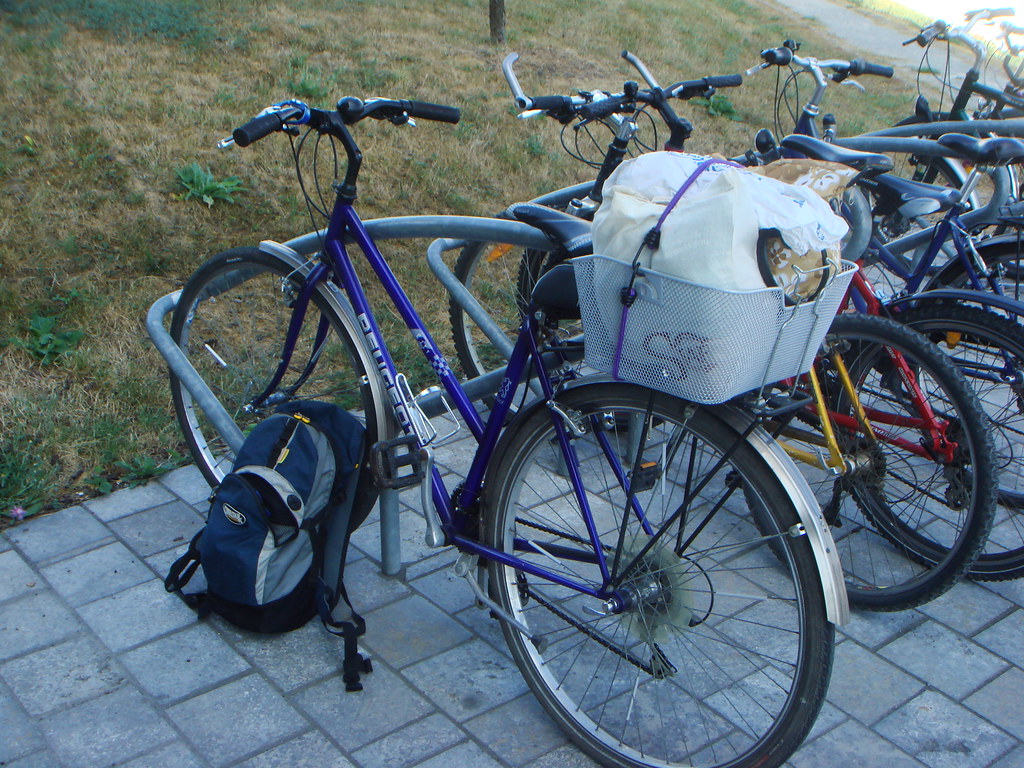
2. Bags - Pictured here is my typical backpack (containing a computer) and a dog-hiking saddlebag turned into a bicycle toolbag.  The milk crate offers various positions for your bungee hooks, so it's easy to keep everything tight and secure.  You can put all shapes and sizes of bags into the milk crate, make an 'x' of bungees across the top and go!  

November 18, 2010

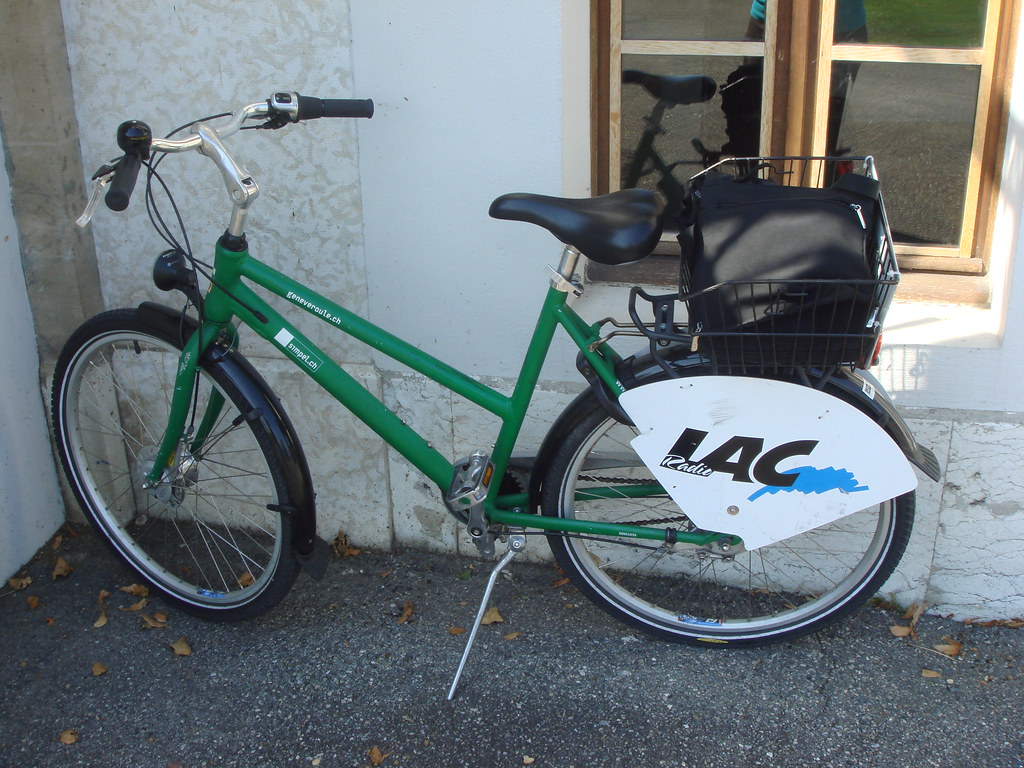
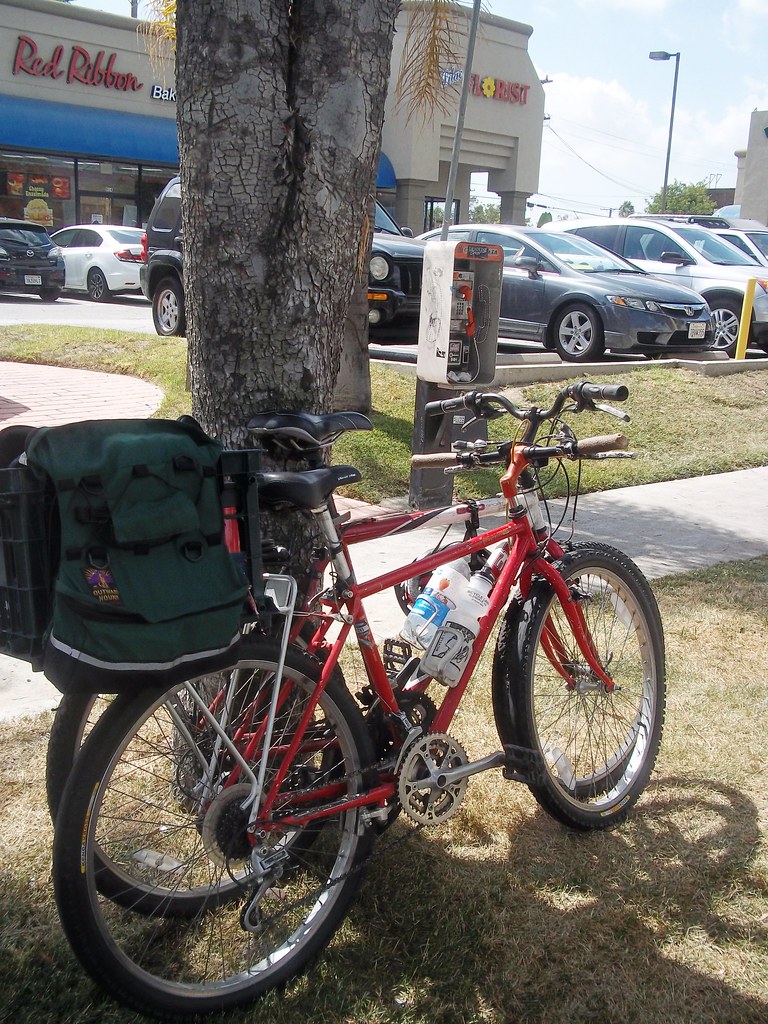
3. Water - If you don't have a water bottle cage, a milk crate is a great place to store your water.  This was a bikeshare bike that I rode from Geneva, Switzerland to Evian, France

September 14, 2007

4. Cakes - I transported numerous cakes from my house to school in an upside-down Tupperware container (so the lid supports the bottom of the cake).  You wouldn't put that in a pannier, since it could tip over, but a milk crate is perfectly level.

July 31, 2008

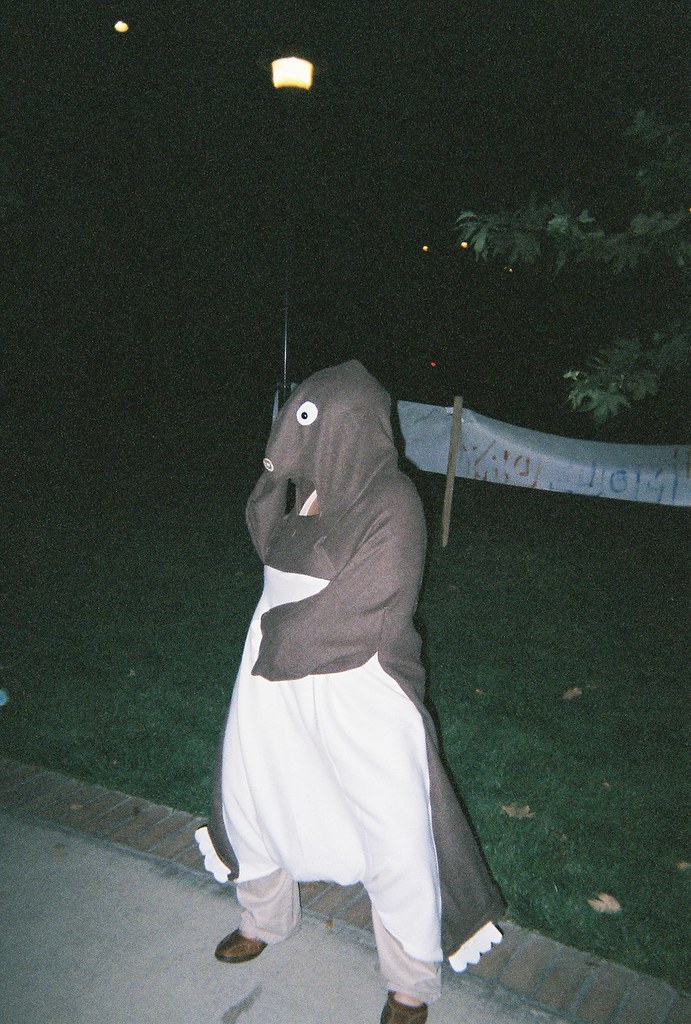
5. Costumes - This is a mole costume which requires a bicycle helmet under the 'hood' part of the head.  Celebrating 'mole day' is a thing chemists do periodically.  It's really fun to arrive at a party with your costume (and several cases of beer) in a milk crate.

October 23, 2008

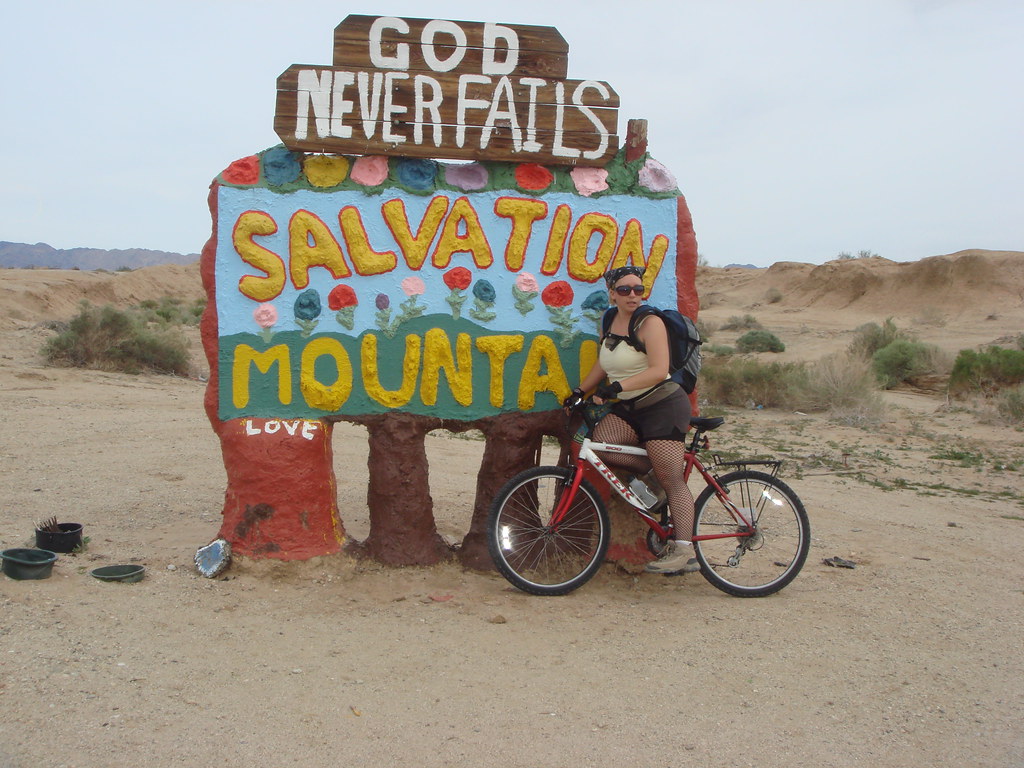
6. Rocks - If you're into geology, a milk crate is a great way to bring back rock samples.  You wouldn't want them weighing you down in a backpack.  And you also wouldn't want them to get your bags dirty.

February 15, 2009

7. Plants - Maybe you're not into inorganic (rocks) but you're more of a biologist... it's really awesome to transport plants in a milk crate.  Here, I'm showing a flat of Arabidopsis on my rear rack but it would really have been better to have the plants in a milk crate in case the bike tilted left or right too far.

September 15, 2009

8. Ice Cream - The last thing you want is melted ice cream in your saddlebag.  It's much better to have an insulated bag in your milk crate, then pedal at top speed to get that frozen treat home before it melts.  In Germany, I did all my shopping by bicycle.  I would buy frozen fish fillets regularly.

December 29, 2009


9. Locks - it's no problem to bring your U-Locks if you can toss them into your milk crate.  That way you can secure your bikes while you enjoy your destination.

January 1, 2010

10. Maps - There's nothing less safe than looking like a tourist.  Some people go around on bicycle tours with a cue-sheet, remarking on ooh! and aah! and ooh-la-la!  When I'm in a foreign country, I try to blend in as much as possible.  Keeping the maps on the down-low and only discreetly peeking at them to plan your next segment on a trip to the restroom (in full privacy) ensures that you don't become a target of pickpockets.  In Italy, I stayed at several hostels and heard horror stories of travelers who had lost money, passports, phones, and other important travel documents.  If you keep your maps in a milk crate, you'll think twice before pulling them out in public.

June 26, 2010

11. Take-Out - Imagine hot liquids, such as Phở or Sweet-and-Sour Pork. You wouldn't want to risk that spilling in your saddlebags!  A milk crate is the perfect way to pick-up your to-go foods.

July 19, 2010

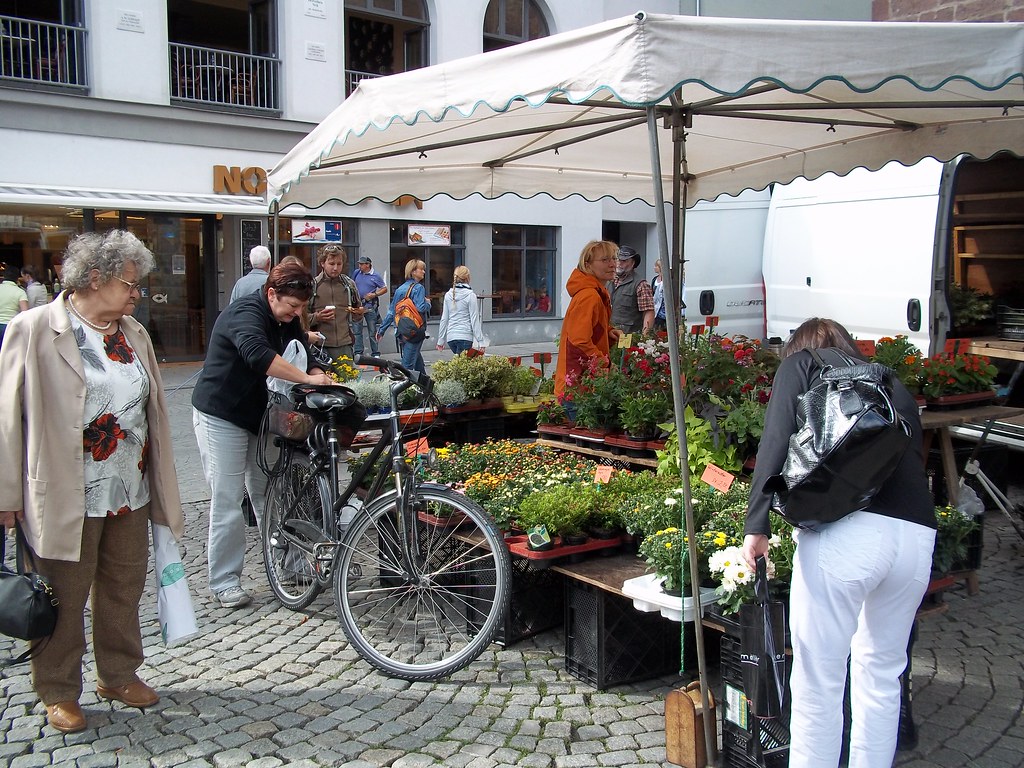
12. Farmer's Market - Because the seasons change, you never know what you'll find at the Farmer's Market.  It's so much safer to transport items such as plums and tomatoes in a milk crate because if they're ripe, the skin can break, releasing sticky sweet juices that could be hard to get out of your panniers.  I like how there are all ages of people in this photo.  It's not only for the young and fit to use a bicycle as a primary means of transportation.

August 28, 2010

13. Workout Gear - Imagine sweaty socks, ballet slippers, swimsuits, wetsuits, anything that would stink up your panniers or carry a good amount of sand and surf.  Those items lend themselves perfectly to a milk crate on the back of your bicycle.  You could also bungee your yoga mat directly to the milk crate.

May 27, 2011


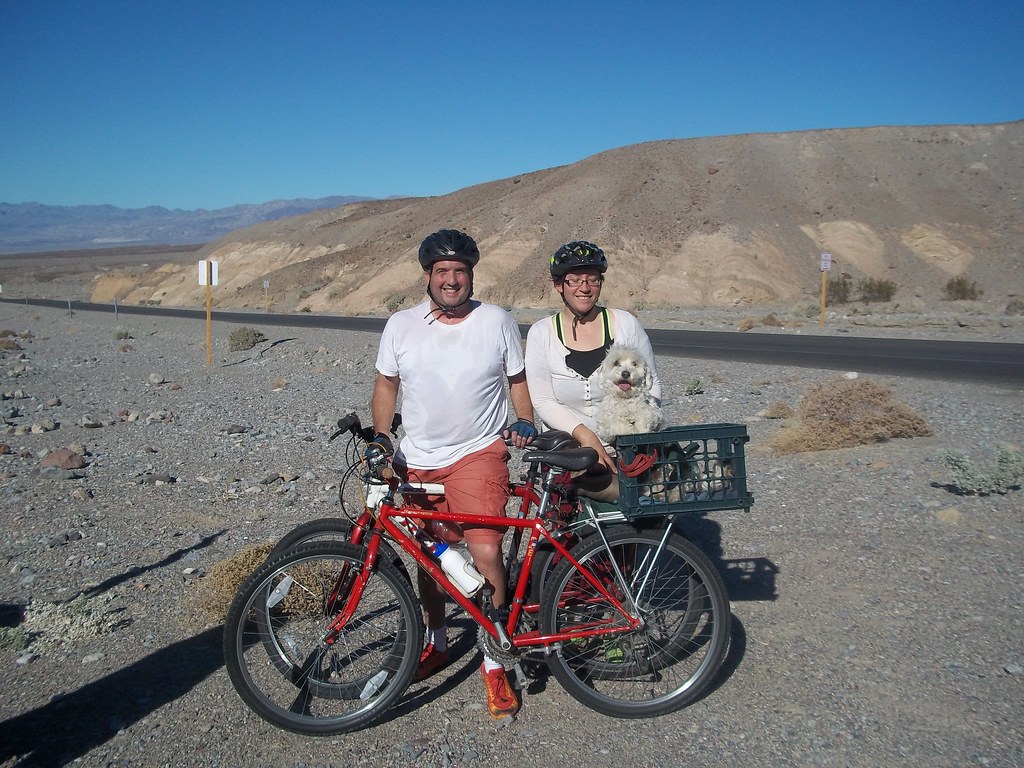
13. Dog - Our dog didn't love riding behind me in a milk crate, but I've seen other dogs quite content to do so.  We would employ the harness that came with our 'dog hiking backpack' which resembled a kind of strait jacket to keep her from jumping out.  This was a 30 mile bike ride in Death Valley.

December 23, 2014


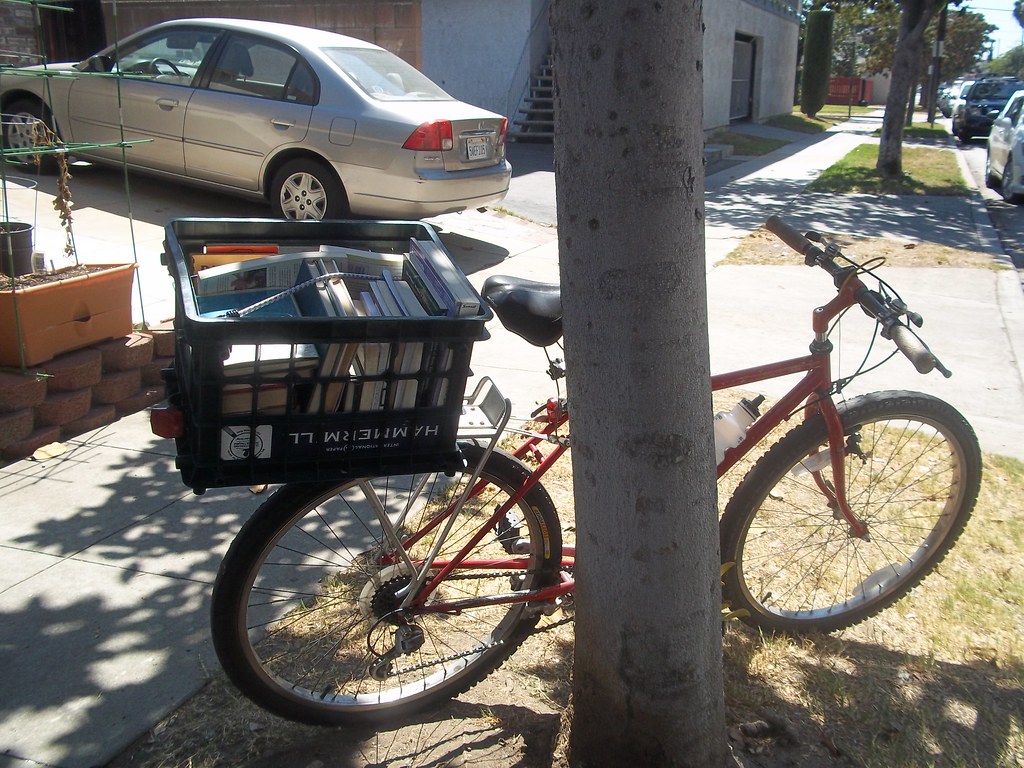
14. Books - The best way to get stronger legs is to put your heaviest books in your milk crate and bomb some hills.  I used to put Chemistry, Calculus, and Biology, top it with a bungee and then head out. This photo is from when a bookstore was closing and we took home a big haul of books!

September 14, 2014


15. Sound System - I've never done this, but I know lots of people who do for open street events like CicLAvia.  You don't have to abandon your tunes when you get out of your car.  There is plenty of space in a milk crate to set up speakers loud enough to share with a group of your friends.

October 24, 2014


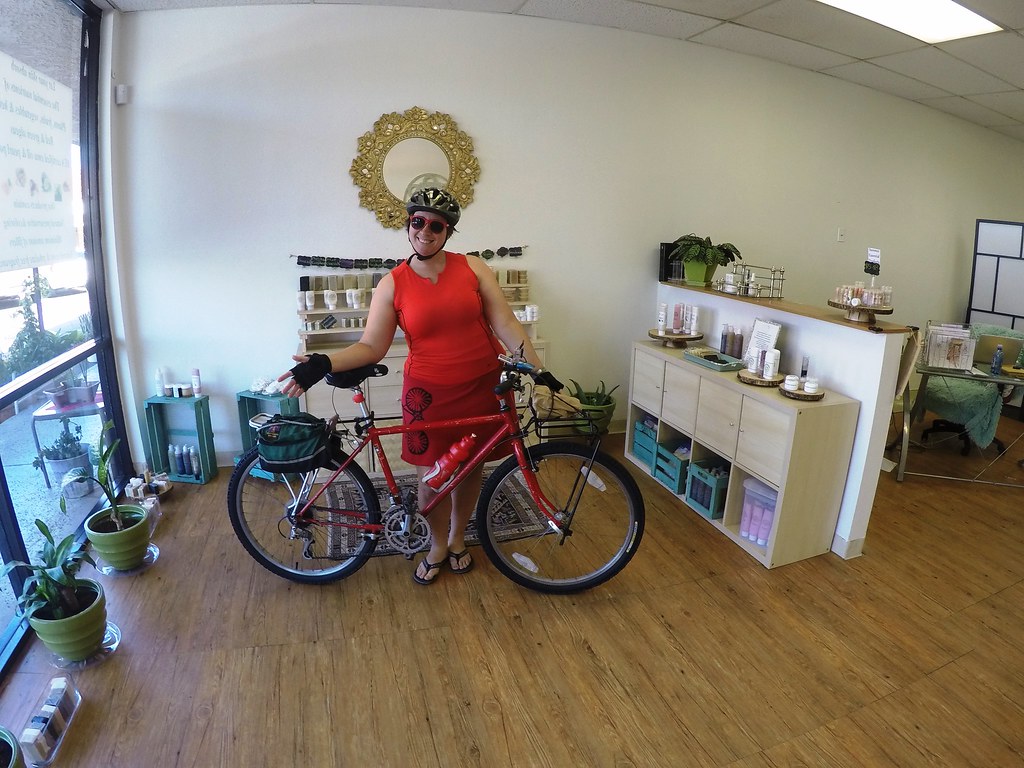
17. Cosmetics - I buy cosmetics regularly from CT Organics.  You don't want to put those oily lotions, soaps, and creams into a bag that you also have your cell phone in.  Especially if you have a long, hot ride back to The Valley from Santa Clarita. Throw them in a milk crate and you can be sure that your electronics can be well-segregated from the essential oils.  Speaking of which, SHOUTOUT to the Mother's Day Boutique, which is TODAY.


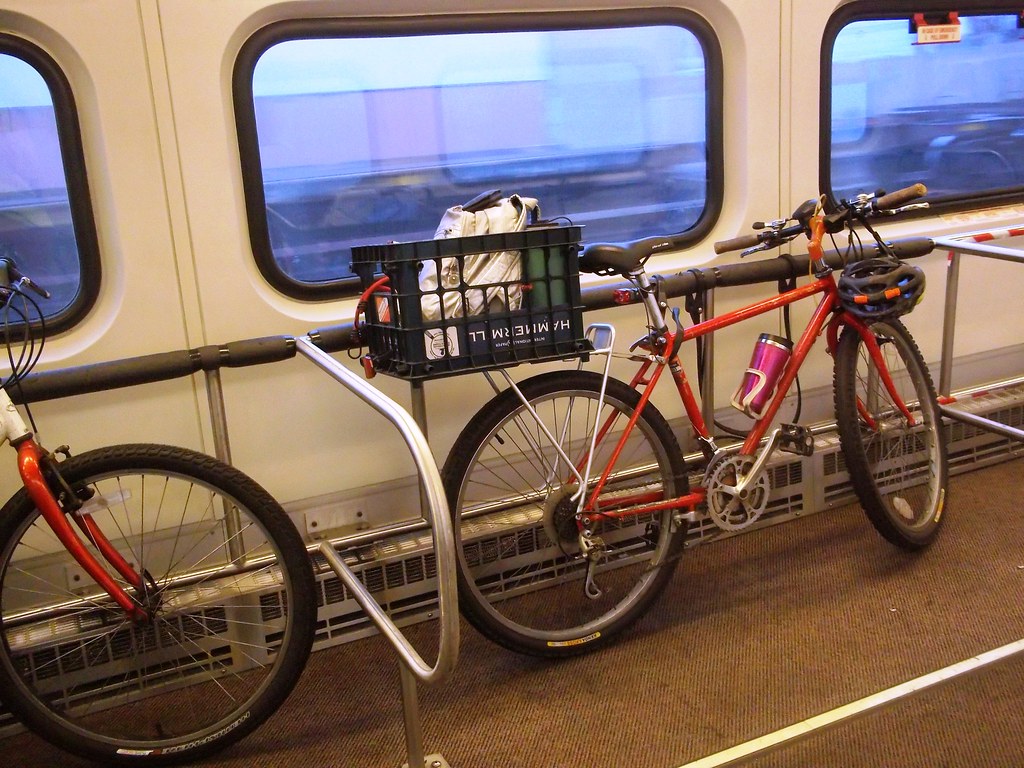
18. Coffee - Instead of buying coffee at school, I'd take about 6 Cups of drip-coffee in a Hydroflask and bungee that to the inside of my milk crate.  Then I would put the half-and-half in a 700 mL water bottle with a coozy around it. I could refill my travel coffee mug (in the water bottle cage) at will during my commute on the Metrolink train.  It is a glamorous way to travel!

October 20, 2014


19. First-Aid Kit - If you're spending all day in the sun with the family, your adorable nephew may end up with a skinned knee.  This day, his pedal was threaded backwards and consequently fell off three times, each time our nephew fell to the ground and skinned his knee.  If we had been carrying more tools and a first aid kit (and a picnic lunch) in a milk crate this family day wouldn't have had to be cut short.

April 7, 2012
20. Pizza - Who doesn't love pizza?  An easy way to deliver your own pizza is to bungee the pizzas right on the top of your milk crate.  It's already a flat surface.  You can put the drinks, dipping sauces and breadsticks in the milk crate and the pizzas form an automatic lid.  That's what we did this day!

September 27, 2014

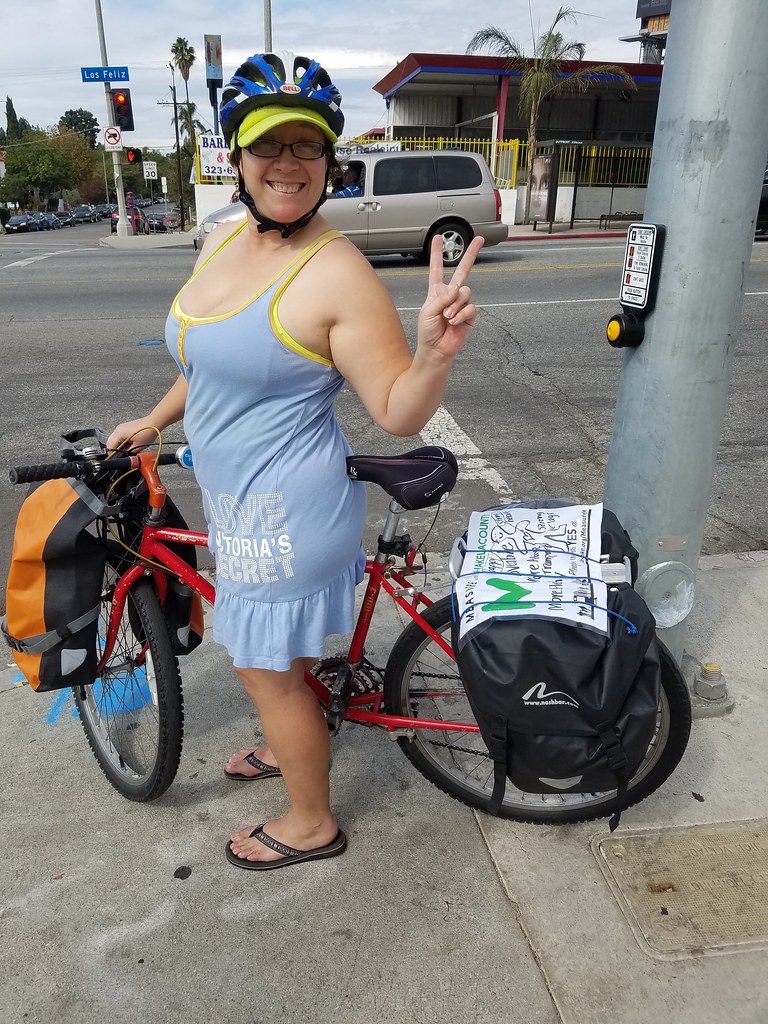
21. Campaign Signs - Although I had a good time doing some last-minute campaigning for the passage of Measure M, this sign would have been more effective on the sides and back of a milk crate.  Think of the milk crate as advertising real estate.

October 23, 2016

22. Firewood - Our bicycle camping trip was fantastic.  I had to ride several miles to the Albertson's to buy firewood and it would have been convenient to put the bundle of wood in my milk crate. Instead, I bungeed one bundle to the front rack and one bundle to the rear rack, which was OK, but that's another thing you wouldn't put in a pannier.

December 29, 2015

23. Teaching Supplies - In this photo, you can see I fitted my milk crate with a custom-trimmed paper box lid to make it somewhat padded and also have fewer holes.  I brought everything I needed to do my job in this milk crate for years.  Candy, cookies, molecular and solid state modeling kits... anything somewhat fragile that wouldn't do well banging around in a backpack is ideal to be transported in a milk crate.


In closing, I will offer a word of caution.  The high center of mass created when you fill your milk crate will change the dynamics of stopping, starting, turning, and overall handling of your bicycle.  Make sure your brakes are in working order (read: tight).  If you are riding with a group, remember that a fully loaded milk crate will alter your stopping distance (because you have more momentum). 

If you find that a milk crate makes your bike too difficult to handle, panniers will be better since they have a lower center of mass.  I have more trouble with weight on the front of my bicycle than the back.  Front baskets are good so that you can see what's going on, but when you let go of the handlebars, the front wheel will turn rapidly so that the load has the lowest potential energy.

If your weight is in the rear, however, and you are stopped at a red light, simply use your legs to stabilize the bicycle frame.  Take care when not moving to stabilize the bicycle.  You may want to investigate in a heavy-duty two-legged kickstand if that's important to you, but I've always found a bike rack or tree nearby to prop the bike against.

Share your thoughts, suggestions, experiences and comments!  HAPPY BIKE MONTH!!!!!!

Monday, December 19, 2016

Bike Racks

We got our Smart Car in August 2011.  Since then, we've taken it on many trips.  We've had to do little things to maintain the car in the last year, such as brakes ($427.69) and new tires ($647.35). These we have had done at Boulevard Auto Repair in Van Nuys.  We get regular service (e.g. oil changes) here at Glendale Lube Center.

Photo credit: Anne Hamersky (January 2012)
In academic years 2011-2012 and 2012-2013, I was driving 80 miles per weekday!  I'm so glad I don't have to do that anymore.  We got rid of our 2nd car in February of 2015 and thank goodness for that.  I overheard two people discussing the Public Transit Subsidy Program at CSUN, specifically in regards to Metrolink.
CSUN employees who opt to use the bus, rail, or train to campus may be eligible for a discount of up to 60% off the cost of the monthly transit pass. The total monthly discount will not exceed $100.
One person was explaining to the other that the discount really starts to pay off when you become a single-car family.  Now we drive when we have to (or want to) but if we don't want to drive, we take the Metrolink train with our bicycles.

April 2015 we got the rack, June 2015 we got the bike (Fuji)
Free2Go Bike Rack (#FREE2GO) $109.00 + $15.00 via Flat Rate USA = $124.00

Becoming a single-car household wasn't without its challenges.  We had a bike rack for our old 4-door Honda Civic, but we needed a way to transport at least one bicycle in the case of an emergency. The first rack we purchased is the Free2Go.  As long as your bike weighs less than 45 pounds, this rack will work.  In fact, it's even my preferred rack for transporting our beach cruiser bike, due to the shape of its frame.  At around 2 pounds, the Free2Go bike rack can even be slipped into your messenger bag or backpack if you are driving a rented SmartCar.  The car-sharing company car2go operates in 9 US cities, including San Diego, but not yet in Los Angeles.


October 2015 we got the bike (Fix-D), October 2016 we got the rack
Thule Helium Aero 3 Bike $399.95 + $189.95 Hitch (U-Haul) + $60 Installation + Tax? = $697.10
Fix-D 700C Road Bike - Silver/Red (28") = $98.09

This year, we upgraded our carrying capacity with a 3-bike rack, which is kind of ironic since we have a 2-passenger car.  It was pretty expensive to get the hitch installed, but we finally got the car paid off so it seemed like the right time to start making modifications (spending the money we would have put into a car payment).  We're considering where to take this rack.  So far, we've used it to go out to Riverside and over to the LA River Bike Path with out-of-town guests.  At 20 pounds, the Thule rack can be installed by one female (me) solo.  It has a load-capacity of 110 pounds.

I'm not wild about the Los Angeles car culture, but there are still some remote areas that are not well-served by public transportation (e.g. Point Mugu) where we would like to camp and bring our bicycles.  I'm still not totally sure what we're doing over the winter break, but it will most likely involve our new bike rack.  Even though we have a really tiny house, we both fantasize about the next bicycles we want to buy.

Monday, October 31, 2016

MultiModal Weekend (Part III)

Having taken a bike on Friday afternoon, a car on Friday night, and a walk to the bus on Saturday (both ways), we knew we had to take a train on Sunday.  Luckily, it was a CicLAvia (open street) weekend in Downtown LA and we got to ride bicycles from Glendale to MacArthur Park with an awesome group of people.


Since we had spent the majority of the weekend talking about bike advocacy, we cut our CicLAvia experience short and caught the early train back to Glendale.


The nice thing about catching Metrolink is that it is a short 10-12 minute train ride back to Glendale and then a 10-12 minute bike ride back to our house.


Metrolink monthly pass holders (like us) can ride the train system (bus and light rail, too) for free on weekends.  Non-monthly pass holders have access to the entire system by purchasing a $10 weekend pass.  There is now an app that you can use to purchase your Metrolink pass virtually, in case your trip starts with a bus instead of starting at the Metrolink station (like we did). Screenshots from the Metrolink app are shown side-by-side below.

Remember, your bus pass will not get you on the light rail.  Nor will your light rail pass get you onto the Metrolink train.  But a Metrolink ticket will get you on the bus and light rail.

Last, but not least, if you're going for a short trip, your one-way ticket on Metrolink will be cheaper than a Day Pass.  But if you're traveling a long way (Lancaster to LA Union Station, which costs $11.50 one way) then the Day Pass will be cheaper even if you're not returning on that day to your original destination.  The app makes it easier to comparison shop on your own schedule, without having to mess around with the ticket vending machine (TVM) at the actual train depot.

There is an agreement between Amtrak and the Glendale Beeline and several other bus providers for free transfers, but LA Metro buses only offer a discount to Amtrak passengers, according to Fox 5 News San Diego. If you do take Amtrak, you must call and make a bike reservation (800-USA-RAIL).  Roll-on service is possible on the Pacific Surfliner AND the Coast Starlight.  I guess Amtrak also has a mobile app, but I don't have experience with it yet.


Also, I learned that a Metro TAP card is how you use Metro Bike Share, but I haven't tried it myself yet. Have you?

Wednesday, November 18, 2015

Edit this

“Editing is the very edge of your knowledge forced to grow--a test you can't cheat on.”
S. Kelley Harrell

I've been up to so much since my last post, and the more time that passes makes it more impossible to summarize everything I've learned in one post.  But procrastination is the enemy of productivity and I may have to go on a ramble to get caught up with myself.

November almost didn't exist.  I was so focused on the activities of October.  National Chemistry Week (Oct 18-24, 2015), for example.  We went to San Diego Miramar College.

"Chemistry Colors Our World"
I still need to do a write-up of all the hands-on activities visitors to our booth were invited to interact with.  Many of the items involved recycled materials, we really kept our costs down this year.

After the ChemExpo, we headed to Downtown San Diego for the bike summit (Oct 25-28), which I did summarize in a previous post.  What I didn't discuss was my play-day in the bay.

"Cat" Niki de Saint Phalle (1999) 
I have always loved the Niki de Saint Phalle's work and it was a real treat to walk along the bay with my dog, Edna.  I had an idea to walk to Cabrillo National Monument, which I didn't quite make.  I got as far as the USS Recruit and hopped on a BikeShare bicycle to ride back to where I started.

After that, it was time to prepare for the American Chemical Society Western Regional Meeting (Nov 6-7, 2015) in San Marcos.  It was a real treat to visit another CSU campus.  I saw a handful of friends, old and new, and it was a good retreat from the everyday teaching life.

Mission San Juan Capistrano
After the meeting ended, I drove up the coast to Dana Point.  While waiting for the check-in time for my hotel across from Doheny State Beach, I visited the Mission San Juan Capistrano.  It was gorgeous!  I had made it a goal to see the California missions in a previous post.

It looks like camping at Doheny State Beach costs $35/night for up to 8 people, 2 vehicles.  The campsites are right on the beach.

Pedestrian Overpass (33.458311, -117.672942)
There are restrooms and showers and a place to get firewood.  This is definitely something to consider for a bicycle camping adventure.  There's a Ralph's grocery store in Dana Point.

I wanted to start this post off with a quote about "editing" because I feel like that's what my life needs right now.  There are so many opportunities to "say yes" to various activities.  Just like with one's wardrobe, it can be tempting to put on every neckalace, bracelet, watch, ring, and pair of earrings but good outfits need editing.  The same is true with writing.  The same is true with life.  I feel like my New Year's resolution this year will involve editing.  Learning how and when to "say no" to various activities will prevent me from feeling overcommitted and exhausted.

Monday, November 2, 2015

CalBikeSummit

Breakfast Plenary Session

Tony Dang, California Walks
Michele Hasson, Counsel for Justice & Accountability
Chanell Fletcher, Safe Routes to Shool National Parternship
Estuardo David Mazarigos, TRUST South LA

TD: We have to remove the financial strings attached to getting involved in advocacy
Case in point: I had to pay $200 for a one-day attendee registration fee!

MH: There's no data to use in proposals b/c safety issues are not accurately reported

Lead Organizer Estuardo Marzariegos
TD: Walking plans are in place for only 50% of communities, plans should be community-driven rather than consultant-driven.  Residents should define where they want to go.

EDM: Create a community that can stand up for itself.  Host bike rides.  Survey at the street level.  Recruiting people in this way will empower them.  Collect their stories.
Hold press conferences.  Visit Councilmember's offices.  Make inequity clear.
Out of 123 surveys, 38% of people have been in accidents, 67% use a bicycle as a primary form of transportation.  Collecting the voices of constituents (mothers, workers) has been convincing.

CF: Complete streets need reporting; climate health, equity.  If the project doesn't collect data the funding will be pulled.  The new idea of "Low Carbon Roads."

MH: When a continuing dialogue is ongoing with politicial leaders, it's easier to push when the time is right.  Continuing education at every interaction.

~~~~~~~~~~~~~~~~~~~~~~~~~~~~~~~~~~~~~~~~~~~~~~~~~

Best Marketing & Promotion Practices

Cory Wilkerson, City of Santa Ana
Ryan Johnson, Alta Planning + Design
Nathan Wheadon, Orange County Transportation Authority

CW: $150,000 grant for direct education (school assemblys, bike rodeos), marketing & design

RJ: Community surveys conducted including key stakeholders (police, engingeering & public works, city staff, Spanish language translators)
8 month funding cycle, which took 3-4 months to secure contracts
Survey results were translated into word clouds (Wordle): the prompt was
"How would you describe Santa Ana in 1 word if it were a person?"
Goals of the image campaign: not graphically violent, not humorous b/c humor can be lost in translation, more simplistic/positive/uplifting, the expectation is "Travel Safely"
How a single person in a single day can be all 3: pedestrian, cyclist, driver

Outcomes: 12 bus stop posters (3 months, $17,000)
36 pole banners placed in areas of high bike-ped collisions
Printed brochures, safety sheet, webpage http://www.ci.santa-ana.ca.us/bike/
jenny@graphikdeziner.com
18 school assemblies during April/May
"Safe Moves" coordinated the bike rodeos
10 new League-Certified Instructors were inducted in an LCI seminar
1000 helmets were distributed

NW: A SWOT analysis is a way to begin a project, decide what/when to say something, choose a relevant/topical message, the audience is educating drivers
The best teachers use humor, voices, antics! If you can come up with a campaign and get the support of the more conservative board members, then it may eventually be approved.
Next campaign [B]right... be safe, be seen.

The video should be less than 60 seconds, educational, entertaining, positive, funny/creative.
The video should NOT be inspiring fear or victim-blaming.
The video can be distributed using social media (digital), at events (face-to-face), through email marketing, through print media (magazines, local newspapers) through a formal press release, and through your own network of contacts (city staff and bike advocates) ask them to share it!

It takes 2 months from the concept for a video to a publicly posted video, 2 weeks of filming
5 videos were made at a cost of $20,000

~~~~~~~~~~~~~~~~~~~~~~~~~~~~~~~~~~~~~~~~~~~~~~~~~

On the Cutting Edge of Quantifying the Public Health Benefits of Bicycling

Dan Gallagher, San Diego Association of Governments
Sherry Ryan, San Diego State University
David Flores, Casa Familiar
Peter Jacobsen, Public Health Consultant
Sean Co, Toole Design Group
Carla Blackmar, Public Health Alliance of Southern California

DG: The built environment effects community behaviors, correlations between the geographical environment and health factors were calculated and used to prioritize infractructure projects
Active Transportation (trails, parks, sidewalks), Injury Prevention, Nutrition, Air Quality
all granular data fed into the model... Compared San Ysidro versus all San Diego County
Partial Correlations Analysis used to determine which factors had the most impact on health
http://sandag.maps.arcgis.com/apps/MapJournal/?appid=fc149b3233eb48e796dd8e40d7e6eac4

SR: the percent difference between San Ysidro versus San Diego city was used to identify ramps and lighting, landscaping, traffic calming, new parks, wayfinding, crosswalks, bike lanes that could improve the health of San Ysidro
http://www.sandag.org/uploads/publicationid/publicationid_1933_18945.pdf
DF: promotoras are community leaders of health that volunteer to boost community awareness
they receive in exchange for their leadership training in first aid, zumba, which builds their skills.

PJ: He was a contributor to the Bike Plan for the City of Pasadena and noticed that the amount of cyclists in a city actually decreased the risk of injury (collisions b/w cars and cyclists)
If you double the # of cars, you double the # of collisions b/w cars but the same is not true for cyclists/pedestrians "Safety in Numbers"
The reasons for this are twofold 1) physiology 2) psychology
Physiologically we evolved to understand a 15 mph pace, beyond that our minds simplfy situations and ignore some of what is going on.  This is a learned behavior
Psychologically, rare events are hard to detect.  When there are fewer cyclists, drivers simply don't recognize them or "see" them.  If cyclists are commonplace, they're easier for drivers to "see"
Driver education alone is insufficient/unsuccessful, it's better to encorage more people to bike/walk

SC: Montlhy pass riders in Washington DC choose to take BikeShare instead of walking (35%) or taking public transportation (45%), but ~13% of them would have otherwise taken a car or taxi.
The motivation was for time savings (73%) and exercise (41%) even though 23% admit the BikeShare is more costly than other means of transportation.

CB: Public health benefits are important to measure and will be required as a part of future proposals for funding.  Active Transportation has a greater impact on quality of life benefits when compared with "Low Carbon Driving"  Water infrastructure should be a part of complete streets plans

Active transportation accounted for a 7% reduction in depression and 5% decrease in breast/colon concer, a 13% reduction in cardiovascular disease and diabetes, a 9% reduction in dementia

~~~~~~~~~~~~~~~~~~~~~~~~~~~~~~~~~~~~~~~~~~~~~~~~~

Modeling Benefits & Costs for Equity & Connectivity

Sherry Ryan, San Diego State University
Laura Cohen, Rails-to-Trails Conservancy
Michael Jones, Alta Planning + Design
Eric Anderson, City of Berkeley
Brett Hondorp, Alta Planning + Design

We rode past this counter on Wed 10/25/15
SR: $300,000 investment to monitor 37 sites in San Diego County
24 bike-only counters (in street) Class II, III bike infrastructure
9 bike/ped counters for Class I bike infrastructure
4 ped-only counters (sidewalks, urban)
Goal: track trends over time as the bike network was built out

SR: when a buffered bike lane opened, the # of cyclists per month jumped from 1000-1500 to 1800-3000 per month, which is roughly double.  On a scatterplot this data looks awesome.
New "rules of thumb" found that 16.5% of cycling activity occurs between 4-6 pm regardless of whether the counts were done in San Diego or Maricopa counties
http://www.eco-public.com/ParcPublic/?id=681 is the link to live count data
Class I bike paths were more used on weekends, whereas Class II and III were used on weekdays

LC: Trail Modeling and Assessment (T-MAP) tool
3 year $1,200,000 effort to collect data, model the data, and disseminate the info to the public
"Trail Score" likened to Walkability score.  The question is "What % of the population can get to a majority of their destinations using a low-stress route?"  The goal is that by 2020, 90% of Americans will live within 3 miles of a trail system

MJ: National Bike & Pedestrian Documentation (NBPD) recommendations stipulate that if you do a bike/ped count only once per year that it happens on the 2nd week of September.  You may consider 4th of July the peak and try to count on both weekday and weekend.
Rather than choosing random placement of counters, consider relevant places within your transportation network. http://bikepeddocumentation.org/
Key Findings: 76% of walking trips and 29% of biking trips are for work or essential activities
70% of respondants biked once per week

MJ: Alta Benefits Cost Model (ABC) takes into account reduction in greenhouse gases
Property values (of real estate) increased $2,200,000 within 500 ft of bike/ped projects


BH: Strong & Fearless = will ride no matter what; Enthusiastic & Confident = need bikeways; Interested but Concerned = the majority of people; No Way, No How = won't ride anyway
To reach all people there was a random sampling by zip code and a door-to-door survey on a tablet showing streets in their community with either: no markings, sharrows, bike lanes
The streets shown in the mock-ups were residential all the way to arterial streets
A segregated cycletrack was preferred and least desirable was a 4-lane arterial with fast traffic

Note: this graphic was re-created in Google Sheets based on percentages presented in the session

~~~~~~~~~~~~~~~~~~~~~~~~~~~~~~~~~~~~~~~~~~~~~~~~~

Coronado Bike Tour

Mariah VanZerr, City of Coronado Transportation Planner
John Holloway, KTU+A Planning + Landscape Architecture

Met some good people on this outing!


If you ride from Los Angeles to San Diego, it can be done in 2 days, camp at Doheny!

Wednesday, September 9, 2015

Glendale Active Lifestyle Meetup

Ideas for Bicycle Tourism 

At most California state parks, Day Use Fees are charged for parking only. There is no charge to walk or bike into these parks.

Poppy Reserve
(1) Antelope Valley Poppy Reserve (15101 Lancaster Rd, Lancaster, CA 93536) from the Lancaster Metrolink Station (44812 Sierra Hwy, Lancaster, CA 93534) is a 16-18 mile bike ride, depending on which route one chooses to bike from the station to the park.  Best time to visit is in the spring (March).
Placerita Canyon
(2) Placerita Canyon State Park (19152 Placerita Canyon Rd, Newhall, CA 91321) from the Santa Clarita Metrolink Station (22122 Soledad Canyon Rd, Santa Clarita, CA 91350) 7-10 miles by bicycle, depending on the route from the station to the park.

Santa Susana Pass
(3) Santa Susana Pass State Historic Park (10215-10265 Larwin Ave, Chatsworth, CA 91311) from the Chatsworth Metrolink Station (10046 Old Depot Plaza Rd. Chatsworth, CA 91311) less than 3 miles apart.

Crystal Cove
(4) Crystal Cove State Park (Reef Point Dr, Newport Coast, CA 92657) from the Irvine Metrolink Station (15215 Barranca Parkway, Irvine, CA 92618) 14-16 miles depending on which route you choose.

San Clemente
(5) San Clemente State Beach (225 Avenida Califia, San Clemente, CA 92672) is 3 miles from the San Clemente Metrolink Station (1850 Avenida Estacion, San Clemente, CA 92672) and 2 miles from San Clemente Pier Metrolink Station (615 Avenida Victoria, San Clemente, CA 92672).

Lake Perris
(6) Lake Perris State Recreation Area (17801 Lake Perris Drive, Perris, CA 92571) is 20-25 miles from the Riverside-La Sierra Metrolink Station (10901 Indiana Ave., Riverside, CA 92503).

Carlsbad
(7) Carlsbad State Beach (3901-3915 Carlsbad Blvd, Carlsbad, CA 92008) from the Oceanside Metrolink Station (235 S. Tremont St., Oceanside, CA 92054) is 4 miles.

Torrey Pines
(8) Torrey Pines State Natural Reserve (12600 North Torrey Pines Road, La Jolla, CA 92037) is 6 miles from the Solana Beach COASTER train station (105 North Cedros Ave. Solana Beach, CA 92075)

Point Mugu
(9) Point Mugu State Park (9000 W. Pacific Coast Highway, Malibu, CA 90265) is 12-14 miles from the Oxnard Metrolink station (201 E 4th St, Oxnard, CA 93030).

Emma Wood
(10) Emma Wood State Beach (Park Access Rd at Pacific Coast Hwy, Ventura, CA 93001) is 7-9 miles from the East Ventura Metrolink station (6175 Ventura Blvd., Ventura, CA 93003)

September 26, 2015 is National Public Lands Day.  On this day, the entrance fee to all national parks will be waived! 

Cabrillo
(1) Cabrillo National Monument (1800 Cabrillo Memorial Drive, San Diego, CA 92106) from the COASTER train station (1050 Kettner Blvd. San Diego, CA 92101) is 10-13 miles.