Showing posts with label grad school. Show all posts

Saturday, July 20, 2019

Fertility Part 21

Yesterday we had our 6 week ultrasound. Everything is wonderful. We got to hear the fetal heartbeat together with our doctor (116 bpm). We got these printouts of the yolk sac. The placenta is visible. The baby is measuring 6 weeks 3 days. The due date is March 9, 2020.


July 3rd - 11dp5dt - hCG: 260 IU/L - E2: 1,014 pg/mL - P4: 31.4 ng/mL
July 5th - 13dp5dt - hCG: 664 IU/L - E2: 912 pg/mL - P4: 28.6 ng/mL
July 12th - 20dp5dt - hCG: 7,986 IU/L - E2: 1,110 pg/mL - P4: 29.4 ng/mL
July 19th - 34dp5dt - hCG: 32,585 IU/L - E2: 1,364 pg/mL - P4: 35.85 ng/mL

The coordinator had a sit-down with us to let us know that it is time to seek out a "regular" obstetrician, or OB for short. So after seeing our reproductive endocrinologist we went home to do our shots. Thank goodness dear husband is my co-conspirator, who has been absolutely great at administering ALL shots throughout this entire process. Here is a list of the medications that I am currently taking and the dose schedule.
  • 1 mL injections of 50 mg/mL progesterone in sesame oil DAILY.
  • 0.2 mL injections of delestrogen (estradiol valerate) 20mg/mL every third day.
  • suppository endometrin 100 mg vaginal capsule three times daily.
  • oral estrace (estradiol) 2mg tablets twice per day. 
  • oral "One A Day" prenatal vitamins.
  • oral omega 3 fatty acids: DHA and EPA.
  • oral vitamin D 2000 IU twice per day.
  • oral vitamin B6, or pyridoxine, 100 mg once per day.
I am listing all of the above medications because my mom revealed a misconception, she said, "Oh great, you're pregnant. So that means no more shots." Yes mom I wish that were true, but also I am happy to keep doing what we have been doing in order to hang on to the success we have had. We are in week 6 now, and the medications will continue into week 8 or 10 depending on what they see on the next couple of ultrasounds. 

In addition to the medications, I have been having morning sickness (hence the Vitamin B6). One day I vomited up right after taking all my pills and I panicked and emailed my coordinator. She said don't worry about it, just take the next day's dose tomorrow. Also try spreading out the pills. She suggested eating crackers and soup. So now every morning when I wake up, I eat 150 calories of multigrain crackers (packed with folic acid) before doing anything else. Also, I wait until 10am and my second breakfast to take the "One A Day" prenatal vitamin pill. The iron in that one has always made me a bit queasy and I find it easier to keep down if I am more awake and have had two servings of our breakfast smoothie.

After the meds, I went to my office at school. It felt good to sit at my desk and turn on my computer, have a to-do list and knock it out. My school computer is the fast one and the least cluttered with files. Although my office is messy and cluttered, it looks exactly like it did on the last day of the spring semester, it is a place that I have spent lots of time so it kind of feels like home. I got my schedule for the fall semester, it will be very busy. Not more than usual, but not less either. I picked up a required reading for my freshman seminar and then left campus for another doctor's appointment.

My "regular doctor" feels pretty disappointing compared to my "reproductive endocrinologist, or RE for short." In fact, I have never seen the doctor at my regular doctor's office. I have only seen the physician assistant, or PA for short. The waiting room at my regular doctor's office had the morning news blasting, with stories about shootings and high speed chases ending in death. The exam room was dirty and had chipped paint on the walls, it was grosser than the bathrooms in public transit (subway) stations. They don't explain anything thoroughly, the call me "babe" "sweetie" and "honey," which I find insulting.

The reason I had to go there is because of my insurance, it's a gateway to a referral. They had me pee in a cup for a pregnancy test and then ordered a quantitative hCG at a lab down the street. They asked me what I wanted in an OB and I said, "I don't really know how all this works, but I want to deliver at Northridge hospital so I want someone with privileges there. Someone nearby." I have no idea who I will be referred to, the referral will arrive in the mail in about a week.

My reproductive endocrinologist will be putting together a packet of my medical information and releasing it to us at our week 8 ultrasound, so hopefully the timing will work out where we can get an appointment with the new. I wish the PA would have given me a bit more information about the process that will happen over the next 8 months, but she just smiled and said that there will not be many doctor visits.

I had a second vial of blood drawn for the quantHCG test at LabCorp and I keep checking my patient portal but the results are not posted yet. I am not worried but neither my RE nor my regular doctor have released the numbers on yesterday's hCG levels. I was concerned that taking too much blood was a bad thing. My heart rate was going up and up from the day of my transfer (June 22) until July 8th. It was kind of scary to see that on my fitbit, but I guess it was also kind of comforting because I felt like my heart was pounding with even the slightest exertion. I guess it is something to do with increased blood volume and then at some point the body gets used to it.

I am super grateful that everything is working out. I have heard that unicorns fart rainbows, and I am definitely no unicorn. I have had pretty regular diarrhea, and lots of stinky farts. But I also heard that during pregnancy many women experience constipation, which is the body's way of extracting more nutrients out of the food that is digesting. So maybe this means baby AA has enough nutrients and is happy to excrete what is not needed. Or maybe since I'm generally constipated when I am not pregnant, then when I am pregnant I get to be the opposite. Who knows? Biology is complicated.


We are discussing a possible "babymoon" which is a vacation that a pregnant couple takes during the second trimester. Like a last hurrah before you have another human in the family. Maybe we will go to Cayucos and Morro Bay. The babymoon would have to be scheduled between Friday, September 6th (start of week 13) and Thursday, December 12th (end of week 26). Unfortunately, according to our academic calendar that is the entire semester. Classes begin on Monday, August 26th. We have a break for Labor Day on Monday, September 2nd. We have a break for Veteran's Day on Monday, November 11th. We have Thanksgiving holidays on Thursday and Friday, November 28-29th. And finals week starts on Wednesday, December 11th. So we would have to do it over T'givs.

Finally, I want to document a feeling I had. It started two weeks ago when we got the positive pregnancy result. I feel like we are a family now. I don't know if it is the stress of going through IVF that has made our marriage stronger, or the fact that we are preparing to welcome our offspring into the world, but when I wake up on a Saturday morning, I feel like we are a "real" family now. We have taken what at first seemed like an impossibly large leap of faith and it seems to have been worth it for us. When you think about it, spending $22,000 wouldn't even buy you that nice of a car. It wouldn't even pay for 1 semester of college at a private school. Looking back, it is easier to justify.

I am so excited. Today, we are going to a birthday party for a 1-year old that was created through IVF at the same clinic where we went. It is my best friend from grad school's baby girl. We got some cute little things for the baby, but more than that I just want to catch up with them and see how they are feeling 1-year post birth. I feel like I can really celebrate and participate in baby-centric rituals now, without feelings of jealousy and self-hatred. There's a really great piece of writing here about being in the stage of life where you are risking what seems like everything to create a baby. And now it's time to go and do SHOTS!

Friday, August 10, 2018

Why Blog? Part II


Why start a blog?

http://blogs.scientificamerican.com/literally-psyched/2013/04/12/why-grad-schools-should-require-students-to-blog/
somewhere between 40 and 50 percent of students will quit their doctoral programs
1/3 of that attrition will happen at the dissertation-writing stage
if you write regularly, it will be less overwhelming when you get to that point

Riley Elliott TEDxAuckland

1.8 million scientific articles are published every year
50% of them are read only by the author and the editor
90% of them are never cited and shared
Nowadays people gather information from social media, television, and the internet
http://youtu.be/GA8RsnezFIg
people in academia these days are promoting their journal articles on social media and blogs to increase traffic and citations

Science and Technology: Public Attitudes and Understanding

http://www.nsf.gov/statistics/seind12/c7/c7h.htm.
The Internet is the main source of information for learning about specific scientific issues such as global climate change and biotechnology. Americans are now about equally likely to rely on the Internet as on television as their primary source of general science and technology (S&T) information.
Many Americans continue to give multiple incorrect answers to questions about basic factual knowledge of science or the scientific inquiry process. In the United States, levels of factual knowledge of science have been stable for more than a decade.

Identify your audience

The average reading level of Americans is between eighth and ninth grade. NPR’s story was written at an 8.2 grade level. http://www.npr.org/blogs/itsallpolitics/2012/05/21/153024432/sophomoric-members-of-congress-talk-like-10th-graders-analysis-shows
it is important if you are writing a blog on a scientific topic to keep the blog readable and relatable

Some of my writing

Going Green Flesch-Kincaid Grade Level: 4.69
The Inagural Blog Post Flesch-Kincaid Grade Level: 5.92
Selective Serotonin Reuptake Inhibitors Flesch-Kincaid Grade Level: 8.92
Fountain of Youth Flesch-Kincaid Grade Level: 9.27
A scientific abstract Flesch-Kincaid Grade Level: 14.79
http://sarahktyler.com/code/sample.php

BLOGGING is all about creativity.

Your original ideas can take center stage, uncensored. Here are some best practices:
  • Use Categories (tags)
  • Create an engaging Meta-description (first 160 characters) = your thesis statement
  • Focus on having an Eye-catching title 
  • Include In-text links (hyperlinks) which will increase traffic to your blog
  • Embed Social sharing buttons such as "tweet this"
  • Use Hootsuite to promote repeatedly, also use Editorial calendar to Schedule Posts
  • Learn how to use Headings (H1) in html code to improve readability
  • Include Images (convey emotion, illustrate a metaphor, evoke curiosity, complement your title)
  • Include factual content (with sources) and write professionally (edit and proofread)
  • Create a careful bio that established credibility and a way for readers to contact you
Review web analytics for the kinds of questions people type into search engines like Google or Bing that deliver visitors (this was also part of the ACS Reactions talk in San Francisco and the CalBikeSummit)

How long should each post be?

Your word count per post may vary between 100-1000 and that’s OK. Link to longer content.
http://www.socialmediaexaminer.com/26-tips-for-writing-great-blog-posts/

Link your social media (or don’t).

Consider connecting your blog to your facebook or twitter feed.
Content first = write what you know
Adopt a publishing schedule = one post per month or one post per week, for example
Let your content be driven by a theme = goes together with identifying your audience
Keep it professional = blogs are public and your identity may or not be anonymous
http://chrisguillebeau.com/how-to-start-a-blog/

Does my blog matter?

Hundreds of millions of blogs are online today. Thousands more are started every day. Anyone can start a blog in 5 minutes, but very few will start blogs that matter.
http://fizzle.co/start-a-blog-that-matters
If the purpose of your blog is for yourself only, then you don't have to worry about number of visitors. I prefer to keep my blog ad-free, which compromises the amount of traffic that google will direct to my site. However, I feel it makes my page more readable so that the audience is organic and focused on my content. Also, I use it to uncover themes in my life and to track events and items that I have recycled so that I can manage my tendency to hoard physical objects that I have attached sentimental value to but that are really arcane pieces of junk.

How to engage effectively

Blogger has a feature where you can follow other blogs like yours. Alternative is RSS feeds. RSS stands for Really Simple Syndication or Rich Site Summary
Another idea is to create a “Follow this blog via email” listserv.
Use the 411 formula to manage your engagement
4 retweets, 1 response back, 1 original posting = 30 minutes per day
People following you for one reason don’t want to hear about stuff in your hobby area
Blogging is such a great way to get expertise out.
When you read/follow a blog, make sure to comment to get your name out.
It is good to engage people. Start lively dialogue. Could be a link to a potential employer to connect you with a job. People within companies support blogging.
It brings people closer to customers, companies can build loyal following.
I learned this at the Virtual Networking for Grad Students event at University of California, Riverside
http://events.ucr.edu/cgi-bin/display.cgi?comp_id=33367:20101104153000
hosted by Jan McCorkle, UCR Career Services

Blogging by the numbers

43% of bloggers use Wordpress
35% of bloggers use Blogger
16% of bloggers use Tumblr + TypePad + Posterous
6% use other platforms
31 million bloggers in the US
81% never make $100 from blogging
Wordpress has 42 million blogs
329 million people view a blog
25 billion pages are viewed each month
500,000 new posts a day
400,000 daily comments
35% actively blog at least one time per month
65% haven’t updated their blog in one year or more
60% of businesses have a business or company blog
http://www.jeffbullas.com/wp-content/uploads/2012/08/State-of-Blogging-in-2012.jpg

Between 2007 (launch) and the end of 2011, Tumblr hosted over 39 million blogs
Based on the 19-digit ID for Blogger, there are at least 38 million Blogspots (June 2009)
http://pulsed.blogspot.com/2009/06/how-many-blogspot-blogs.html

Above all, don't be afraid

There are so many blogs out there, it's unlikely that you will garner a huge audience, so go ahead and write your heart out. You may just find a kindred spirit or two out there who really get a kick out of what's going on in your mind.


Monday, July 23, 2018

Second Nebraska Trip Packing List

It's the day before my second visit to Nebraska and I'm packing. Or at least I'm thinking about packing. I was doing some last minute digging in the garage and I found my old sound generator, which can provide soothing ocean waves even without wifi.

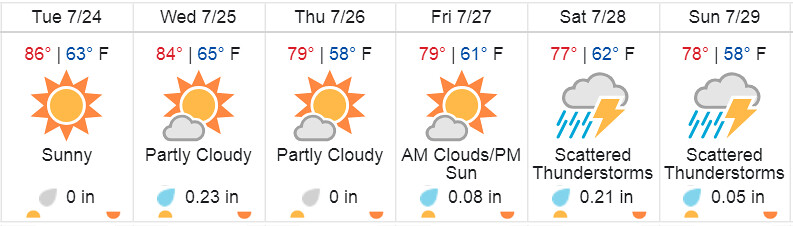
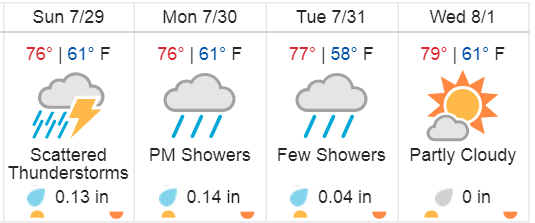
Looking at the weather forecast, it's going to be cooler there than it will be here. However there is a chance of rain. So I guess I'll be packing an umbrella.

Burchard, NE
Of the events on the list: hang out with uncle, grandma, grandma, sister, sister, aunt, mom and dad. I definitely have to practice my talk. So I'll need a cable to connect my computer to the hotel TV. I'll also need some clothes to wear to the Pawnee County Fair.

South Bend, IN
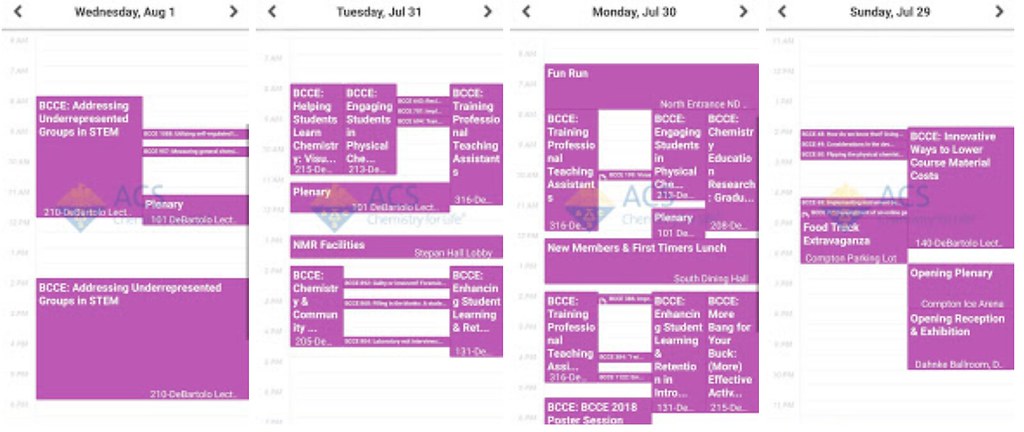
The weather in South Bend, IN where the conference is also has a chance of showers. I'm doing a "fun run" on Monday morning and then presenting on Tuesday morning. So I'll need running shoes/workout clothes and business clothes.

Besides my sound generator, I want to bring all my other toys (rollerskates, folding bike, etc.) but there's only so much room in the suitcase that I'm bringing (as soon as I decide which one that is). I'm leaning towards a rolling bag this time since it was a bit of a drag carrying my duffel bag last trip.

I don't need to bring the folding bike because: I've rented a car, Omaha has B-Cycle (docked bikehsare, based near where I'm staying) and South Bend has LimeBike (dockless bikeshare). I don't need to bring rollerskates because: that is not the purpose of the trip, they're heavy, and there won't be time to go skating.

We are going to try to squeeze in a dance party, so maybe I can bring something dance-worthy. My brain is driving me crazy because I thought that through organizing the house, I would find some handwritten notes from my days in grad school, unfortunately they haven't turned up yet.

I'm attending my 20-year high school class reunion, so I should bring something to wear for the tour of the school and the social event that evening. Nothing too fancy. Then I'm off to the conference. It would be nice to have some traveling clothes (read PJs) that are comfy.

BCCE Meeting Schedule
ACS Meetings App is a way to schedule your conference time. It allows selecting concurrent events, so that if there is a cancellation in one session you can jump into another. I found the most fabulous dress at Goodwill, during my shopping extravaganza which will work for both the class reunion and my talk at BCCE.

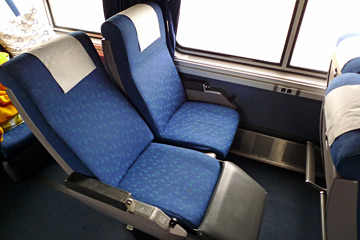
I'm coming back on the Amtrak. Items that made that part of the trip better included: noise-canceling headphones, a black bandanna that I could use as an eye-mask, a cooler bag to bring my own food (but I might not do that on this trip) and a neck pillow (good for planes and trains).

Amtrak Coach Seat
I had a really great time on Amtrak Empire Builder so I'm really looking forward to the Southwest Chief. We're leaving Chicago in the afternoon, going through a tiny corner of Iowa, reaching Kansas City by evening (Fresh Air Stop #1).

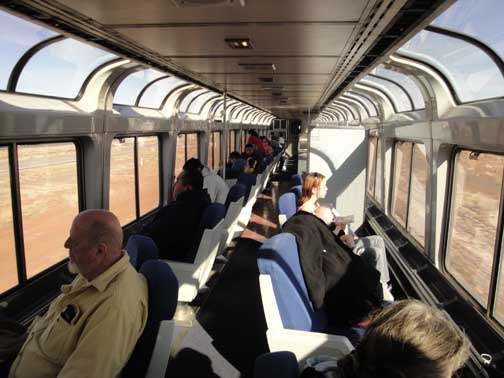
Amtrak Observation Car
My brother-in-law was asking me last night, in all earnestness, why take a train? I tried to explain how you have the freedom to walk throughout the train while it's moving and you can enjoy the scenery from your seat or the observation car.

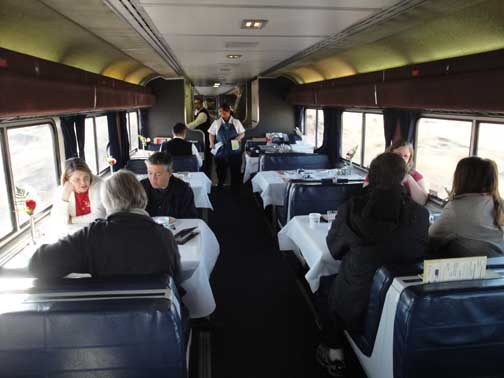
Amtrak Dining Car
If you want a formal dining experience, you can eat in the dining car. See this blog for some other really helpful tips. Also for humor watch the film Silver Streak. We cross the state of Kansas overnight, waking up on the second day in La Junta, Colorado (Fresh Air Stop #2).

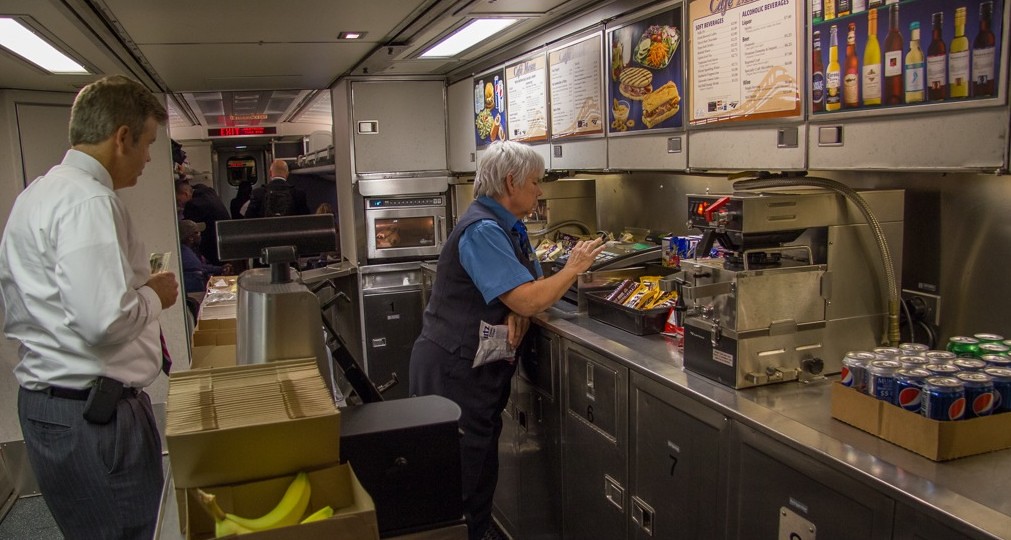
Amtrak Cafe Car
If you don't mind bodega (7-11 a.k.a. truck stop) food then you can visit the cafe car. It's downstairs of the observation car. There's also seating down there, which can be another place to sit. It should be a really beautiful day going through Colorado, New Mexico and Arizona.

Albuquerque and Flagstaff are Fresh Air Stops #3 and #4, respectively. A fresh air stop is where you can get off the train and walk along the platform. I do some calisthenics and plyometrics to get my circulation going and to keep my metabolism running. 

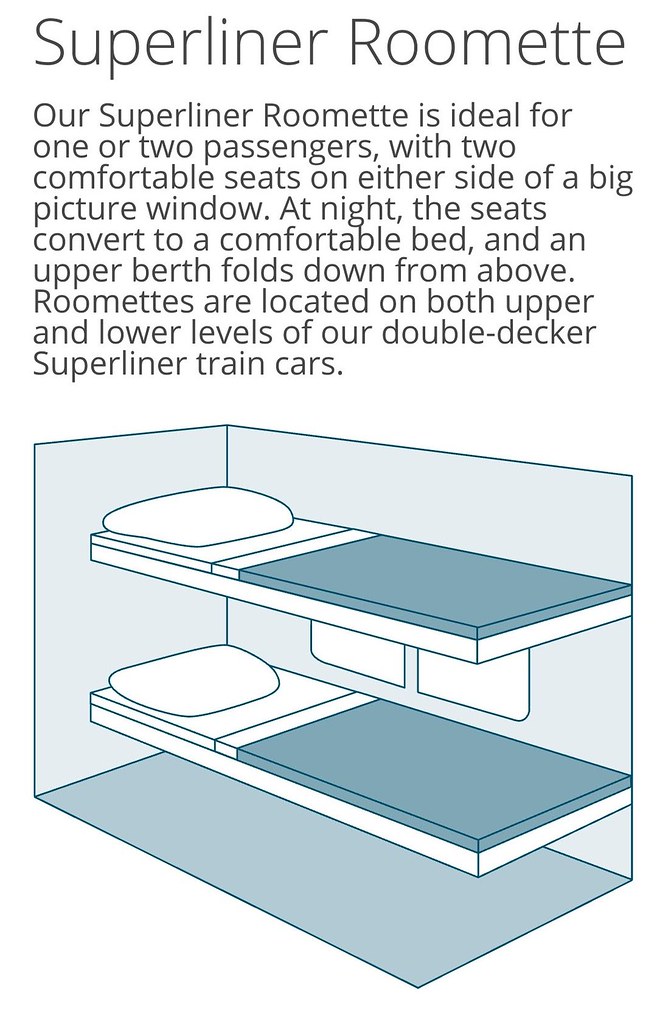
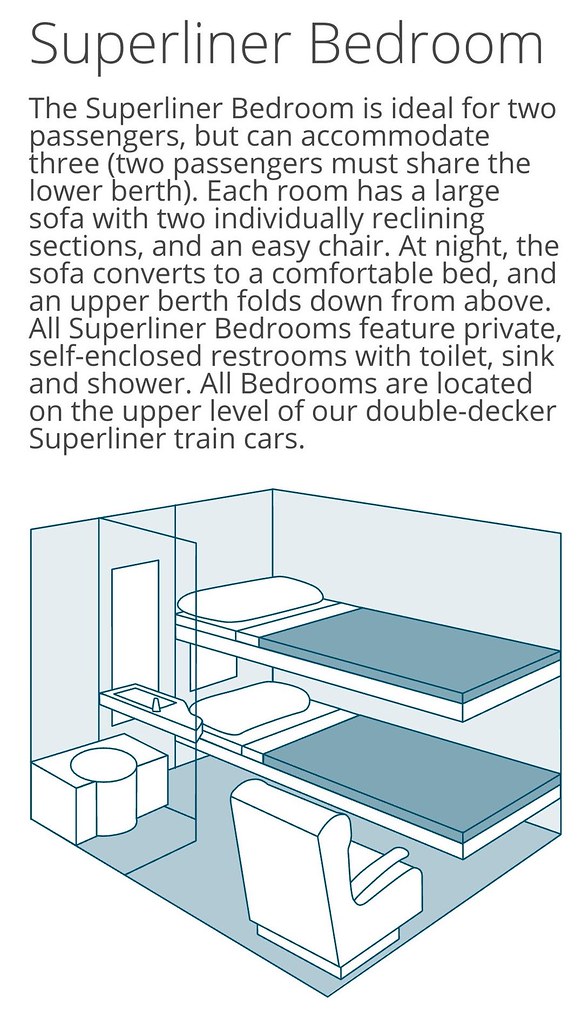
Since I've never booked a sleeper compartment, I can't say whether they're better or worse than coach. I did borrow these pictures from Google Images since I'm always too shy to take photos of people when I'm on the train. You never know who won't want to be photographed.


The second overnight goes through the desert part of California (Needles, Barstow, Victorville, San Bernardino, Riverside) and hopefully I'll be waking up around Fullerton, CA. We arrive in Los Angeles in the morning around 8am.

Monday, June 4, 2018

So much science!

I love teaching the introductory chemistry courses. It engages storytelling, explaining, defining and illustrating of fundamental ideas in my field of study. Last week, I substituted for my friend. The goal of the lecture was to cover Chapter 1, which was a daunting task considering I had 75 minutes to speak about only 28 slides. One of her slides had a URL that directed me to the embedded video below regarding the Law of Conservation of Mass. I found it underwhelming, what about you?


I spoke about atoms, molecules, reactions, and how chemistry is everywhere! I spoke about the good old 'Scientific Method' where you begin with an Observation followed by Hypothesis and then Experiments and lastly Results and Conclusions. After the class was over, I realized that I could have told a better story using more web-based resources. There's so much information publicly available and so much more behind various paywalls of academic publishing, I decided to pick one story and dig around to show you what resources I could use if I were to do the lesson again.


First of all, the Poisoner's Handbook is a fascinating account of how forensic science developed alongside environmental pollution and criminal homicide. There is a section there about leaded gasoline which is something students may be curious about if they have read the gas pumps having "Unleaded" gasoline. There's a reason the lead was added to fuel (to reduce engine knocking) and there was a reason that the lead was banned from fuel (it made people crazy).


I also chose the topic of lead poisoning because I love going to the Protein Data Bank and reading the stories they post on the Molecule of the Month. I love looking at the rendering of the protein, changing the colors and attributes, manually manipulating its orientation and putting it on auto-spin to appreciate its contours and crevices. What I like about this story is that it involves atoms (lead), small molecules (dimercaptosuccinic acid, DMSA) used in chelation therapy, large molecules (aminolaevulinic acid dehydratase or ALAD a.k.a. porphobilinogen synthase) and molecular assemblies.
DMSA-mercury(II) chelate

Another interesting part about this story is that I came across the picture of DMSA-mercury(II) chelate using text-based google image searching. Apparently there are people who advocate the adminstration of DMSA to rid the body of toxicity from mercury amalgams (tooth fillings). http://zap.intergate.ca/dmsa.html I looked at that structure because I was wondering which of the groups on the DMSA would bind to the metal. We call ligands that make two contacts to the metal "bidentate" meaning like they are a set of teeth that chomps down from top and bottom. The rendering above shows DMSA making four points of contact. I had a feeling it wasn't right.

EDTA-iron(III) chelate

The only ligand I think of that makes that much contact is ethylenediaminetetraacetic acid (EDTA) which is considered a hexadentate ligand, making six points of contact. As it turns out I'm not the only chemist that was "triggered" by the rendering of DMSA-mercury(II) chelate and it was a graduate student who posted it to Wikipedia based on their own idea of what it would look like (not on a crystal structure). https://en.wikipedia.org/wiki/Talk:Dimercaptosuccinic_acid


So I created the small molecule in two dimensions using ChemSketch, then copied that structure and optimized it in ChemSketch3D. The teal spheres are carbon atoms. It's possible to rotate that small molecule just like with the protein. The only thing I couldn't figure out how to do in ChemSketch is how to make the coordinate-covalent bonds between the ligand and the heavy metal atom. Maybe it's possible and I don't know how to do it, or maybe it isn't possible in that software.

I also explored the enzyme ALAD in the BRENDA (BRaunschweig ENzyme DAtabase) and MetaCyc (Metabolic Encyclopedia). These two sources of information tell me what the enzyme does and what other enzymes are related (structurally similar), and which organisms express this enzyme, and what steps in a pathway leading ultimately to the symptom of anemia are inhibited by the presence of lead. It's also a great way to get towards journal articles that can explain how we know what we know about this enzyme.

References

Camina, Casas, Castano, Couce, Gato, Herbello-Hermelo, Sanchez, Sordo and Torres. Journal of Inorganic Biochemistry 104 (2010) 599-610.

Andersen and Aaseth. Environmental Health Perspectives 110 (2002) 887-890.

George, Prince, Gailer, Buttigieg, Bonner Denton, Harris and Pickering. Chemical Research in Toxicology 17 (2004) 999-1006.

Choiniere, Scott, Gelb and Turecek. Analytical Chemistry 82 (2010) 6730-6736.

Erskine, Duke, Tickle, Senior, Warren and Cooper. Acta Crystallographica D56 (2000) 421-430.

George, et al. Figure 4


To be continued...


Tuesday, February 7, 2017

Another Chemistry Lesson

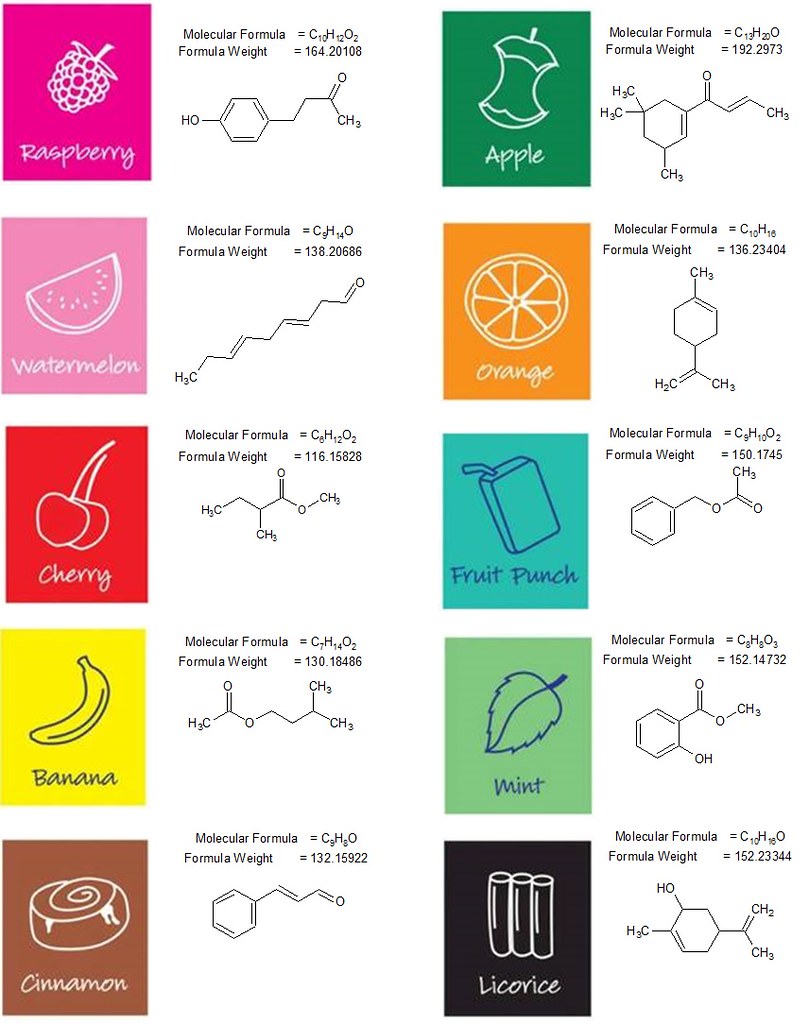
Many times, I've done a "Smell-a-Vision" lesson with my students based on GC-MS data on terpenes from citrus fruits, herbs, and flowers collected from around campus.  This year, I plan to use Mr. Sketch markers as a source of the aromas.  Students will be given either percent composition or combustion analysis data, together with the molecular weight, and asked to determine empirical and molecular formulas.


The implementation could have been smoother, it was really difficult to hand out 36 markers of different aroma and the corresponding papers.  If I had to do this activity again, I would have spent more time preparing the markers and papers (already matched up) and had a corresponding seating chart (plan to distribute).  With a class of ~80 students, there were pairs and groups of 3.  I ended up taking about 15 minutes to distribute the activity which only left 5 minutes for students to work on the problems.  I made it a take-home extra-credit assignment, so there's no telling how students will get the problem solved.

Monday, January 16, 2017

Opioids


Plants and microorganisms produce over 150,000 natural molecules, some of which are bioactive in humans.  I am writing this post in response to the wave of celebrity deaths, some of which may be attributed to drug overdoses.

Figure 1: Opium poppy (Papaver somniferum) courtesy of the DEA Museum website
The opium poppy is the source of morphine and codeine. Hydrocodone (e.g., Vicodin) is a semi-synthetic opioid synthesized from codeine. According to the US DEA, hydrocodone is the most frequently prescribed opioid in the United States and is associated with more drug abuse and diversion than any other licit or illicit opioid. Dextromethorphan (pronounced "dex-tro-meth-orphan") is a molecule that resulted from a search for a non-addictive analogue of codeine that still retained cough relief. Unfortunately, it still carries a risk for abuse.

Figure 2: Most widely used (and abused) opioids
This year, the musician Prince is said to have died from a fentanyl overdose. A structurally similar molecule, demerol, is primarily used in labor and delivery. Demerol was the first wholly synthetic opioid developed, in 1939. Fentanyl was discovered in 1960 by screening demerol analogues. To my eyes, it isn't easy to see the structural similarity between the plant-based opioids (natural and semi-synthetic) and the synthetic opioids.


Figure 3: Red region of the molecules mimics the endogenous ligand for opioid receptor, a GPCR
There are multiple types of opioid receptors: mu (MOR), delta (DOR), and kappa (KOR) among them.  The drugs mentioned here mimic the endogenous morphine, also known as endorphin.  There are multiple types of endorphin peptides, but one endorphin peptide met-enkephalin (structure not shown) shares a common substructure with the plant-based opioids (shown in red in Figure 3).

Figure 4: Selectivity of opioids for three classes of opioid receptors
Different opioids have varying degrees of selectivity for the different classes of opioid receptors. This selectivity may explain why distinct substructures can have a similar effect.

Figure 5: A set of structurally related anti-diarrheal compounds in current use

Orienting the fentanyl molecule differently reveals its structural similarity to other anti-diarrheals, Immodium and the combination drug called Limodil. A side effect of opioids is constipation. Everything I know about opioid abuse, I learned from the movie Trainspotting.


References:

John Wiley & Sons, 2007.


Chahl, Loris A. "Opioids - mechanisms of action" Australian Prescriber, 1996.

Sunday, February 21, 2016

I wish

When I was in my early teens, I was lucky enough to be surrounded by college-age girls.  But when I was in my twenties, I needed advice from a thirty-something.  Here are some thoughts that have been knocking around...

things I wish someone would have told me:


1) Your career will not take off right away.

This is a big one, and a bitter pill to swallow.  I had a thought in my 20s that if I worked SUPER hard to distinguish myself from everyone else, then I would land an amazing job right away.  That didn't happen.  Or maybe it did, but I didn't realize that I was right where I needed to be and there was nowhere else I was supposed to be going.

2) You do not have to hurry so much.

I did enjoy my 20s but I was in such a hurry to "get everything done" that I made myself miserable.  I wish someone would have told me to slow down sooner.  I wish I could have helped myself sleep better at night, with more patience and self-compassion.  I had a frantic state of mind because I thought I wouldn't live past 34 and I wanted to check off every item on my bucket list.

3) You will eventually turn 35 and things can be simpler.

In my 20s, like many other young people, I drank a lot of soda.  Now young people have "energy drinks" in more varieties than there are fresh fruits in a grocery store.  I complicated my life with a lot of worrying.  I thought there was something wrong with me, but I didn't know what it was.  I was so amped up but didn't know that I could have lived at a more reasonable pace with less drama.

4) You are the love of your life.

I thought about having a family in my 20s.  I have heard women do this: considering a family while planning their career path.  They end up making choices that will accommodate an imaginary husband and child before those things even enter their life.  I wish I would have been happier and less concerned that those things would come to fruition immediately.

5) Paying back student loans sucks.

I really didn't have a care for how much I was taking out in loans.  I wish I would have lived more simply earlier in life and saved more money.  We recently went to our first model home tour and had a heart-to-heart about what amount of cash we should have saved for a down-payment on a house.  I know, real estate in California is astronomically expensive, but I wish I had started saving earlier.

Season 8 starts March 7th
I know there are more ideas, but these are a few I will leave you with for today.  Like RuPaul says "If you can't love yourself, how in the hell are you going to love somebody else, can I get an Amen?"

Saturday, January 23, 2016

Griffith Park Traffic Plan Presentation

The presentation hinged on four points:

1) public safety
2) shuttle
3) Hollywood sign
4) media campaign

The intersection of Vermont and Western Canyon was heavily impacted during Spring Break.  They propose one-way traffic on Vermont and two-way traffic on Western.  A shuttle would stop at Traveltown, the LA Zoo, connecting to the Metro Red Line at the Sunset & Vermont station.

There will be free parking at the Greek Theater and Section 9.  East & West Observatory Road will have angled parking (metered).  The goal is to redirect tourists who wish to view the Hollywood sign from the neighborhoods to the park.

The shuttle route would be from the Greek Theater to the Obsevatory.  Another shuttle would run from the Greek Theater to a Hollywood sign viewpoint.  A third shuttle would run through the tunnel and back.  Shuttle service would run every 15-20 minutes.

Vehicle traffic invading Vermont and Ferndale would be alleviated.  Hollywood & Western may be designated as the official Hollywood sign viewing point from the Metro system.  There will be shuttle stops outside the park.

Q & A session:

Q. Will Western Canyon eventually become a one-way street?
A. Eventually, but not in phase 1.  Phase 1 will roll out in Fall 2016.

Q. Can you give us more details about the shuttles?
A. They will hold 21 passengers.  There will be 4-5 shuttles total.

Q. What about the sharrows along Obsevatory Road?  Sharrows do not work to improve public safety.  Impatient motorists passing cyclists can cause problems.
SEE: http://bikinginla.com/2013/07/24/embarrassing-video-shows-sheriffs-deputy-doesnt-know-what-a-sharrow-means/

Q. What about the environmental impact of the shuttles?
A. The mitigated negative declaration tells how much emissions the shuttles will generate annually.  The document is available on LAparks.org.

Q. How does the neighborhood traffic exit Commonwealth Canyon Drive?  Residents cannot get to their houses, nor can emergency vehicles access those residents.

Q. Why can't Griffith Park be closed to all cars like Central Park in NYC?
A. We are reaching saturation of cars within the park, so this may be a long-term solution.

Q. Has a bike lane been introduced to the one-way plan?

Q. Can revenue generated by parking fees be used to repave Mt. Hollywood Dr. and keep it closed for pedestrians and cyclists?

Parting thoughts:

The shuttle in Zion National Park is a buzzkill for pedestrians and cyclists.  The selfie culture is dominating wilderness access.

Griffith Park is my Backyard, Too (Mapped on 12/21/2015)

After thoughts:

During public comment, I spoke about how I was among the dreaded Spring Breakers, although it was 15 years ago.  At that time, websites were sparse.  Back then, I found information about the Youth Hostels we stayed at on a webpage, but most of our information was found in travel books and magazines.

As a tourist, I would not have had the sophistocation to take public transportation back in 2001.  Coming from Nebraska, I had no idea how to navigate the Metro light rail system.  I have lived in California for more than 10 years now, and I am just now figuring it out.

This is a scan of the actual scrapbook.
In order to take our photos in front of the Hollywood sign, we drove around the area until we found some neighborhood to park in and hike up a bit.  Some nice locals even took our picture.  I want to say that our "tourist dollars" poured into California, but the truth was that we didn't actually go inside Legoland or Disneyland.  We did a lot of walking in areas that were free.


What I didn't realize at the time is that I was already imagining what it would be like to live in Southern California.  I love the sunshine and recreational opportunities that come with it.  Speaking with a former running buddy, I describe how the streets of Glendale are a dangerous place to go running, but Griffith Park is considered a safe space.  Also, the climbing offered by Griffith Park, in particular Mt. Hollywood Dr. (currently not open to cars), is a great way to train for other longer rides that involve hills.  If I only ride out to CSUN and back, it's too flat to prepare for hills.  


Having a safe space to climb on a bike is EXTREMELY important to those who train for the long multi-day rides such as Aids/Lifecycle, the Climate Ride, and Ride2Recovery California Challenge.


With all the negativity (on the part of cyclists) about sharrows, I did a bit of reading.  It turns out that sharrows are meant to show cyclists the safest place to ride.  I had been confused when there are sharrows in the middle of the lane, I ride in the middle of the lane.  I thought there were no sharrows in Glendale painted to the right of the lane, but here's one example.

Watch this video here.
When a sharrow is painted in the center of the lane, it means that riding to the right side of the lane is not safe, due to parked cars (creating a door zone) for example.

If you really want to read the entire report regarding "Griffith Park Action Plan" as it is called, see here:

If I, as a cyclist, had to do 2 hours worth of research and reading to really understand a "sharrow" it's unlikely that people will use them as intended.


SF to Salinas Century (May 2015)
The other thing, that I think is related to these issues, is a discussion of requiring cyclists to have safety flags and wear a certain amount of square inches of fluorescent fabric.
I have no problem wearing fluorescent colors and reflectors and I have a flag for my bicycle that I use when I'm volunteering as a ride marshal or when I ride recreationally along the Pacific Coast Highway.  I wonder if the Park Action Planners realize that opening Mt. Hollywood Dr. to cars will force cyclists like me to start worrying about my safety.  I already worry enough as it is, can't we just have one car-free space to train?  

When I ride among cars, I will wear a safety vest and if on a particularly busy highway, I will fly my flag.  I don't want to have to do all that to ride in my "backyard," aka Griffith Park.


I understand that a helmet is expensive. The safety vest I wear was $15.  I think we paid $12-15 for our flag at a bike shop, but you can buy a 6' flag online for $7. Some helmets cost $60-120 and some are as cheap as $7 (see Burbank Bike Angels).  I have heard that a mandatory helmet law for cyclists is not supported by bicycle advocates due to the cost burden for low-income individuals that rely on a bicycle as their primary means of transportation.  What about the requirements for reflectors ($8)?  Are they not cost-prohibitive?   The lights I use are in a state of constant flux, but $26 was just for a USB-rechargable taillight.  A set of front and rear lights was $39 (in 2013).  Half of our fleet of bicycles is missing the pedal reflectors ($5).  So just to meet the current laws would cost just over $50.  Adding requirements for a helmet, vest, and flag would bloat the cost for the casual cyclist, commuter, or competitive athlete.

The bottom line for me, that I didn't get to articulate in my 1 minute public comment, is that Griffith Park should NOT be open to shuttles or car traffic. #keepgriffithwild

Thursday, October 1, 2015

I am a cyclist

Six years ago, I classified cyclists into four groups. Today I propose a fifth category: the commuter!

Originally, I classified myself under "Lonely Loner Laboring" because I spent time alone on my bicycle. People are buzzing about how Southern California is shifting to a more bicycle-friendly landscape. There are bike lanes and sharrows on more of our roadways. Either I'm connecting with more cyclists, or there are more people out there on bikes now.

Just when I think I'm alone, I look around at a red light and Voilà, there are two more cyclists coming up behind me. I love it. Also, I rarely ride alone now. My dear husband is usually right there with me.

Reflecting on my classification scheme (don't get mad, it's what scientists do!) I realize now that with more diversity in cycling, it's useless to try to fit cyclists into boxes.  Many of us crossover into more than one category.  When I wrote that post, I had just started riding with Riverside Bicycle Club (for three months) and I was upset that folks were peer-pressuring me to ride in spandex.

Wavy Bob
I read a lot of articles from Bicycling magazine, which is great but also tends to push people to buy stuff.  You definitely don't need to buy stuff to ride a bike, with the exception of a bike.  It's also good to have lights, a helmet, and some reflectors.  But other than that, wear what you want!  There are many creative solutions for commuters.
Wavy Stacked Bob
The biggest apprehension I hear from people that are unsure about riding a bike to school or work is that they will mess up their hair or outfit.  That's where a little creativity comes in!  For me, it is easier to maintain a haircut that looks great straight out of a helmet.  When my hair is longer, and in the cooler winter months, I use a silk scarf under my helmet to create a hair-flip.  You're not going to come out of the helmet looking this glam, but a haircut like this can get smooshed under a helmet, dry a little bit smooshed and come out looking wavy and soft.  The longer version is best for winter, covering a little of your neck and ears.  The shorter version is good for summer, to keep your neck cool.
Pixie

Pixie
Another hairstyle that worked great for me was a pixie.  Now I understand that this hairstyle may send your boyfriend or husband into a tailspin, but it's not on his head!  You will want to stay cool, but still look cute and then this haircut is for you!  It was great for me when I was doing lots of cycling AND running.  Just enough hair to dump a cup of water on it and cool off, but not a mop of hair to trap the heat in.

Another thing I consider when I commute is not wearing light-colored pants.  I got lots of great colored jeans from Express (and the Goodwill), some of my favorites right now are Gloria Vanderbilt.  Obviously, from the picture you can see that Express jeans are for when I'm leaner and the GV brand is more accommodating to a curvy frame.  I wear tall-ish socks and tuck the bottom of the jeans into the socks (in the Winter) whereas in the summer, I roll up the bottom of the jeans for a capri-style that's a bit cooler for my ankles.  If you get a grease-mark on a dark pair of jeans, it isn't as noticable.  And if someone does notice, just tell them that riding a bike is awesome.   Say proudly, "yeah, I bike to work."


As for shirts, I rock a tank-top as a base layer.  I don't wear a sports bra for commuting, but a regular bra with a camisole-built-in-shelf thingy is a good combination for all-day support.  In hot months, I will wear my reflective vest directly over the tank top and put my work shirt in my backpack.  In cooler months I wear my reflective vest over a button-down shirt.  I don't mess around with safety.  Even though I call these my "dork vests" I feel like it's a seat-belt.  Something that is pro-active.  We saw a guy riding with one of these last night, he had not fastened it in the front, so the vest was billowing around him and it really looked like an angel was flying along with him.  He wasn't even riding fast, but he looked like he was because of his vest flapping.
Summer Safety
Winter Safety

I have written a lot about shoes, and the only thing I will say is that I always tuck in my shoelaces.  The last thing you need when you're riding in traffic is to get your shoelace caught in your chainring in the middle of an intersection.  I've ridden in sandals, sneakers, cycling shoes, and boots.  I've not ridden in high heels (pumps) but that's because I don't really wear those.  Not to say it isn't possible.  The only thing to be wary of is that if you're wearing platforms, you might want to raise your seat up accordingly, or if you're wearing flats (to the point of Barefoot shoes) you may need to lower your seat.

I tried the lifehack called Penny in Your Pants to ride in a skirt.  My commuter friends said it looked like I had balls, so I prefer to ride in a skirt with cycling shorts underneath.  It is fun to ride a bike in a skirt, but doesn't work well in a pencil skirt.  I have some pencil-ish skirts with stretch and a nice slit in the back that can work, but more A-line or even circle skirts work better.  The thing I liked about "Penny in Your Pants" is that you don't have to buy stuff to make it work.  And that's what I love about commuter cycling style.  It's not about the look, but you don't have to look awful.  It's more about creative solutions to adapt to the lifestyle.

However you ride, the important thing is that there are many types of cyclists.  You don't have to fit into a box to call yourself a cyclist.  You don't need a $200 kit.  And if you don't know what a "kit" is, then don't worry about it.  Just ride.

Monday, May 25, 2015

SF to LA packing list

As much as I hesitate to admit, I am undertaking a bike ride from San Francisco to Los Angeles.  The reason I am not keen on bragging about it is that I don't know for sure that it will happen.  The forces of the universe are going to have to sing in harmony for everything to work out.  Regardless, as I pack my bags, I wanted to document the items that I will bring.

Starting from my Top 10 List, I have a bicycle, water bottles, safety flag, helmet.  Said bicycle has been cleaned and tire liners have been installed.  The brakes and shifters are in working order.  I have added a second water bottle cage.  The rear rack has been used to mount panniers.  I bought this bike in February 2010 and named it "mi corazón azul" because it reminded me of Côte d'Azur (the French Riviera).  My husband and I were living 90 miles apart and I was struggling with being separated from him.  My heart was broken, since I had always wanted to live in San Diego (La Jolla) and I couldn't.

SONY CYBER-SHARE DSC-T10 Digital Camera
KODAK EASYSHARE M530 Digital Camera
I am ready to retire my Kodak digital camera.  The things I don't like about it are numerous (1) it takes poor pictures in low-light (2) the compartment where the battery and memory card are stored keeps coming open (3) when the battery is jostled out of its position because the compartment is opened, the date and time have to be reset before you can take a picture.  As a result, there are some pictures that have incorrect date/time stamps because I was more excited to take a picture immediately than to reset the date and time to correct settings.  I will probably bring one of our Sony Cyber-shot DSC-T10 cameras instead.  Those also have a slim profile, and we own two of them.  That means twice the batteries, twice the battery chargers.  Twice the cables for downloading the pictures.  The reason for duplication is the aforementioned 90 mile separation.

The important tools to bring, to keep it lightweight, are: a pedal wrench, a link breaker, a multitool for allen wrenches, tire irons, a patch kit, spare tube, and a pump.  Logan (on pedalingtonowhere) suggests extra rack bolts, zip ties, nuts, and a few chain links. Some of these tools fit in my seat bag, others will have to go in the panniers.  I don't think I would bring extra spokes, but I have located a handful of bike shops along the way.  I should bring bicycle lights, possibly spare batteries or the USB charging cables, and a headlamp for camping.

This tent is over 12 years old... and weighs ~14 pounds
I know it's not a great idea to add new items at the last minute, but I might go buy a new tent today.  The one I have is pretty big and pretty heavy.  There are Memorial Day sales going on, which may bring us a small discount.  I got a 1-person tent for $35 at Big 5 Sporting Goods.  I practiced pitching it twice so I think I'll be good with it.  I'll go to the storage unit today and pick up my sleeping bag.  Don't think I'll have room for a tarp or a yoga mat.  The weather looks good (for San Francisco at least) and hopefully we will be blessed with low winds and no rain!  I'll probably use spare clothes for a pillow.

The outfit I'm wearing above is part of what I will be packing for clothing.  I'm definitely bringing my Adidas track suit.  I will bring a windbreaker jacket.  I will bring about 4 pairs of cycling shorts, my legwarmers, and 2 pairs of arm coolers (to prevent sunburn).  I will bring about 4 pairs of socks and probably 4 sportsbras.  I will probably bring only 2 jerseys, with sleeves.  I will bring 2 t-shirts (one short-sleeved, one long-sleeved) and about 4 pairs of regular panties.  It will be good at the end of the day to change into something clean, dry, and absorbant.  2 pairs of gloves (one full-fingered, one fingerless), and a long-sleeved winter jeresy.  I'll bring my cycling cap and maybe also a hat for wearing around camp.  I want to bring a pair of sunglasses for sure.  I will also pack a reflective vest for safety.

The toiletries that I'll bring include: face wash, face sunscreen, body sunscreen, chamois butt'r, toothpaste, toothbrush, shampoo/conditioner, and cooling foot creme.  I hope to have room for the addaday roller and possibly a racquetball for self-massage. J/K no room for those. A clothesline is a good idea, along with laundry soap that could be used for washing clothes.  I will also pack a small towel or washcloth.  I added contact lenses, contact lens case, contact lens solution, glasses, glasses case, sunglass case.  I added body glide, a hair comb, and face lotion.

For food, I'm stymied.  We had originally planned on having a chase vehicle so I bought a bunch of gus and gels.  But carrying 15 pounds of Clif bars and blocks seems a bit ridiculous.  I have been pouring over a book, Bicycling the Pacific Coast, that details where you can find bike shops and grocery stores along the route.  I'll probably just load up my panniers with the essentials and weigh them.  Amtrak has a 50 pound limit, which I hope I won't get anywhere near, per bag.  I'll just add/subtract until the bags are balanced and reasonable.

I'm reminded of scenes from the movie Wild where Cheryl Strayed thought she had it all and she learned along the way what was necessary and unnecessary.  I packed a mini-first aid kit with different shaped bandaids, sterile pads, athletic tape, triple-acting antibiotic oitment and Aleve.

Tuesday, March 3, 2015

lithium orotate

It has been some time since a chemical story has come to my attention. When a colleague suggested that lithium orotate is "better" than lithium carbonate, I felt compelled to investigate.

Lithium in its drug form comes in many names.
(lithium or lithium carbonate or calith or camcolit* or carbolit* or ceglution or duralith or durolith or eskalith or hypnorex or hynorex or hyponrex or lentolith or licab or licarb or licarbium or lidin or lilipin or li?liquid or li-liquid or lilitin or limas or liskonum or litarex or lithan or lithane or litheum or lithicarb or lithionate or lithizine or lithobid or lithocarb or lithocap or lithonate or lithosun or lithotabs or litheril or litilent or manialit* or maniprex or phanate or phasal or plenur or priadel or quilonium or quilonorm or quilonum or teralithe or theralite)

Oral doses of lithium in the soda 7 Up, originally named "Bib-Label Lithiated Lemon-Lime Soda," were available from 1929 to 1940 in the form of lithium citrate.

Within the review by Fairweather-Tait and Hurrell, it was reported that Schlebusch, et al. found magnesium orotate to have a higher bioavailability than magnesium hydroxycarbonate.  Other studies reported magnesium oxide with a lower bioavailability than magnesium citrate or magnesium aspartate, and magnesium from foods is as bioavailable as magnesium acetate, but the bioavailability of magnesium chloride is much lower than food or the acetate salt.  The study by Schlebusch was based on 14 healthy male volunteers with 5 samples collected over a 12 hour period. Hardly a large-scale clinical trial.

Andermann and Dietz compared three forms of zinc in rabbits.  They found zinc pantothenate and zinc sulfate were not significantly different (bioequivalent) whereas the plasma concentration after injection with zinc orotate had a faster distribution and elimination.  With oral administration, zinc orotate had a slower absorption phase, compared with that of the other two salts.  Magnesium and zinc are not the same ion as lithium, neither in size nor charge.

Balon wrote a letter to the editor of Annals of Clinical Psychiatry to share his opinion that lithium orotate, for self-diagnosed bipolar disorder is dangerous because this preparation is unregulated by the FDA and has not been fully investigated for toxicity in acute overdose and the long-term effects to the thyroid and kidney.  Lithium orotate is readily available online or over the counter.

Smith, A. J. et al. reported in 2014 the investigation of lithium salicylate and lithium lactate, which have markedly different pharmacokinetics than the more common FDA-approved salt, lithium carbonate.  Lithium salicylate produced elevated plasma and brain levels of lithium beyond 48 hours post-dose without a sharp peak, which is currrently observed with lithium carbonate.

Sartori reported in the journal Alcohol in 1986 with a group of 42 alcholic patients (33 males and 9 females) that treatment with lithium orotate proved useful as the main pharmacologic agent for the treatment of alcoholism.  The conclusion of the study was that a daily dose (150mg) given 4-5 times weekly was sufficient to for side-effects to subside, which included muscle weakness, loss of appetite or mild apathy.  Further advantages to lithium therapy included improved liver and cardiovascular function, reduction of migraine headaches, amelioration of seizures, improved white blood cell counts in leukopenia, reduction of edema in liver cirrhosis, suppression of manic episodes, and reversal of hyperthyroidism.  Does lithium orotate sound like a wonder drug to you?


In the review by O'Donnell and Gould, the mode of action of lithium is explored, shown in the above diagram (Fig.1).  This review focuses on the action of lithium carbonate in rodents (rat, mouse).  It is easier to investigate drug action in small mammals because they fit easily in laboratory shelves and can be sacrificed when it is time to harvest organs for analysis.  Rodents are easier to control in terms of diet and exercise, to isolate the variable of interest.  Transgenic mice or pharmacological
probes can be used to investigate how the factors associated with clinical disorders are reflected in the behavior of laboratory animals, which is where our current understanding of genetics, cell and molecular biology are advancing the field.  However since it is impossible to ask a mouse how it is feeling, it is difficult to use rodents to measure the efficacy of a mood disorder treatment.

Lastly, I wanted to discuss a meta-analysis conducted by Andrea Cipriana, et al. which aims to include studies on human subjects (sample size ranging between 4 patients to 418 patients).  This study found that lithium was associated with a reduced risk of suicide (by more than 60%) and a reduced risk of self-harm.  The side-effects of lithium included reduced renal (kidney) function, hypothyroidism, hyperparathyroidism, and weight gain.  Although this study does not address the bioavailability of lithium carbonate versus lithium orotate, it does show that lithium has its uses in the treatment of affective disorders.

After all this scientific research, I consulted the resource most people turn to nowadays, Wikipedia. The page connected some dots for me, since I am not an expert in clinical psychiatry or pharmacokinetics.  "Major medical research has not been conducted on lithium orotate since the 1980s due to...the abundant availability of lithium carbonate."  Through the Wikipedia page, I found the article by D. F. Smith, which showed no differences between three forms of lithium (orotate, carbonate, and chloride) but only studied 4-9 rats at a time.  This small sample size is not too convincing.  A nice story of the history of lithium carbonate is told by the RSC in a podcast you can download here originally posted on 25 April 2012.

References:

Andermann, G. and Dietz, M. "The bioavailability and pharmokinetics of three zinc salts: zinc pantothenate, zinc sulfate, and zinc orotate." European Journal of Drug Metabolism and Pharmacokinetics (1982) Vol. 7, Iss. 3, p. 233-239.

Balon, R. "Possible dangers of a 'nutritional supplement' lithium orotate" Annals of Clinical Psychiatry (2013) Vol. 25, No. 1, p. 71.

Cipriana, A.; Hawton, K.; Stockton, S.; Geddes, J. R. "Lithium in the prevention of suicide in mood disorders: updated systematic review and meta-analysis" British Medical Journal (2013) Vol. 346, doi: http://dx.doi.org/10.1136/bmj.f3646

Digital Deli, The. Golden Age Radio Spotlight on Advertising. http://www.digitaldeliftp.com/LookAround/advertspot_7-up.htm (accessed March 3, 2015)

Fairweather-Tait, S. and Hurrell, R. F. "Bioavailability of minerals and trace elements" Nutrition Research Reviews (1996) Vol. 9, p. 295-324.

O'Donnell, K. C. and Gould, T. D. "The behavioral actions of lithium in rodent models: leads to develop novel therapeutics" Neuroscience and Behavoiral Reviews (2007) Vol. 31, p. 932-962.

Royal Society of Chemistry. "Chemistry in its element: compounds" by Chemistry World. http://www.rsc.org/chemistryworld/podcast/CIIEcompounds/transcripts/lithium_carbonate.asp (accessed March 3, 2015)

Sartori, H. E. "Lithium orotate in the treatment of alcoholism and related conditions" Alcohol (1986) Vol. 3, Iss. 2, p. 97-100.

Schlebusch, H; Pietrzik, K; Gillesschmogner, G; Zein, A. "Bioavailability of magnesium from magnesiumorotate and magnesiumhydroxycarbonate" Medizinische Welt (1992) Vol. 43, Iss. 6, p.523-528

Smith, A. J.; Kim, S.-H.; Tan, J.; Sneed, K. B.; Sanberg, P. R.; Borlongan, C. V.; Shytle, R. D. "Plasma and brain pharmacokinetics of previously unexplored lithium salts" RSC Advances (2014) Vol. 4, p. 12362-12365.

Smith, D. F. "Lithium orotate, carbonate and chloride: pharmacokinetics, polydipsia and polyuria in rats" British Journal of Pharmacology (1976) Vol. 56, p. 399-402.