Showing posts with label CicLAvia. Show all posts

Thursday, April 10, 2025

how to PR in fun

If you have a race coming up, I encourage you to seek a PR in fun. Off the top of my head, here is a list of actions that work for me:
  1. Take your pace and throw it out the window!
  2. Don't compare yourself to others. Let them run their race and you run yours.
  3. Sing out loud, create a banging playlist, and blast it.
  4. High-five spectators. Stop for a moment and BE a spectator. Cheer for other runners. Thank the volunteers and police officers.
  5. Celebrate non-scale victories! 
  6. Wear an outrageous costume that puts a smile on other runners' faces—or, more importantly, your face. This will give strangers a way to initiate a conversation with you.
  7. Bring stuff to give away: stickers, friendship bracelets, extra Gu. Make friends in the corrals and on the course.
  8. Run with a friend or family member. This makes excellent race photos that are also family photos.
  9. Take all the pictures. I ran with two extra fuel rods, and it was 100% worth it.
  10. Use fun treats instead of gels. Think gummy bears, nerds, pop tarts, ice cream, and donuts.

150_m-FPIX-3-01324530-DIGITAL_HIGHRES-8796_509976-63252165

Full disclosure, this next part in italics was written by CSUN's OpenAI ChatGPT Edu:

__________________________________

Title: Getting a PR in FUN — The Magic of Party Pace

There’s a kind of PR you won’t find on a results page.

It’s not tracked by your watch. It doesn’t require negative splits. And it’s not defined by anyone but you.

It’s the PR in fun. And it starts at party pace.

Party pace isn’t about slowness—it’s about fullness. Full of laughter. Full of stories. Full of moments when you remember why you fell in love with running in the first place.

_________________________________

After I read that, I almost cried. Because it's exactly how I felt about the LA Marathon. I wanted to write about how to get back to the fun of running. I also used ChatGPT to explore the concept of non-scale victories and how they can apply to running.

_________________________________

A non-scale victory (NSV) is a win that has nothing to do with the number on the scale—and everything to do with how you're feeling, growing, or living your life with more confidence and strength.

In running (and beyond), NSVs are the real-life rewards that remind you your efforts are paying off, even when the scale doesn’t move—or isn’t the goal at all.

Here are a few examples of NSVs for runners:

  • Running a little farther or faster than you did last week

  • Waking up with more energy

  • Your clothes fitting differently (hello, stronger legs!)

  • Making it up a hill without walking

  • Saying yes to a race you once felt intimidated by

  • Feeling proud in your own skin

  • Not needing to stop during a run for the first time

  • Recovering faster than you used to

  • Choosing rest without guilt

  • Smiling during your runs more often

They’re mental, emotional, social, and physical wins that deserve to be celebrated just as much—if not more—than any number.

________________________________________

I've had more than a year of non-scale victories to celebrate. I remember when I first started running I would say to myself, "one day I will run up to and around this corner without stopping." And it feels so good to get to that point. Starting over is so hard.

I looked at my training plan for today, I thought it said strength but it didn't. I get to take a break from my program and it feels good. Like I can breathe and have some mental freedom to write about how to let go and have more fun.

But wait, why would you sign up for a race you have no hope of winning? Because race day is the vibe. There's nothing like the collective energy of tens of thousands of people traveling in the same direction for the same reason, crossing that finish line, and getting a medal. It's about fitness and community. 

The race weekend is everything. The expo. You get goodies and learn about other resources that support your running habit. The kids' race. How adorable are the tiny runners? The warm-up. Some races have a fitness instructor who leads the group through fun exercises. The post-race experience. Some races have a breakfast afterwards. Most have music at the finish line. To each their own, I'm not trying to tell you how to enjoy running. Rather, I'm sharing what works for me. In the hopes that it might inspire you to manage your expectations in a way that allows you to taste the magic of party pace.

47_m-FPIX-3-01324530-CERT_US-8796_606793-63252062
Finish line face

As many have said, the training is the hardest part of doing a marathon. If you follow a training plan, there will be days when you don't feel like doing your workout. The race is a celebration! It's your victory lap. You've already done the hardest part, which is the daily grind. And most likely, you've already achieved many of your non-scale victories. So enjoy your race day. You earned it.

When I crossed that finish line, I didn't feel elite. I already earned a PhD, which is something that less than 2% of the world's population holds. But the internet is suggesting that completing a marathon is similarly rare, so I guess I should be even prouder of this. After attending the LARR brunch last weekend, I realized that there are some people who have just completed their first marathon, but a lot more who have done 10 or more marathons in their life.

Sitting with my training group, someone asked, "Who already signed up for next year?" Almost everyone's hands went up. Now I realize that's a self-selecting group. Those who attended the brunch were invested in the community, but it surprised me that many seasoned runners were still planning to continue training and repeat the race in 2026. And I did it. I signed up for 2026. Not because of the brunch, I had already done it before the brunch.

These gals created a WhatsApp for the training group. Many returning runners said it was the most fun group they've ever been in. I had no idea since it was my first time, but I definitely enjoyed the camaraderie of the online support. The silliness. The inside jokes. The gifs. This group trained in fun and finished with a PR in fun for sure.

I didn't finish the LA Marathon with what I consider a glamorous finish time. I was nervous to say it or share it. But I'm not ashamed of my performance on race day. I walked a lot of my training runs, and I walked a lot of the actual race. I'm okay with it. I had a fun time. I experienced the LA Marathon like I would enjoy CicLAvia. It's an open street event with entertainment and snacks. Sometimes you have to embrace the suck (mile 20). And there's no shame in walking; forward is a pace (mile 23).

Saturday, February 29, 2020

Pregnancy Part 29

New unfortunate pregnancy symptom: carpal tunnel syndrome. Boo hoo. It's really when I wake up from sleeping. I don't experience it as a numbness in my hand, but rather a pain in the joints of my fingers. Lately, in the last couple of days, I've been feeling it as a serious pain in my right wrist. It does feel better if I put ice on it, so that's the solution for now. I don't think it's from scrolling on my phone or holding the phone, because I haven't been really spending time on my phone for the past few days. I've been busy!

Diet
Week 36 - Feb 10-16 - 43% (six fast food)
Week 37 - Feb 17-23 - 69% (four fast food)
Week 38 - Feb 24-Mar 1 - 51% (three fast food)

Symptoms
Week 36 - Feb 10-16 - backache, tender breasts, BH contractions, increased thirst, morning sickness/nausea
Week 37 - Feb 17-23 - tender breasts, heartburn, pelvic discomfort and pressure, increased thirst, morning sickness/nausea
Week 38 - Feb 24-Mar 1 - increased appetite, heartburn, pelvic discomfort and pressure, tender breasts, nipple soreness, joint pain, BH contractions, increased thirst, headache

My parents were considering coming out for a weekend trip March 13-16, but between the cost of it and just how unlikely it would be for that to coincide with the baby's birth, they decided not to come out together. As a consequence, my mom just booked her flight to arrive on March 10th and depart March 18th. This increases her odds of being there for the birth. I'm surprised that she's willing to take so much time off work since it's usually a problem for her. I'm excited that she will be here because I know how excited she must be. Earlier on in pregnancy, I was pretty adamant that I didn't want my mom around during labor, but now that it's getting closer, I'm caring less about being in control and feeling more gratitude for any amount of help and experience that people can share with us.

One day, I forgot to take my prenatal vitamin and ended up getting a strong craving for cat food. Another day, I also forgot the vitamin and wanted fast food really badly. Don't know what it is about salty stuff that my body needs and usually gets from the multivitamin. Google suggests it's iron.

I got a headache that lasted for 6 hours. Ended up going in to the hospital to get checked out at 6 pm. On their monitors, my blood pressure was fine and they didn't find any protein in my urine. No excessive swelling in my extremities. Baby looked good on the monitor. So we were sent home with advice to take 650mg of Tylenol every 6 hours. After 3 doses, the headache finally went away. It felt like a migraine that I usually get around when my period starts. Maybe it was triggered by surging hormones. Or now that I think about it, progesterone levels seem to drop leading up to delivery, so maybe that's the trigger (and not high blood pressure). In any case, we bought a blood pressure cuff for $60 at Rite Aid. My OB suggested to take a reading twice daily and if the systolic is over 140 mmHg and/or the diastolic is over 90 mmHg, then that is cause for concern and we should go back to triage.

Tuesday, November 5, 2019

Pregnancy Part 12

Today I want to check-in. We have had our fetal echocardiogram at 21 weeks. We have had our 22 week appointment at the OB. Everything is looking good. No "holes" where they shouldn't be in baby's anatomy. Cervical length is good. Upcoming appointments at 24 weeks will re-check cervical length and at 26 weeks test for gestational diabetes. I thought my blood pressure was high at 137/77 but my birth class teacher says that something like 150/90 would be cause for alarm.

Here's the roundup of symptoms:

Week 19 - Oct 14-20 headache, neckache, heartburn, tender breasts, nipple soreness, increased thirst, appetite increase, shortness of breath
Week 20 - Oct 21-27 nipple soreness, bleeding gums/nose, headache
Week 21 - Oct 28-Nov 3 headache, abdominal (back) itchiness, heartburn, fatigue/exhaustion

Tonight is the fourth of my pregnancy HIIT workout classes (out of 6). I think it came along in just the right time of my pregnancy, where I had energy, which I am starting to feel is dwindling.

Last night was the second of our Bradley birth class. I am grateful for the information we get in these classes. Such as, the Babycentre diet I've been following lists papaya as a common food for the second trimester but I didn't know why. Our teacher explained that it is a natural source of digestive enzymes which can act as a natural antacid. The Bradley birth diet emphasizes eggs as a protein source. I also didn't know why, but our teacher explained that eggs represent complete protein that is easy to digest. As the baby gets larger, he will occupy more of the volume of my body cavity, leaving less and less room for my stomach. Hence, I will need to rely on eggs to get the protein I need rather than beef or other slower-digesting foods.

I started to google "bicycling while pregnant" this past weekend. The articles I found suggested that women experience a range of reactions from stopping entirely right from the moment you get a positive pregnancy test (like myself) all the way to biking until delivery. I feel comfortable with my decision, I don't regret deciding to step away from the bicycle, but some days I do miss it. For example, there is a CicLAvia coming up near our house and I guess I'll be supporting it in some way other than on a bicycle. Maybe we'll do some tabling.

We completed the third part of our three-weekend babymoon. First, Sept 13-15. Second, Oct 11-13.
Third, Oct 25-27: It was kind of sad because my nephew tore his ACL in a football game so he is out for the rest of the season. But we did have a great time walking around Dana Point. We parked at the corner of Golden Lantern and Dana Point Harbor Drive. Then we walked to the Ocean Institute. It was beautiful and so relaxing. On the map it looks small, but in person it felt like a very long walk. Luckily there were restrooms along the way so nobody had to be uncomfortable.


I've been assigned a nurse by my insurance company who follows up with me about lots of things. She gave me some dietary guidelines to follow:
  • whole grains (1/2 cup cooked or 1 cup raw)
  • vegetables (3 cup)
  • fruits (2 pieces)
  • milk (3 cup)
  • protein (6 oz = 170 g)
  • water (64 oz)
The Bradley method diet recommends similar things:
  • whole grains (4 servings)
  • vegetables (3 servings)
  • fruits (1 serving)
  • milk products (4 servings)
  • protein (80-100 g)
  • water (to thirst)
I have been feeling well when I eat 2100 calories and unwell if I eat 1600-1700 only. Last post, I wrote that I was afraid of gaining too much weight too fast. My birth class teacher suggested that I wouldn't need to worry about an overweight baby (9 lbs or greater) unless I start to show symptoms of gestational diabetes. So I think I'm going to stop worrying about gaining too much weight, because restricting my calories really made me feel like crap (bad headache) and I lost 2 pounds pretty quickly. A big take-home of yesterday's class meeting is that diet is something we do have control over so we might as well be mindful of it. And a healthy mom has more choices when it comes to labor and delivery. Next class, we'll be getting into drugs.

Another great thing about our babymoon holidays was that I got into the swimming pool. It felt good the first time in mid-October (pregnancy week 18). I mostly just stood there in the water. I also tried taking a shallow bath at the hotel. I was scared the water was too hot and I was scared to fall getting in or out of the tub so dear husband helped and supervised me. It felt really good getting in the pool during the third babymoon weekend at the end of October (pregnancy week 20). I actually did some light treading water and swam some very slow laps. This past Sunday night (pregnancy week 22), I took a bath at our house. My birth class teacher said that swimming pools and bath tubs, in general, are good for baby unless there is any reason to suspect that the cervical plug has been disrupted. If we get any leakage of amniotic fluid, then public bathing will have to stop.

I had a big technology scare last week. My work computer wouldn't turn on (semester week 10). This was a big problem because my home computer also wouldn't turn on and we got rid of it mid-October (semester week 5). Time is flying by so quickly yet slowly. It didn't seem like that long ago but it didn't seem like such a crisis because we were starting to consider nursery configurations. But to have both computers go out, I started panicking because I still have 5 weeks to go in the semester and I need to do a lot of grading and preparing lessons. I ended up using an old laptop from 2011 that had Word 2003 installed. It was crazy. I couldn't find any of the functions because they've all moved around. But dear husband found a PC that wasn't being used. We put my hard drive in there and it booted right up (after we bought a $30 cable to convert from DisplayPort to HDMI).

We finished-ish our baby registry. It was kind of fun trying on babywearing stuff. I bought a couple pairs of new shoes in 1 size up from my normal size. They are both slip-ons because tying shoes is getting trickier by the day. I got a few new pieces of maternity clothing. I started getting excited about the upcoming holidays (Thanksgiving and Christmas) and wanted to have a few nice things to wear. It seems like each month is more expensive than the one before it, there are just so many little expenses that we have as we prepare for the arrival of this baby. Tomorrow we're touring a day care. They don't accept children under 12 months of age and they want a deposit to hold our spot.

I am looking forward to that time in pregnancy when I can stay at home and lounge around in yoga pants and a sweatshirt. I want to take my dog out on dog walks and eat whenever I feel like it.

Wednesday, October 2, 2019

Pregnancy Part 9

This is week 17. I feel like my belly is really stretching out. Mike says next week my belly button will pop out. I feel like my breasts have taken on a life of their own, they are large and veiny.


How I feel now is nervous about the upcoming scans. This month we have lots of appointments. Next week is the 18 week ultrasound with our OB, Dr. Marr. I believe she will be taking samples for the second trimester screening. In three weeks we have our 20 week anatomy scan with the MFM, Dr. Incerpi. Four weeks from now we go in for a fetal echocardiogram at 21 weeks, Dr. Nancy Kim. Until proven otherwise, this is a normal pregnancy. The docs are just being cautious.

I got a call from the Department of Public Health yesterday, they say the doctor needs to send them our insurance information to do the billing for the first trimester screening tests. I am definitely handling medical stuff, including billing and insurance, much better than before. It's all just business and something that has to be done. I don't really get as upset and worked-up as I did before. I called my doctor's office and they said that it was really strange. If DPH didn't give me a fax number then there's nothing they can do. I guess I will just try to deal with it at our appointment next week.

A colleague at work said, "pregnancy suits you." I'm not sure exactly what she meant by that, but I can agree. I don't feel absolutely terrible like some people have told me horror stories of pregnancy. I feel calm, for the most part. My husband spoils me. He gives me so much attention and I only really notice how much when he can't be there for me. Last night I had a bit of a sob-fest over just feeling alone when I used to LOVE being at school late by myself and walking/biking home in the dark.

Dear husband was out last night at the City of Los Angeles Bicycle Advisory Committee. I'm really proud of him for doing that work, but it was hard getting myself home all alone. He was also having a meeting with the Community Advisory Group for the Aliso Canyon SoCal Gas blowout Department of Public Health study. I used to be involved in a lot of advocacy and activism, but with this pregnancy, it's just important to rest and keep up with the work I am being paid for.

There is a CicLAvia this weekend but we won't be going. Instead, we will be doing outreach at the Granada Hills Street Faire. I get it. Local is better. Now that we're living "deep in the valley," we don't get out to downtown LA as much as when we lived in Glendale. The following day there is the Encino Family Festival, which is on Ventura Blvd. I guess we could check it out just to get out of the house. Unfortunately, by Sunday it is supposed to be in the mid-90s so maybe we will just stay home in the air conditioning.

Tuesday, June 27, 2017

Messenger Game

Confession: in my free time, I pretend I'm a bike messenger.  I love biking to the post office, like I'm on some important assignment from a client, locking up real fast, and dropping off some mail or a package.  I love the challenge of trying to fit oddly shaped boxes into a messenger bag.  I don't have any kind of fancy bag, I just use a rectangular cross-body bag that sits comfortably on my back.  Why I don't use a backpack when I'm pretending to be a messenger, I don't know.  Maybe it's for the speed. Like, it just takes too long to take a backpack on and off, messengers gotta be quick.  Whip that bag from the back to the front, make the delivery, and get on to the next stop.

Northridge, CA
I love a post office with great bicycle parking.  I used to enjoy waiting in line for 20-35 minutes at the Glendale, CA Main Post Office because the interior is absolutely gorgeous.

Glendale, CA
Photo from Oltmans Construction Co
http://www.oltmans.com/projects/glendale-main-post-office-renovation-and-restoration
The exterior of the Glendale, CA Main Post office is great, too.  Conveniently located (Broadway is a Class 3 Bicycle Route) on a major East-West corridor, the building is clearly a civic and architectural landmark.

Glendale, CA
Photo from Oltmans Construction Co
http://www.oltmans.com/projects/glendale-main-post-office-renovation-and-restoration
For East-West travel in Glendale, my favorite street is Wilson.  It goes by all the stuff I like: KFC, the YMCA, Big 5 Sporting Goods... and if you get the timing of the lights just right, you can have a Green Wave (which is another fun game I play while I'm pretending to be a bike messenger).  I took a group of women on a Walk Bike Glendale women's ride, we rode across Wilson Ave, and the ladies were impressed how cars used the center turning lane as a passing lane and gave us a very wide passing margin.  I hope it inspired them to ride through the city more confidently.

Wilson Ave at Louise St in Glendale, CA
Another street I like for East-West travel through South Glendale is Maple St.  Especially I enjoy going under the skybridge at CalStar Motors.  I don't know why, maybe it's just a novelty.  I think some of the best bike rides involve tunnels, bridges, and unexpected landmarks.  

Maple St at Brand Blvd in Glendale, CA
Even though the post office is on the northeast corner of Louise and Broadway, I wouldn't recommend taking Louise Street as your North-South corridor, I biked it this past weekend and it's been torn up for a long time.  Louise is very narrow around the YMCA and Glendale Central Library and STILL under construction!  Also, Louise accommodates street parking and car doors are a strong possibility.

Broadway SHARROWS in Glendale, CA
Following the route of Glendale's CicLAvia on June 11, 2017, I would recommend Central Ave as your safest North-South corridor.  Although Central Ave is labeled as a MAJOR ARTERIAL, it is the fastest way.  The street is wide enough for all road users and there are signs posted with the message "Bicycles May Use Full Lane."  Although Glendale's bicycle infrastructure tends to rely on sharrows and road signs (Class 3) instead of bike lanes (Class 2) or cycletracks (Class 1), nothing will change if the city doesn't see cyclists out there.  It's kind of like the same thing with Metrolink... bikecar101 learned that you don't get more space for bikes on trains unless the board sees pictures of lots of bikes on trains.

Bike parking on the East side of the Glendale, CA Post Office
Glendale has done a great job IMHO at providing bicycle parking for the destinations I bike to.  At the Glendale CicLAvia, some residents expressed that they wanted more bicycle parking along Central Ave for example.  I usually park along Brand, since there's lots of bike racks there, and then walk over to Central.  But that was some feedback for the City that we collected through talking to people at the event (public outreach).

Bike parking on the West side of the Glendale, CA Post Office
I would say that the "bike messenger game" is the best way to take care of some errands.  It motivates me to be in a hurry, carry my own lock, practice locking up and unlocking quickly, and be visible in the community on a bicycle on major traffic corridors.  What motivates you?

Wednesday, June 7, 2017

Vision Zero

Last month, I attended a ceremony where a ghost bike was placed for a man killed while bicycling home from his job.  That man was killed by a hit-and-run automobile driver.

I do my best to avoid calling cars "death machines" as I bike around town, but some days are tougher than others.  When someone actually dies at the hands of a motorist, in the area where I've just moved to, it shakes me up.

I am calling this an act of terrorism defined as: unlawful violence and intimidation, especially against civilians, in the pursuit of political aims.


Militant motorists want to keep the streets purely for vehicles, with unrestricted flow, at high speed. There are groups of residents who exert political pressure on city council to maintain this agenda.

The man killed in Winnetka is said to have been the victim of a purposeful crime.  A truck swerved in order to hit the man on his bicycle.  Has the criminal been found?  Yes.  But what will be the consequences?  What value will be placed on the human life that was ended?

Victims of terrorism tend to want to do something.  Feelings such as shock, outrage, sadness, rage, depression, and anger are normal.  At the placement of the ghost bike, we were directed to pray for the 2nd man who was in critical condition at a local hospital.  This did give me something (peaceful) to do.  Has the second man recovered?  What were the extent of his injuries?  Will the motorist be financially liable for the hospital bills of this man?

Of cyclists, I am of the populist vehicular variety. At a recent community meeting where a "road diet" was presented, a resident of my city suggested that if I were cycling in the street, he may just "tap" me with his truck to let me know that he's there.  He asked me what I'd do.  I told him that I would turn over GoPro footage of the incident to the police.  He asked if I've ever done that before.  I said, "not yet."

I feel like some motorists are engaging in intentional intimidation in an effort to reduce the number of people who will ride their bicycles on city streets in a vehicular manner.


While I agree with John Forester, that creating off-street bike paths reduces the visibility of cyclists and therefore does nothing to bridge the bikes vs. cars debate, if you want to see more miles of bike paths, consider signing this petition to support a feasibility study for the Verdugo Wash.  If you prefer to sign in person, come visit me at CicLAvia ~ Glendale Meets Atwater.  I'll be at the Walk Bike Glendale / LACBC / Bikecar101 booth at the Central Hub from 1-3pm.

I don't think the idea of Vision Zero is to actually reduce the number of pedestrians and cyclists killed by automobiles to zero, but to invest in infrastructure improvements that would continue to make the streets safer for the most "vulnerable road users."  I actually don't like that term, but it's true.  When I don't have 2000 lbs of steel and airbags surrounding me, I am literally more vulnerable!  Maybe I don't like the term because I have to believe I will survive out there in order to continue the vehicular cycling behavior I enjoy.  I don't like to think about how vulnerable I am out there.

One thing I got out of the ghost bike placement is that we acknowledged that "that could have been me."  Or any number of other people I know and love that engage in vehicular cycling.


My personal reaction to my fear (generated from the man killed while cycling on Winnetka) was to put on more blinky lights than usual and bike to the ceremony.  My husband thought I was being crazy, but if you let your fear prevent you from vehicular cycling then the terrorists win.

https://www.wired.com/2014/11/9-things-drivers-need-stop-saying-bikes-vs-cars-debate/

http://www.peopleforbikes.org/blog/entry/real-talk-bikes-cant-reduce-congestion-without-bike-lanes


Saturday, May 6, 2017

23 Reasons Why You Need a Milk Crate on Your Bicycle

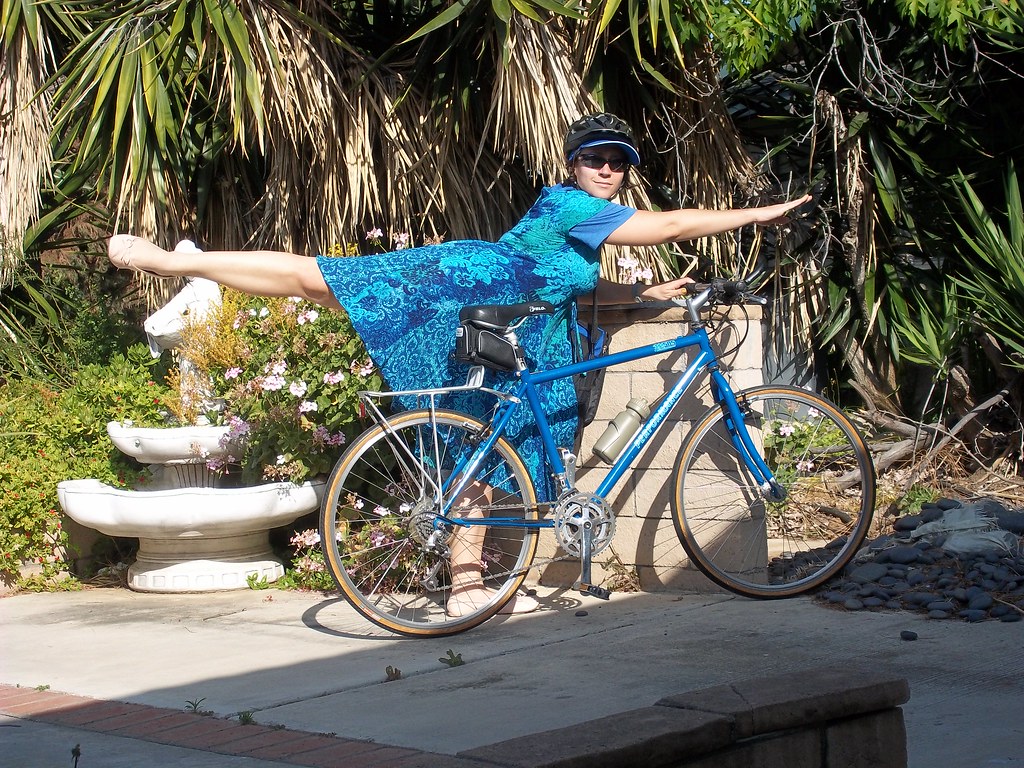
If you've never had a milk crate on your bike rack, you are missing out on one of the most versatile ways to haul a diverse array of items.  I will present some of the most compelling reasons here. Invest in yourself to celebrate Bike Month and consider adding a milk crate to your commuting setup.  It's more affordable than a set of the cheapest panniers.

You can find a milk crate in the office supply store, hardware store, or superstore in the home organization section.  Or better yet, find one in the trash to upcycle.  I've had 3 different milk crates on bikes in my life (in the past 20 years).  Sometimes people attempt to steal or vandalize your milk crate, and sometimes the plastic just wears out.  Mount it securely to your rack with nuts & bolts. Carry an adjustable wrench and screwdriver to tighten the mounting hardware if it gets loose.

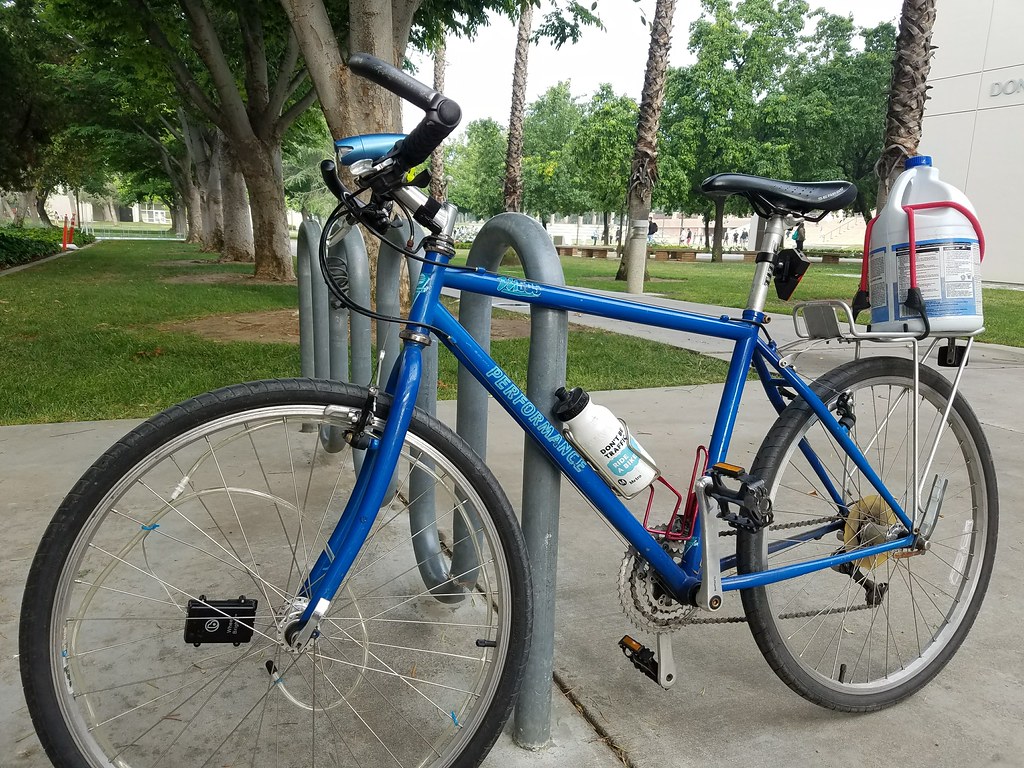
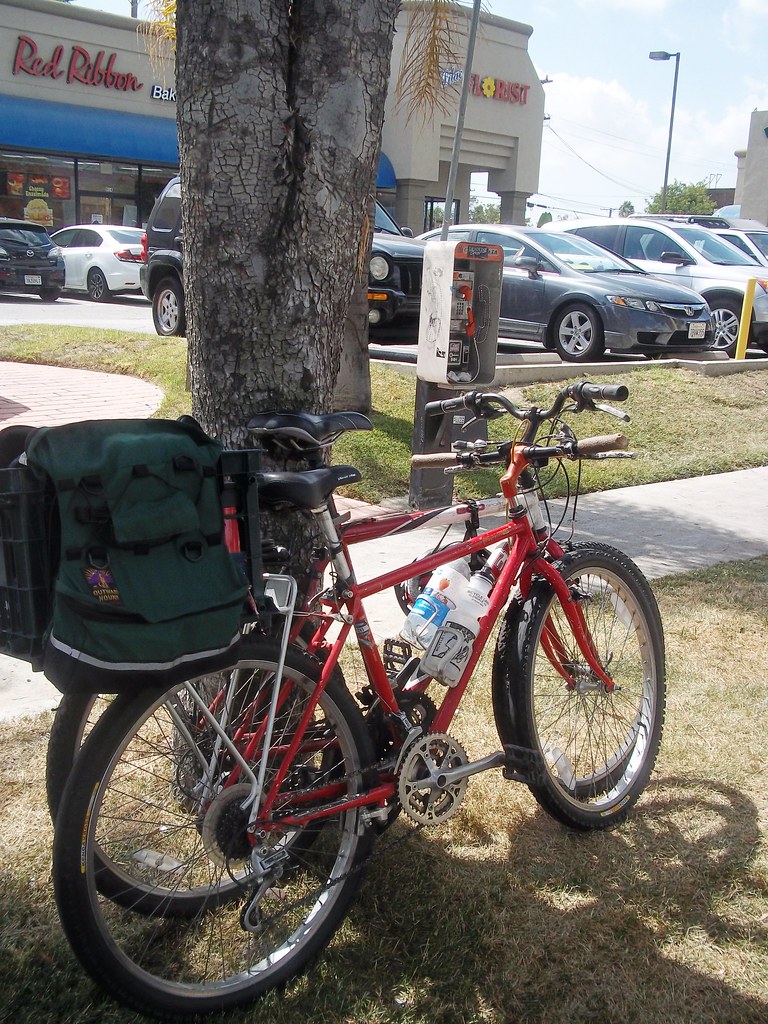
1. Hazardous Materials - Pictured here is a jug of bleach bungeed onto my rear rack.  It would have been safer in a milk crate.  I could see this would also be a safer way to transport paint.  Anything you wouldn't want to spill or explode in a pannier.  A milk crate can be easily detached and rinsed out in the event of a leak.  If the milk crate gets ruined, you can buy another for less than $10.  

May 5, 2017

2. Bags - Pictured here is my typical backpack (containing a computer) and a dog-hiking saddlebag turned into a bicycle toolbag.  The milk crate offers various positions for your bungee hooks, so it's easy to keep everything tight and secure.  You can put all shapes and sizes of bags into the milk crate, make an 'x' of bungees across the top and go!  

November 18, 2010

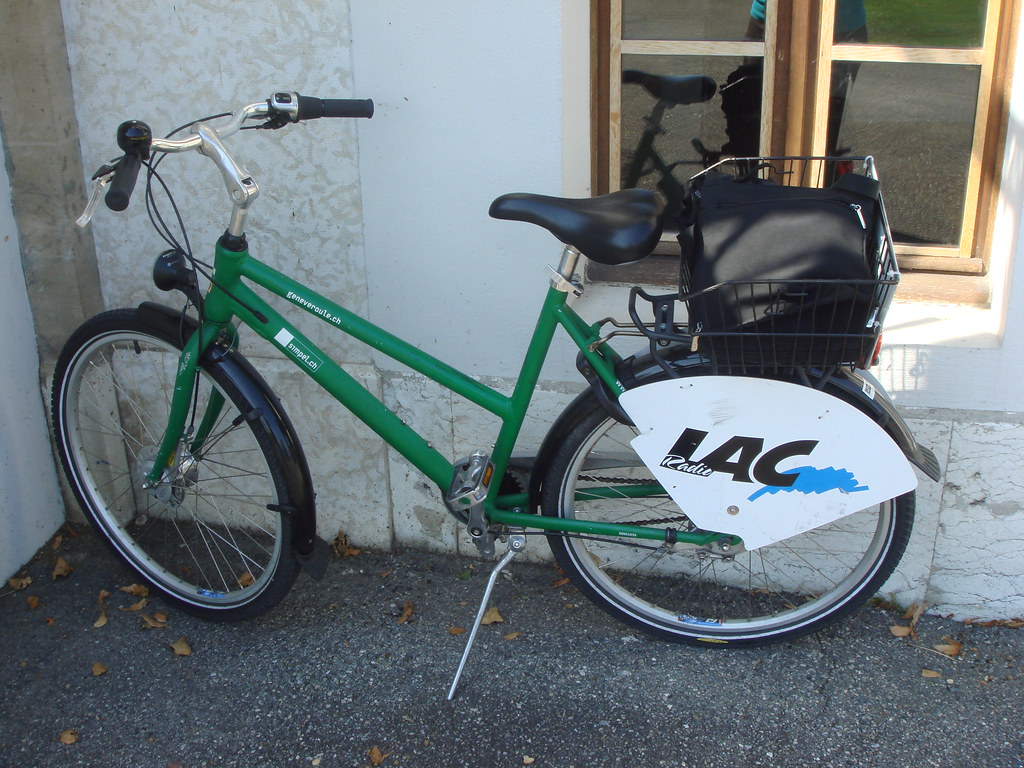
3. Water - If you don't have a water bottle cage, a milk crate is a great place to store your water.  This was a bikeshare bike that I rode from Geneva, Switzerland to Evian, France

September 14, 2007

4. Cakes - I transported numerous cakes from my house to school in an upside-down Tupperware container (so the lid supports the bottom of the cake).  You wouldn't put that in a pannier, since it could tip over, but a milk crate is perfectly level.

July 31, 2008

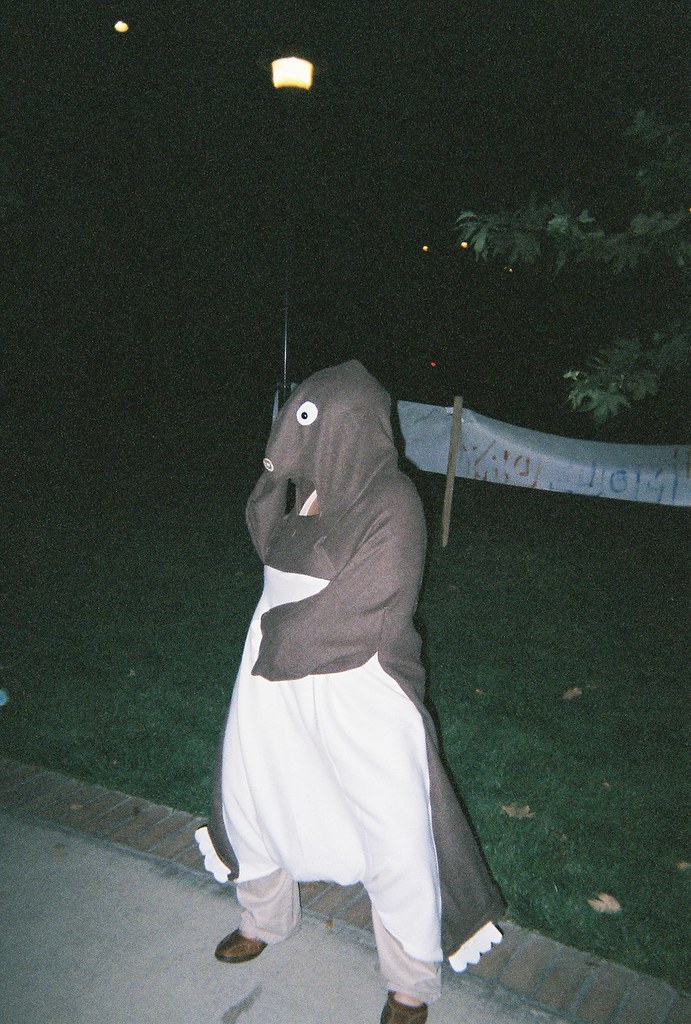
5. Costumes - This is a mole costume which requires a bicycle helmet under the 'hood' part of the head.  Celebrating 'mole day' is a thing chemists do periodically.  It's really fun to arrive at a party with your costume (and several cases of beer) in a milk crate.

October 23, 2008

6. Rocks - If you're into geology, a milk crate is a great way to bring back rock samples.  You wouldn't want them weighing you down in a backpack.  And you also wouldn't want them to get your bags dirty.

February 15, 2009

7. Plants - Maybe you're not into inorganic (rocks) but you're more of a biologist... it's really awesome to transport plants in a milk crate.  Here, I'm showing a flat of Arabidopsis on my rear rack but it would really have been better to have the plants in a milk crate in case the bike tilted left or right too far.

September 15, 2009

8. Ice Cream - The last thing you want is melted ice cream in your saddlebag.  It's much better to have an insulated bag in your milk crate, then pedal at top speed to get that frozen treat home before it melts.  In Germany, I did all my shopping by bicycle.  I would buy frozen fish fillets regularly.

December 29, 2009


9. Locks - it's no problem to bring your U-Locks if you can toss them into your milk crate.  That way you can secure your bikes while you enjoy your destination.

January 1, 2010

10. Maps - There's nothing less safe than looking like a tourist.  Some people go around on bicycle tours with a cue-sheet, remarking on ooh! and aah! and ooh-la-la!  When I'm in a foreign country, I try to blend in as much as possible.  Keeping the maps on the down-low and only discreetly peeking at them to plan your next segment on a trip to the restroom (in full privacy) ensures that you don't become a target of pickpockets.  In Italy, I stayed at several hostels and heard horror stories of travelers who had lost money, passports, phones, and other important travel documents.  If you keep your maps in a milk crate, you'll think twice before pulling them out in public.

June 26, 2010

11. Take-Out - Imagine hot liquids, such as Phở or Sweet-and-Sour Pork. You wouldn't want to risk that spilling in your saddlebags!  A milk crate is the perfect way to pick-up your to-go foods.

July 19, 2010

12. Farmer's Market - Because the seasons change, you never know what you'll find at the Farmer's Market.  It's so much safer to transport items such as plums and tomatoes in a milk crate because if they're ripe, the skin can break, releasing sticky sweet juices that could be hard to get out of your panniers.  I like how there are all ages of people in this photo.  It's not only for the young and fit to use a bicycle as a primary means of transportation.

August 28, 2010

13. Workout Gear - Imagine sweaty socks, ballet slippers, swimsuits, wetsuits, anything that would stink up your panniers or carry a good amount of sand and surf.  Those items lend themselves perfectly to a milk crate on the back of your bicycle.  You could also bungee your yoga mat directly to the milk crate.

May 27, 2011


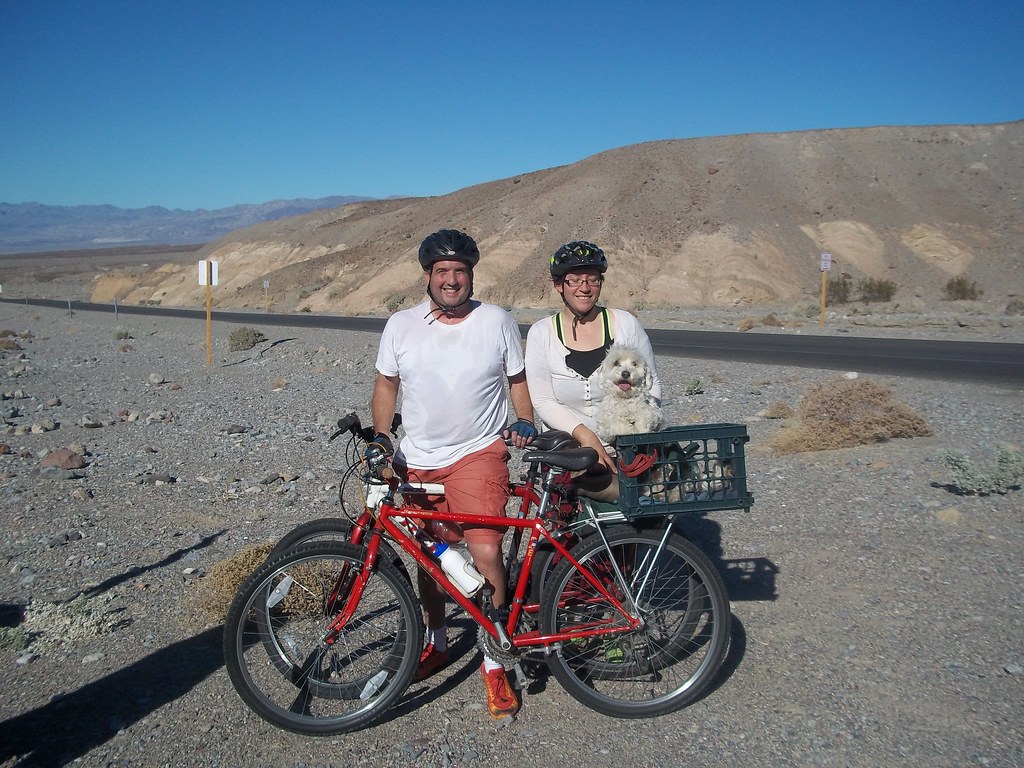
13. Dog - Our dog didn't love riding behind me in a milk crate, but I've seen other dogs quite content to do so.  We would employ the harness that came with our 'dog hiking backpack' which resembled a kind of strait jacket to keep her from jumping out.  This was a 30 mile bike ride in Death Valley.

December 23, 2014


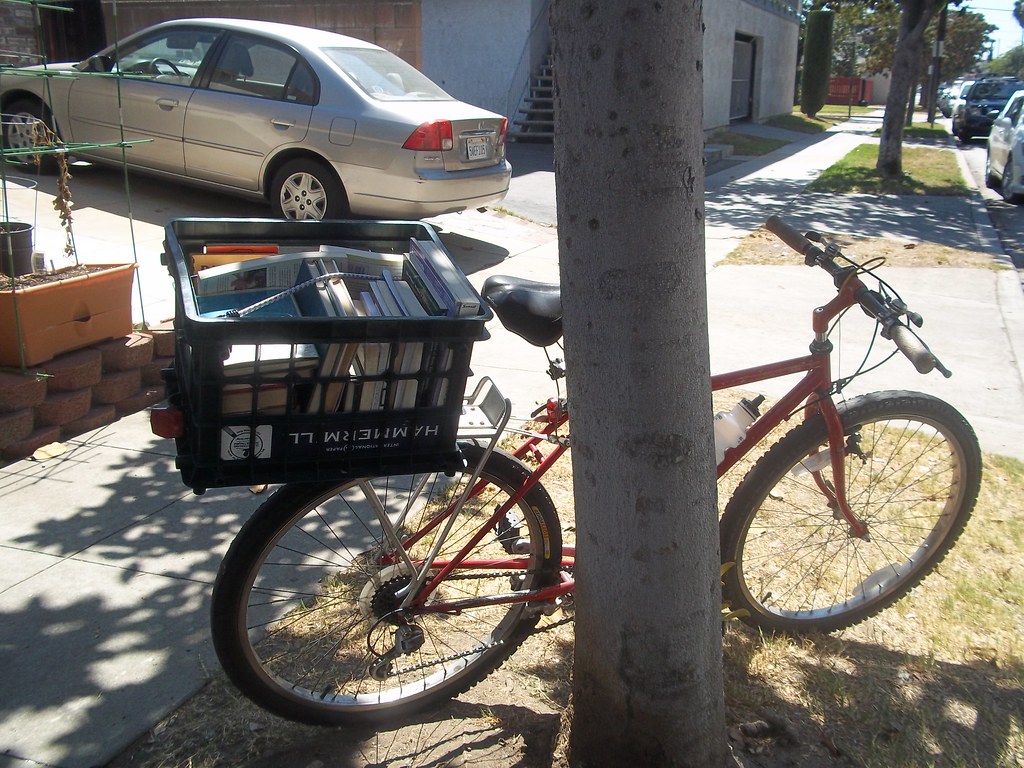
14. Books - The best way to get stronger legs is to put your heaviest books in your milk crate and bomb some hills.  I used to put Chemistry, Calculus, and Biology, top it with a bungee and then head out. This photo is from when a bookstore was closing and we took home a big haul of books!

September 14, 2014


15. Sound System - I've never done this, but I know lots of people who do for open street events like CicLAvia.  You don't have to abandon your tunes when you get out of your car.  There is plenty of space in a milk crate to set up speakers loud enough to share with a group of your friends.

October 24, 2014


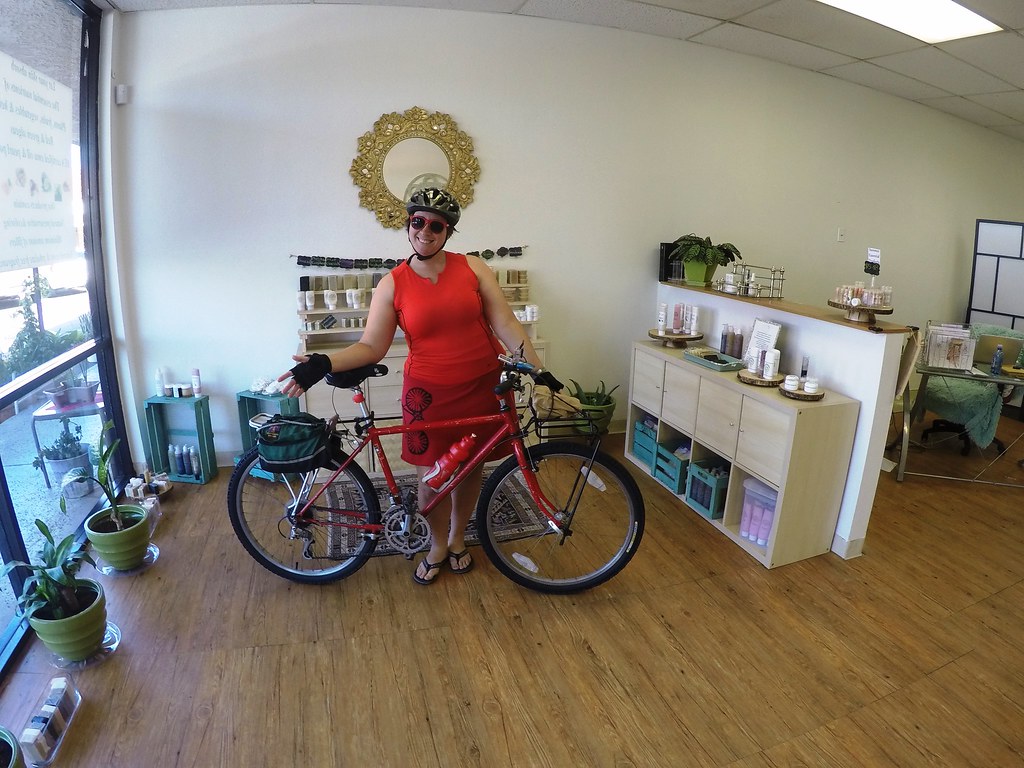
17. Cosmetics - I buy cosmetics regularly from CT Organics.  You don't want to put those oily lotions, soaps, and creams into a bag that you also have your cell phone in.  Especially if you have a long, hot ride back to The Valley from Santa Clarita. Throw them in a milk crate and you can be sure that your electronics can be well-segregated from the essential oils.  Speaking of which, SHOUTOUT to the Mother's Day Boutique, which is TODAY.


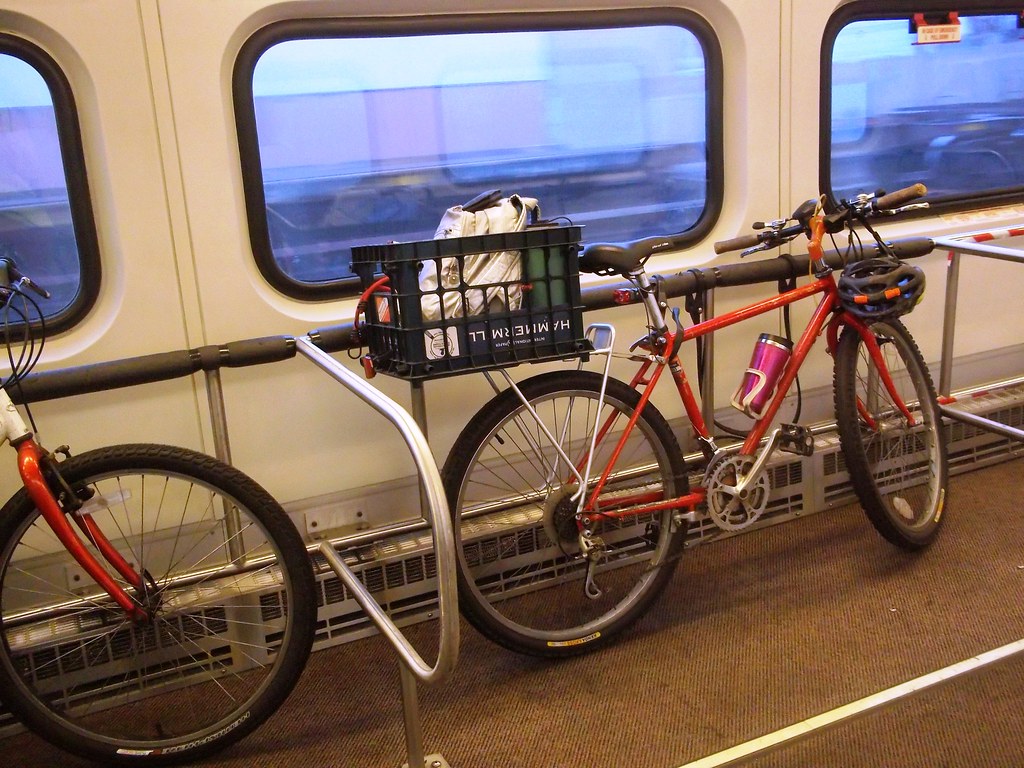
18. Coffee - Instead of buying coffee at school, I'd take about 6 Cups of drip-coffee in a Hydroflask and bungee that to the inside of my milk crate.  Then I would put the half-and-half in a 700 mL water bottle with a coozy around it. I could refill my travel coffee mug (in the water bottle cage) at will during my commute on the Metrolink train.  It is a glamorous way to travel!

October 20, 2014


19. First-Aid Kit - If you're spending all day in the sun with the family, your adorable nephew may end up with a skinned knee.  This day, his pedal was threaded backwards and consequently fell off three times, each time our nephew fell to the ground and skinned his knee.  If we had been carrying more tools and a first aid kit (and a picnic lunch) in a milk crate this family day wouldn't have had to be cut short.

April 7, 2012
20. Pizza - Who doesn't love pizza?  An easy way to deliver your own pizza is to bungee the pizzas right on the top of your milk crate.  It's already a flat surface.  You can put the drinks, dipping sauces and breadsticks in the milk crate and the pizzas form an automatic lid.  That's what we did this day!

September 27, 2014

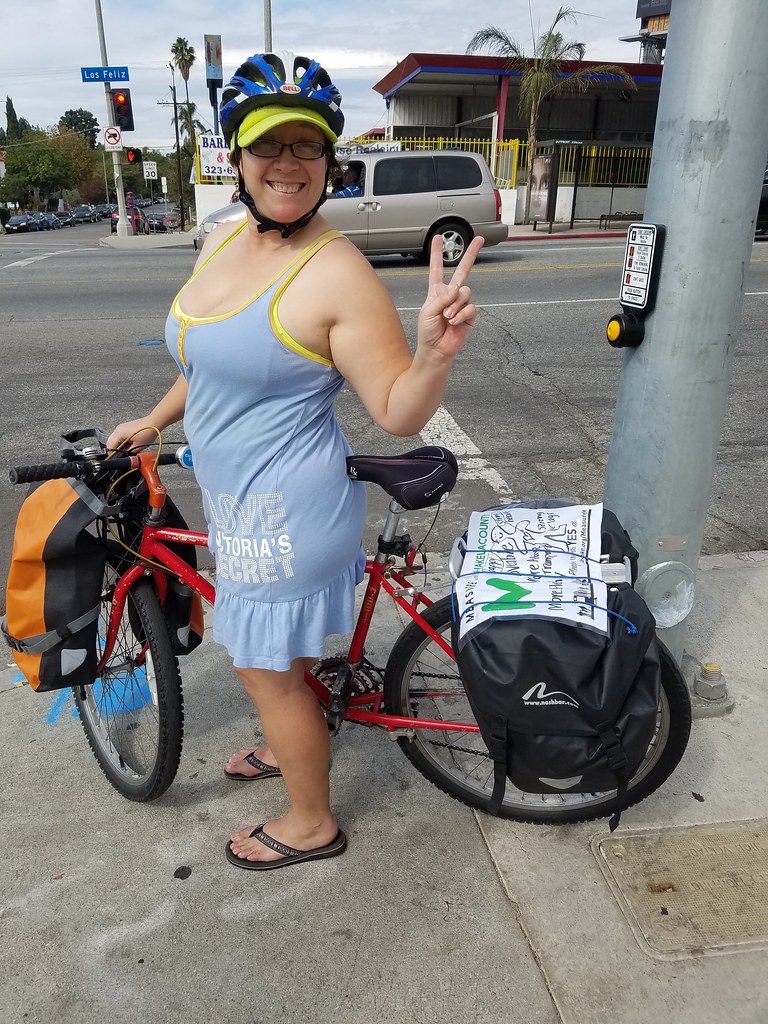
21. Campaign Signs - Although I had a good time doing some last-minute campaigning for the passage of Measure M, this sign would have been more effective on the sides and back of a milk crate.  Think of the milk crate as advertising real estate.

October 23, 2016

22. Firewood - Our bicycle camping trip was fantastic.  I had to ride several miles to the Albertson's to buy firewood and it would have been convenient to put the bundle of wood in my milk crate. Instead, I bungeed one bundle to the front rack and one bundle to the rear rack, which was OK, but that's another thing you wouldn't put in a pannier.

December 29, 2015

23. Teaching Supplies - In this photo, you can see I fitted my milk crate with a custom-trimmed paper box lid to make it somewhat padded and also have fewer holes.  I brought everything I needed to do my job in this milk crate for years.  Candy, cookies, molecular and solid state modeling kits... anything somewhat fragile that wouldn't do well banging around in a backpack is ideal to be transported in a milk crate.


In closing, I will offer a word of caution.  The high center of mass created when you fill your milk crate will change the dynamics of stopping, starting, turning, and overall handling of your bicycle.  Make sure your brakes are in working order (read: tight).  If you are riding with a group, remember that a fully loaded milk crate will alter your stopping distance (because you have more momentum). 

If you find that a milk crate makes your bike too difficult to handle, panniers will be better since they have a lower center of mass.  I have more trouble with weight on the front of my bicycle than the back.  Front baskets are good so that you can see what's going on, but when you let go of the handlebars, the front wheel will turn rapidly so that the load has the lowest potential energy.

If your weight is in the rear, however, and you are stopped at a red light, simply use your legs to stabilize the bicycle frame.  Take care when not moving to stabilize the bicycle.  You may want to investigate in a heavy-duty two-legged kickstand if that's important to you, but I've always found a bike rack or tree nearby to prop the bike against.

Share your thoughts, suggestions, experiences and comments!  HAPPY BIKE MONTH!!!!!!

Monday, October 31, 2016

MultiModal Weekend (Part III)

Having taken a bike on Friday afternoon, a car on Friday night, and a walk to the bus on Saturday (both ways), we knew we had to take a train on Sunday.  Luckily, it was a CicLAvia (open street) weekend in Downtown LA and we got to ride bicycles from Glendale to MacArthur Park with an awesome group of people.


Since we had spent the majority of the weekend talking about bike advocacy, we cut our CicLAvia experience short and caught the early train back to Glendale.


The nice thing about catching Metrolink is that it is a short 10-12 minute train ride back to Glendale and then a 10-12 minute bike ride back to our house.


Metrolink monthly pass holders (like us) can ride the train system (bus and light rail, too) for free on weekends.  Non-monthly pass holders have access to the entire system by purchasing a $10 weekend pass.  There is now an app that you can use to purchase your Metrolink pass virtually, in case your trip starts with a bus instead of starting at the Metrolink station (like we did). Screenshots from the Metrolink app are shown side-by-side below.

Remember, your bus pass will not get you on the light rail.  Nor will your light rail pass get you onto the Metrolink train.  But a Metrolink ticket will get you on the bus and light rail.

Last, but not least, if you're going for a short trip, your one-way ticket on Metrolink will be cheaper than a Day Pass.  But if you're traveling a long way (Lancaster to LA Union Station, which costs $11.50 one way) then the Day Pass will be cheaper even if you're not returning on that day to your original destination.  The app makes it easier to comparison shop on your own schedule, without having to mess around with the ticket vending machine (TVM) at the actual train depot.

There is an agreement between Amtrak and the Glendale Beeline and several other bus providers for free transfers, but LA Metro buses only offer a discount to Amtrak passengers, according to Fox 5 News San Diego. If you do take Amtrak, you must call and make a bike reservation (800-USA-RAIL).  Roll-on service is possible on the Pacific Surfliner AND the Coast Starlight.  I guess Amtrak also has a mobile app, but I don't have experience with it yet.


Also, I learned that a Metro TAP card is how you use Metro Bike Share, but I haven't tried it myself yet. Have you?

Saturday, October 29, 2016

MultiModal Weekend (Part I)

The weekend of October 14-16th was a big experiment for me.  I used bike, bus, car and train to get around LA County.  I have been wanting to write about the experience and compare each way of getting to and from downtown Los Angeles for a resident of Glendale.

https://www.strava.com/activities/744729565
Friday, October 14th, after work I left California State University, Northridge around 2pm.  I rode along the Orange Line Busway Bike Path.  I rarely ride at this time, but there were lots of school-age teenagers walking on the sidewalks of Reseda and Van Nuys.  I got a little bored in NoHo, but that's normal.  It's not that fun riding in the bike lane along Chandler Blvd, especially when there aren't any other cyclists out there to chase.  After cutting down Keystone, I took an unplanned left turn on Alameda, which had a pretty nice bike lane (that I'm not seeing on Google Maps).  The video below shows it at 53 seconds in.


I went down Victory Blvd to a little side street called Ruberta, which used to have a cool "Halloween House" but now it doesn't.  I refilled my water bottles in the drinking fountain at the Glendale Narrows, then rode/pushed/carried my bike across the Bette Davis Picnic Area (Cyclocross training) and up to Riverside Dr to gawk at the closure of the Los Angeles River Path.  

The Army Corps of Engineers will be hosting a public meeting on Monday, November 7th, from 6:30 p.m. – 8:30 p.m. at the Friendship Auditorium by Griffith Park (3201 Riverside Drive) and LACBC encourages all to attend and speak up.

All that being said, I took the detour through Griffith Park and entered the bike path by the dog park. I exited the path at Fletcher and took the route through Silver Lake and along Sunset Blvd to reach Spring St. I don't know why other people don't like going that way. It was also the first time I really didn't need a route sheet. That's what I love about CicLAvia, it makes me understand how to reach downtown LA without a car.

Raw crunchy four kale mix, shredded cabbage, apples, shredded carrots and avocado, grape tomato, tossed w/ maple orange dressing, topped w/ currants, hemp seeds & creamy hummus dressing drizzle 

After reaching LACBC headquarters, I had dinner at the LA Cafe.  I don't know if it was the 2 hours and 40 minutes I'd just spent winding my way gradually from The Valley to Downtown LA, or if the salad was REALLY GREAT but I haven't had a better meal in years.  There were picnic tables in a parklet, a couple of nice bike racks to lock up.  It was the ideal way to wind down from my ride and take in a street view of the city.

Now I'm off to make the City of Glendale more walkable.  I'll have to finish this post in a multi-part series.

Saturday, October 22, 2016

Rink Rat

Skating is my new addiction.  It came to me this summer that I wanted a reward, and what better way to feel good than to go zooming around on 8 wheels?  I live 0.6 miles from Moonlight Rollerway, so it's crazy I didn't start frequenting it sooner.


Remembering the days of my childhood, I knew what I had to do: Find a "play it again sports" and get a pair of used skates.  I went to the location in Sherman Oaks first.  Although they had a bunch of great fitness equipment, I didn't see or try on any skates that got me excited.  Then I tried the location in Pasadena.  I found the skates pictured above in perfect condition.  They're a size 10 and I generally wear a size 9 in shoes, but hey I could wear thicker socks.  Or just tighten the laces.

Skate rental at Moonlight is $5 and I got the skates for $50 so I only needed to use them 10 times for the purchase to make up for itself.  I'm proud to say I've skated 11 times already.


The boots of my skates are Riedell, which has been making figure, speed, in-line and roller skates since the 1940s. The wheels are Powell, a Stanford-educated engineer who started making his own wheels in the 1970s.  He's associated with skateboarding more than rollerskating.  But I think it's cool that the skates I eventually settled on are so infused with skating history.  Also, I might put a pom-pom on there (that's what the chain is there for).

From Bloglovin' The nostalgic building that houses Moonlight Rollerway was built in the 1940’s and before Harry’s Roller Rink opened there in 1956, it was used to make airplane parts for the great war. The skating floor is the original Harry’s maple flooring, “with no nails all tongue and groove”– it’s basically a living artifact of 20th century American leisure.


I'm getting my skating muscles back, practicing starts and stops by doing "Red Light, Green Light" and practicing turns by doing the "Hokey Pokey" and practicing skating backwards during the "Beginner and Intermediate Backwards Skate."  I might eventually try this type of skate dancing.  There's so much talent at Moonlight.


Monday - adult night - [not yet]
Tuesday - adult class + live organ music - 9/13, 9/20, 9/27
Wednesday - skate dancing class + rainbow night - 8/17, 10/19
Thursday - roller derby practice + throwback music - 8/25
Friday - all ages afternoon - 9/9, 10/21
Saturday - all ages afternoon + evening session - 9/24
Sunday - all ages afternoon + family night - 7/31, 10/2

Clearly, live organ music is my favorite night~!  It's not crowded.  The video above shows the ambiance of that night.  Really good skaters come out, too.  Someday I want to go skating in Northridge.  Rainbow Night is so indescribably amazing, you have to experience it for yourself.  It's like an aerobics class, where everyone's REALLY INTO IT.  At some point, the fog machines start blowing and the lights dim and people really let go of their inhibitions.

I don't remember too much about Thursday, except to say that the derby girls scare me.  They train hard, skate low to the ground, and circle for hours.  Maybe it scares me because I'm interested in it, but maybe it scares me because I hear that they get pretty severe life-changing injuries.  Friday (all ages) skate is mostly kids.  But as long as you don't run them over, it's fun.  The kiddos had a meltdown when the Jacob Sartorius - Sweatshirt song came on.  It was like the Beatles!


Our neighbor offered to sew me something one time, and the pattern I picked out was for a skating dress.  She said "I don't need a pattern to make you a circle skirt."  Well, she never sewed the skirt, but now that I have my sewing machine out, I can make it for myself!  I can see why people like skating in dresses or short skirts, skating really gets your muscles working.  I've noticed my booty has lifted in the past several months.  I attribute it to skating.

I was walking home from the rink last night and snapped the shadow picture above.  The sun was setting and it struck me that I could see a cool shadow of me and my skates.  A few blocks later, a Jeep slowed down next to me and yelled something out the window.  I pretended not to hear it, but the driver was so persistent.  He didn't pull forward to the stop sign, instead yelling again: "It's hot that you skate."


I don't particularly love being yelled at by passing cars, it makes me feel unsafe, but I think the truth is that active transportation is hot.  It's awesome to walk around, take the bus, skate through CicLAvia, bike LA, it's all hot.  I will definitely get my skates on for Glendale meets Atwater Village (Spring 2017).  I'll make a follow-up post about CicLAvia-Heart of LA in October.  But what I want to say is that getting active is attractive.  Moving gets you feeling good, and that's hot!

Friday, April 1, 2016

It's all happening at once!

So many great things are happening, it seems impossible to keep up.

Walk Bike Glendale is planning a series of events:

Verdugo Mtn 10k Training Hike https://www.facebook.com/events/870265023086202/

Women's Beginner Rides https://www.facebook.com/events/254030184935096/

Family Ride https://www.facebook.com/events/1077360075660632/

Commuter Workshops https://docs.google.com/document/d/1GaD-3cPUxq8As_Tu0oVfmz_UsRulLT7jp3R-HQ0JDi0/edit?usp=sharing

Commuter Workshop Class #1 = Tuesday, May 10 from 7-9pm
https://www.facebook.com/events/1002405029796451/

Commuter Workshop Class #2 = Thursday, May 12 from 7-9pm
https://www.facebook.com/events/584312521744875/

Commuter Workshop Ride #1 = Sunday, May 15 at 7:30am
https://www.facebook.com/events/1730956240481600/

Commuter Workshop Ride #2 = Saturday, May 21 at 10:00am
https://www.facebook.com/events/464855407056862/

Monday, August 31, 2015

Metro's Active Transportation Plan needs your input!

Good advice lasts.  I remember hearing a talk in November of 2008 entitled "Leading Professional and Institutional Change through Subversion, Revolution and Meterology."  The speaker was Debra R. Rolison of the U. S. Naval Research Laboratory. She told us about the Rule of 18, which states that when you take a new research direction, it will take 18 months to get yourself up to speed in the [new] area.

Last week I attended an Open House Workshop about active transportation in the San Fernando Valley. I didn't study transportation planning or urban design in school, so it has taken some time to learn the ins and outs of the transit system here in Southern California.  I will try to explain some of the basics here so that you can take part in the conversation, too.

Metro is the major operator of bus and rail service in Los Angeles County, California.  Metro hosted the first round of Open House Workshops as part of the development of the Active Transportation Strategic Plan.  Active transportation refers to any form of human-powered transportation – walking, cycling, using a wheelchair, in-line skating or skateboarding. There are many ways to engage in active transportation, whether it is walking to the bus stop, or cycling to school/work.

Councils of governments (CoGs—also known as regional councils, regional commissions, regional planning commissions, and planning districts) are regional governing and/or coordinating bodies that exist throughout the United States. The Open House Workshop we attended was co-hosted by Metro and the San Fernando Valley Council of Governments (http://www.sfvcog.org/).  The SFVCoG represents parts of Los Angeles County: Burbank, Glendale, San Fernando and Santa Clarita. The Southern California Association of Governments (SCAG) is the nation's largest metropolitan planning organization, representing six counties, 191 cities and more than 18 million residents.


When we arrived at the open house, there were posters on the perimeter of the room and Metro provided copies of the posters in 8.5" x 11" format.  We scanned them and some are posted here.  The pillars of Metro's Active Transportation Strategic Plan are:
  • Acess to transit
  • Physical activity as an integral part of transit
  • Enhancing safety
  • Promoting clean transit
  • Improving public health
  • Nurturing equitable/sustainable communities
The objectives of the strategic plan are to (1) identify improvements to 661 Metro transit stations (2) create a regionally-integrated active transportation network (3) develop policies that support education, encouragement, enforcement, and evaluation (4) to propose a funding strategy so that local jurisdictions and community partners can work together with Metro to enhance the overall quality of the transportation network.


The "First Last Mile" concept is used to describe difficulty in getting people from a transportation hub (rail or bus) to their final destination. When people live and work in lower-density suburbs that are not within walking distance to existing public transportation options, transit use is less practical. Population density in suburban areas promotes a reliance on cars, which results in more traffic congestion, pollution, and urban sprawl.  Metro is aiming to help more people access Metro stations more safely and more conveniently, as well as making bus and light rail station improvements.

Complete Streets is a transportation policy and design approach that requires streets to be planned, designed, operated, and maintained to enable safe, convenient and comfortable travel and access for users of all ages and abilities regardless of their mode of transportation. Complete Streets allow for safe travel by those walking, bicycling, driving automobiles, riding public transportation, or delivering goods. Complete Streets offer improved safety, health, economic, and environmental outcomes for ALL roadway users.


Every subregion has its own mobility plan.  Metro's responsibility is to weave these together to maximize efficiency and reduce redundancy in planning. Measure R was a ballot measure during the November 2008 elections in Los Angeles County that levied a half-cent sales taxes increase on each dollar of taxable sales for 30 years in order to pay for transportation projects and improvements. There are currently 12 transit and 16 highway projects underway.  Also, 5 rail lines are under construction.

California Senate Bill 743 gives us an opportunity to promote sustainability, improve air quality, reduce city congestion by encouraging car owners to walk or bike instead.  Miguel Nunez emphasized the demand for a bicycle network that can attract a variety of cyclists, by creating safe routes that traverse the LA county subregion.  He noted that active transportation projects can be completed more quickly and at a lower cost than highway improvements.  Metro is looking to maximize their return on investment.  Some ideas: parklets (for pedestrians to stop and rest in the shade), and bikeshare programs (for bike-curious residents that do not currently own bicycles).


Metro has compiled 0.5 mile radius and 3 mile radius "walkshed" data.  One such compilation is shown here.  These data will be publicly available so that cities can use it when applying for grants.  After this, the workshop split into Breakout Sessions: (1) Potential Collaborations and Strategies to Overcome Barriers to Implementation of Active Transportation Plans (2) Regional Network Desire Lines.  Tham Nguyen of Metro encouraged all attendees to take an online survey and share the link. 

metro.net/walkbikeroll

Metro hopes to answer questions like:

  • What are the gaps in the transit network?
  • What would it take to get residents out of their cars?  

The deadline for responses has been extended to September 30, 2015 so there's still time to participate.  Please share the link with your friends, colleagues, and neighbors.

The first breakout session I went to was about barriers to implementation of active transportion infractructure.  The conclusions boiled down to (1) lack of leadership at the local level (2) lack of oversight at the local level, cities are not held accountable to make proposed changes (3) lack of community support for "road diets" (4) lack of feasability studies, there is a need for data showing that active transportation infractructure actually enhances communities (5) generalized resistance to change at the neighborhood level.  Some of the solutions proposed were: 
  • educate anti-bike lane folks that we're not taking anything away, just using leftover space
  • being "strategic" in the implementation of projects, doing community outreach first
  • call something a "pilot program" so that if it REALLY doesn't work, you can remove it, but people are more willing to be open-minded to change if it's not going to be permanent, when they see how the change improves livability then they won't let you undo it
  • get signatures from the community members (both "for" and "against" projects) compare numbers
  • propose projects as a "bundle," putting cycletracks together with lighting & sidewalks so that residents either get all-or-nothing
  • Metro (or their hired consultants) could attend city council meetings to present proposed projects, as a non-biased community outsider, the data showing decrease in accidents and slowdowns might be more convincing than an angry resident or crazy bike person
  • designate a regional spokesperson who can attest to the improvement in safety, economic development/revitalization, and quality of life for communities with "complete streets"
  • CicLAvia is one of the greatest agents of change because of its transient nature.  It's a demonstration of what protected bike lanes could look like.  It shows businesses how increasing cyclist access actually impacts their bottom line
The second breakout session I went to was about regional network desire lines.  I spoke with Mark Seinen about regional routes from Glendale to Pasadena and Claremont (East), from Glendale to Northridge and Chatsworth (NorthWest), from Glendale to Venice Beach (South), etc.  The Hyperion bridge may not go the way of cyclists, but we marked it as a "Desire Line" anyway.  We noted that certain scenic routes were better candidates for a cycletrack than other more straightforward routes.  Understanding that these plans are for the next 30 years, we heard that there may eventually be a cycletrack along the Ventura County Metrolink rail line that would be a more direct path to CSUN from Glendale.  Of course, we don't know where we'll be living by then so our input was for the greater good of residents from all corners of Los Angeles County.  In retrospect, events like CicLAvia have given us the opportunity to ride throughout the region.  Being dedicated to car-free travel, regardless of the distance, before we really learned how to use the light-rail, gave us insight into desirable regional connectors.  When you bike the landscape, you get to know the landscape.


A second round of workshops will be in Fall-Winter of 2015 and round three will be in Spring 2016.  Since this is a long-term project plan, we may not see immediate action, but it would be good to have a diverse range of community input.  Metro cannot prioritize enhancements to our neighborhoods without feedback from the residents who live and travel through them.